
Canada Expedition 2026: Grateful to Be in the Heart of One of the Earth’s Most Valuable Ecosystems
There are moments in life like that … ,
that realign and set my inner compass straight. For me, that moment is my annual expedition to a wilderness area where I feel incredibly at home—and which I believe I know inside and out through my work on my laptop. The Misty Forest in British Columbia, Canada. The geographic coordinates and aerial photos are firmly etched in my mind; in meetings, we repeatedly discuss the impressive statistics and global significance of this temperate rainforest ecosystem. And once a year, part of our team sets out on an expedition to this incredible wilderness. This is the third time I’ve had the privilege of being part of our Canada expedition—and the anticipation is just as great every time as it was the first time. Together with our international team from Germany, Peru, and Canada, inspiring ambassadors, and dedicated partners, we’re planning this trip alongside Tobi, our expedition leader and Managing Director of WI Canada. So, the whole thing is preceded by several weeks of intensive planning to ensure that all the tasks and expectations for the expedition are coordinated.
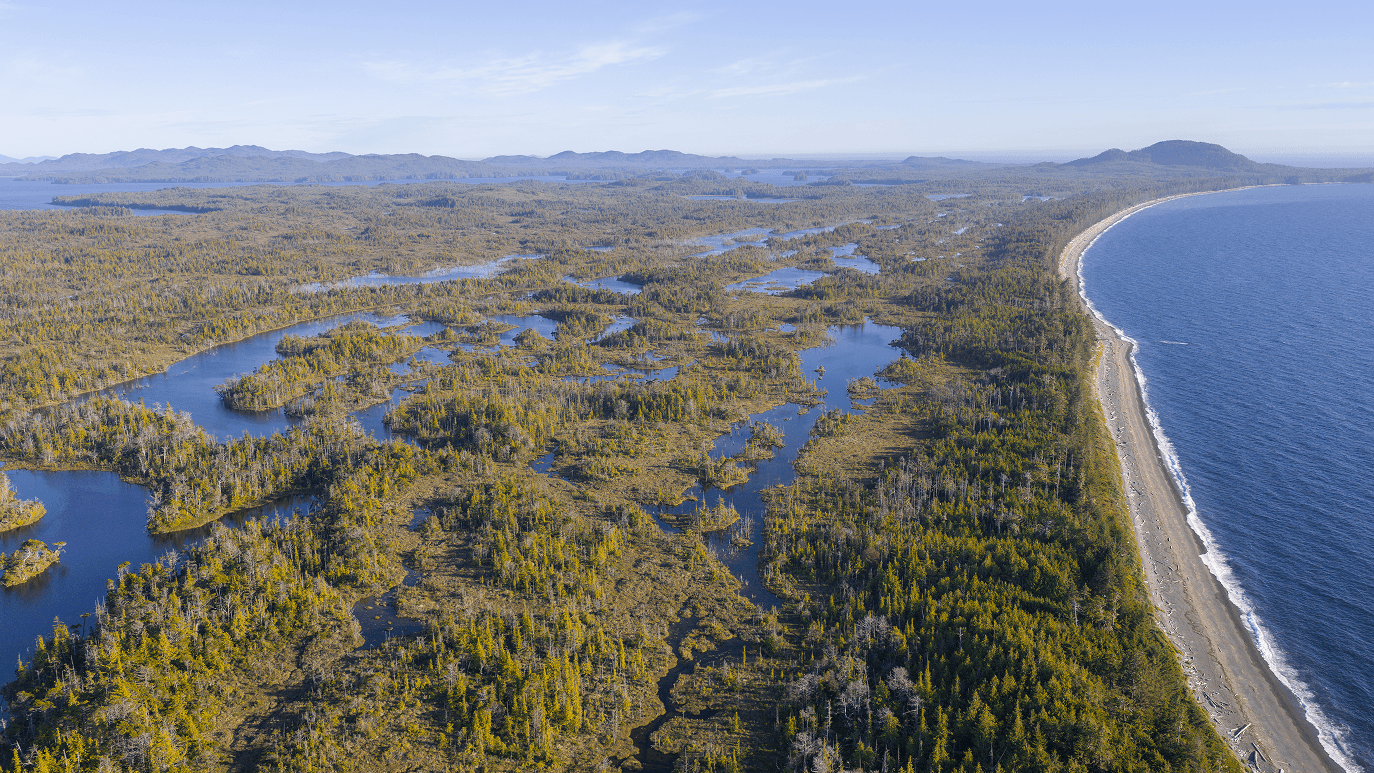
My magic place: Porcher Island. A place whose beauty I simply cannot put into words.
Between Research, Nature Conservation, and Adventure
Our mission on the expedition to the Canadian nature reserve is the same every year: collect data, monitor our on-site conservation efforts, and develop plans for new research projects. And yet, we can never be 100 percent sure what lies ahead. That’s where I come in.
In my role, I’m responsible not only for numerous planning tasks and scheduling details before the expedition begins, but also for collaborating with companies and ambassadors who are committed to protecting these majestic wilderness areas. With their help, we’re able to bring the forest—in all its breathtaking facets—closer to even more people and communities. So on our expeditions, it’s not uncommon for people to come together who, while working toward the same goal, often have backgrounds, mindsets, needs, or fears that couldn’t be more different.
"Can't" doesn't exist!
Chris Hoffmann
Wilderness International, Head of Partnerships & Ambassadors
.png)
But I love this challenge, too. My motto: “Nothing is impossible!” We coordinate a wide variety of processes and work together to iron out countless details:
- Who is out and about with whom, and when?
- What stories do we want to tell?
- Who documents what—and with what equipment?
- ...
An expedition is all about sticking together. And that’s exactly what we did this year, too. I love this mix of meticulous planning, boundless teamwork, and the knowledge that, in the end, we’ll create something that moves people.
And below, I’d like to try to share some of these moving impressions from my two-week expedition to Canada with you.
Back to Basics
June 21, 2026, 11:00 a.m.: Together with a group of amazed people—okay, some of whom are also seasick after a very choppy boat ride—I set foot once again on Porcher Island, part of our Misty Forest conservation area. Far removed from any sign of civilization, it’s so pristine here that you can almost hear the silence. And in that moment, I feel it again: No digital record can ever capture the full impact of this “ wilderness ” in all its reality. I’m grateful, and I hope that everyone could experience this feeling at least once—from my friends to all our donors, to sustainability managers and CEOs, but more on that later…
Far away from any infrastructure ...
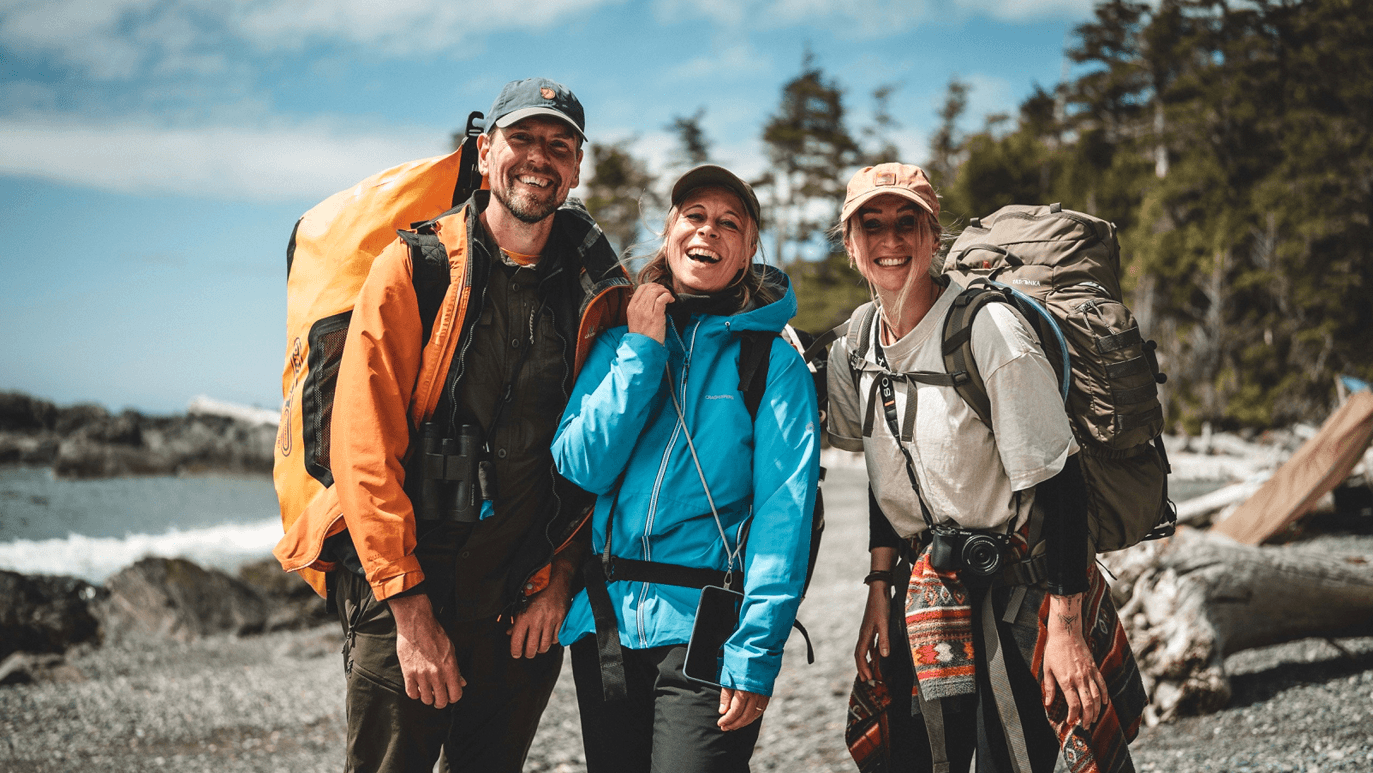
Arriving by “All-Weather Vessel,” hauling countless 25-liter water containers, duffel bags, and boxes into camp (we could even “market” it as a boot camp), stretching out tarps against the unpredictable wind and rain, gathering firewood for nights of campfire conversations—and falling asleep to the sound of the Pacific Ocean on one of Canada’s wildest beaches. And then there’s the matter of food. Thanks to our expedition leader Tobi (“Only those with something decent in their stomachs can work in a good mood and be productive.”), our menu doesn’t consist of packet soups and canned ravioli, but mainly of vegetables, wraps, porridge, homemade stews, and—thanks to me—liters of fresh lemon-honey-ginger tea. The fact that our kitchen team is basically all of us makes it all the more wonderful (though, to be fair, special thanks go above all to Noel, Isi, Anna, and Friederike). As you can see—teamwork makes the dream work.
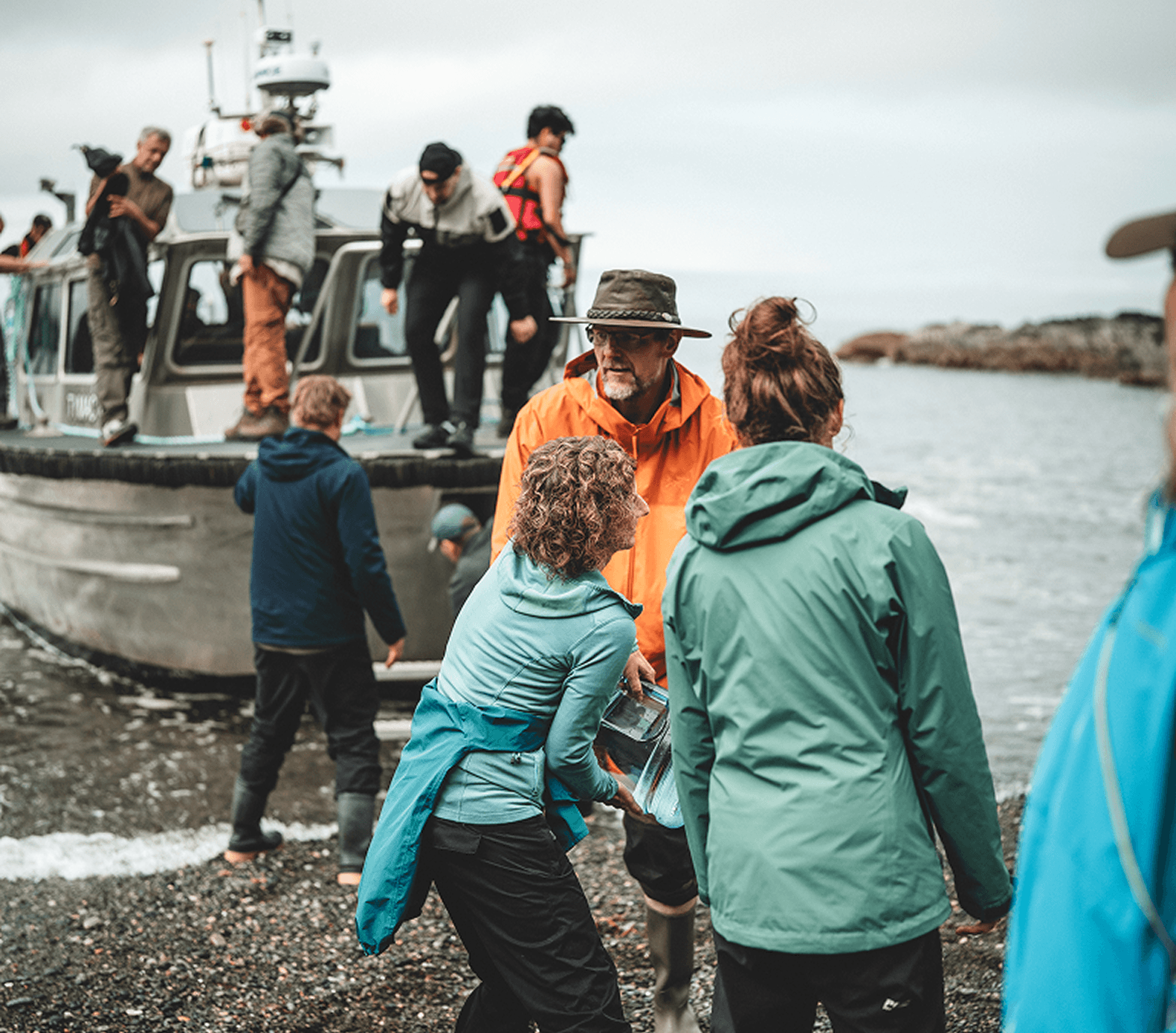
When the " wilderness " challenges us
Once again this year, the experiences in the wilderness are pushing some members of the group to their physical and mental limits. But that’s exactly where the magic lies: When we overcome this extreme remoteness together, support one another, show understanding for each other, and ultimately “hang in there,” we learn a great deal about ourselves once again. Raw and unfiltered. Overwhelming. Beautiful. Sorry for the sentimentality, but anyone who has ever experienced how closely nature and human well-being are intertwined understands why “ wilderness ” is so much more than just unspoiled scenery. It grounds us, brings clarity, and reminds us of what really matters.
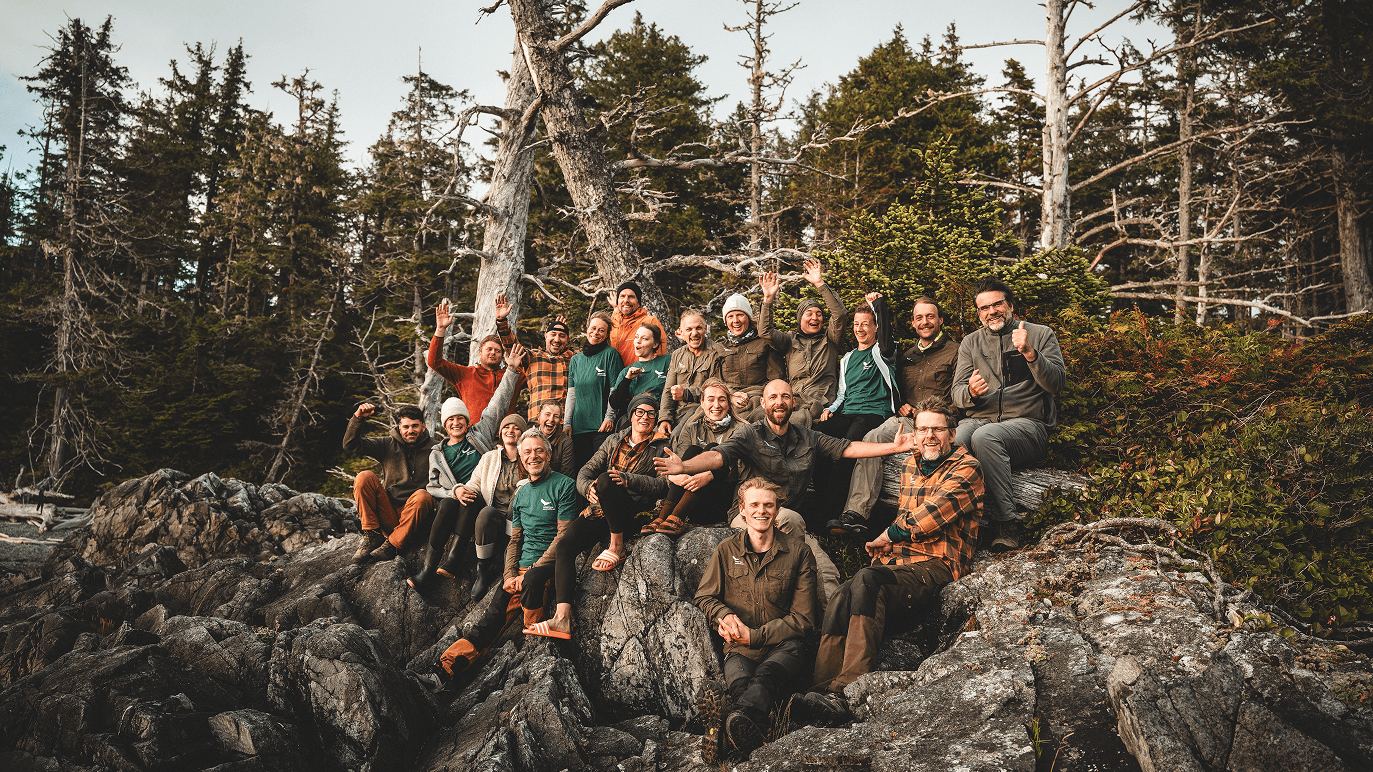
First of all: Thank you. This moment on the rock symbolizes everything that has defined us as a team: trust, fun, perseverance, and taking a moment together to reflect once we’ve reached our goal.
wilderness is the best teacher. That’s why, after a certain amount of time, we take our full-time team members to our conservation areas. Sarah is someone who loves to pitch in and be there for others—often without even thinking about it and without making a big deal out of it. That made it all the more wonderful to see her experience the Misty Forest with her own eyes for the first time this year, together with Cody. What had previously been nothing more than maps, satellite images, scientific reports, and numerous video calls suddenly came to life for her. And anyone who has ever trekked through this rainforest understands our work on a whole new level—and carries that experience with them forever. The fascination ranges from the temperate rainforest to millennia-old, meter-deep bogs and on to the tidal pools—a unique transitional zone between the ocean and the land. It is precisely this close interplay that makes the Misty Forest so extraordinary: While otters search for food along the rocky coasts, even the rare coastal wolves use the intertidal zone to hunt for clams, fish, and marine animals washed ashore. Moments like these change the way we view our work on the cooperation team. Numbers become landscapes. Protected areas become places teeming with life. And a professional task becomes, even more so, a personal responsibility. This is precisely why these trips are so valuable to our team—because every decision, every partnership, and every square meter of protected land takes on a significance that goes far beyond what can be expressed in impact reports or presentations.

Tidal pools are much more than just small bodies of water—they are a vital lifeline for numerous species throughout the coastal ecosystem.
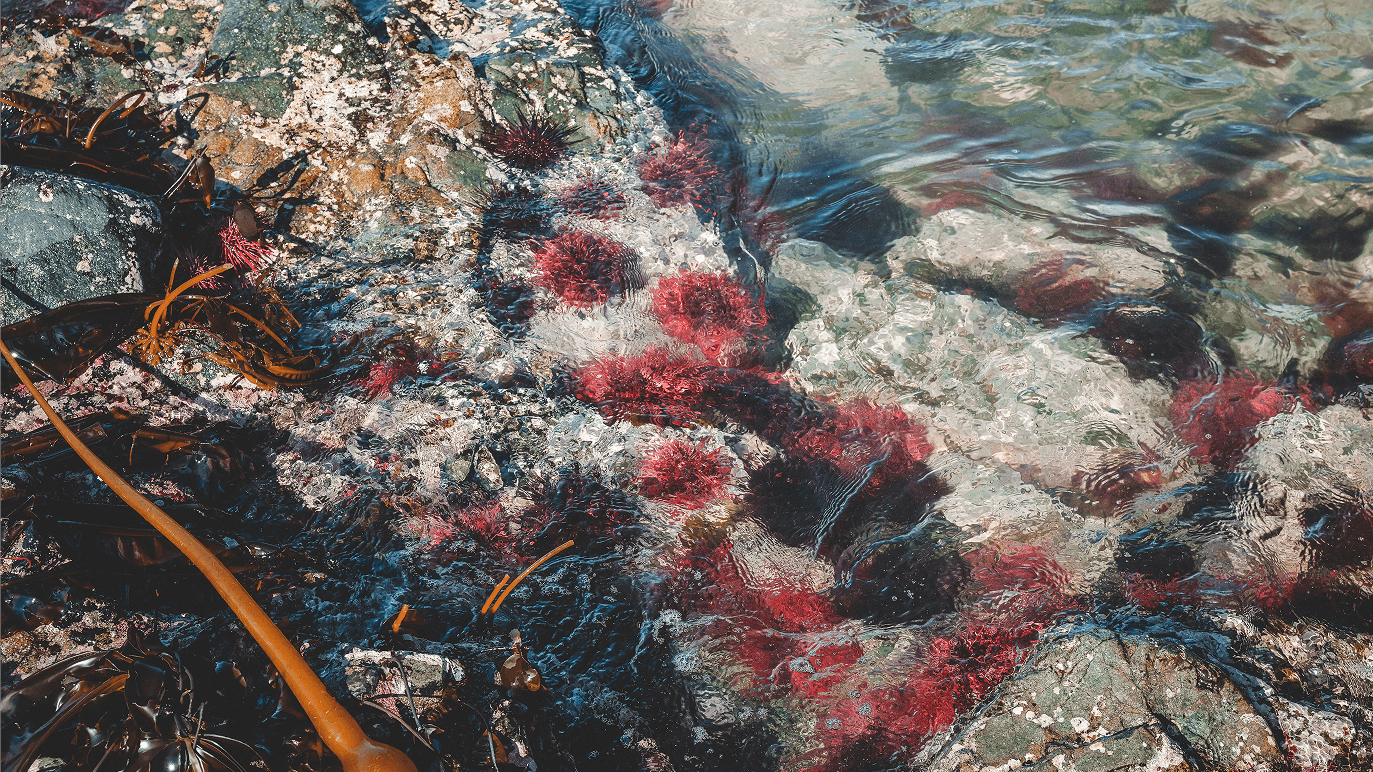
Life is flourishing in the tidal pools on Porcher Island—literally!
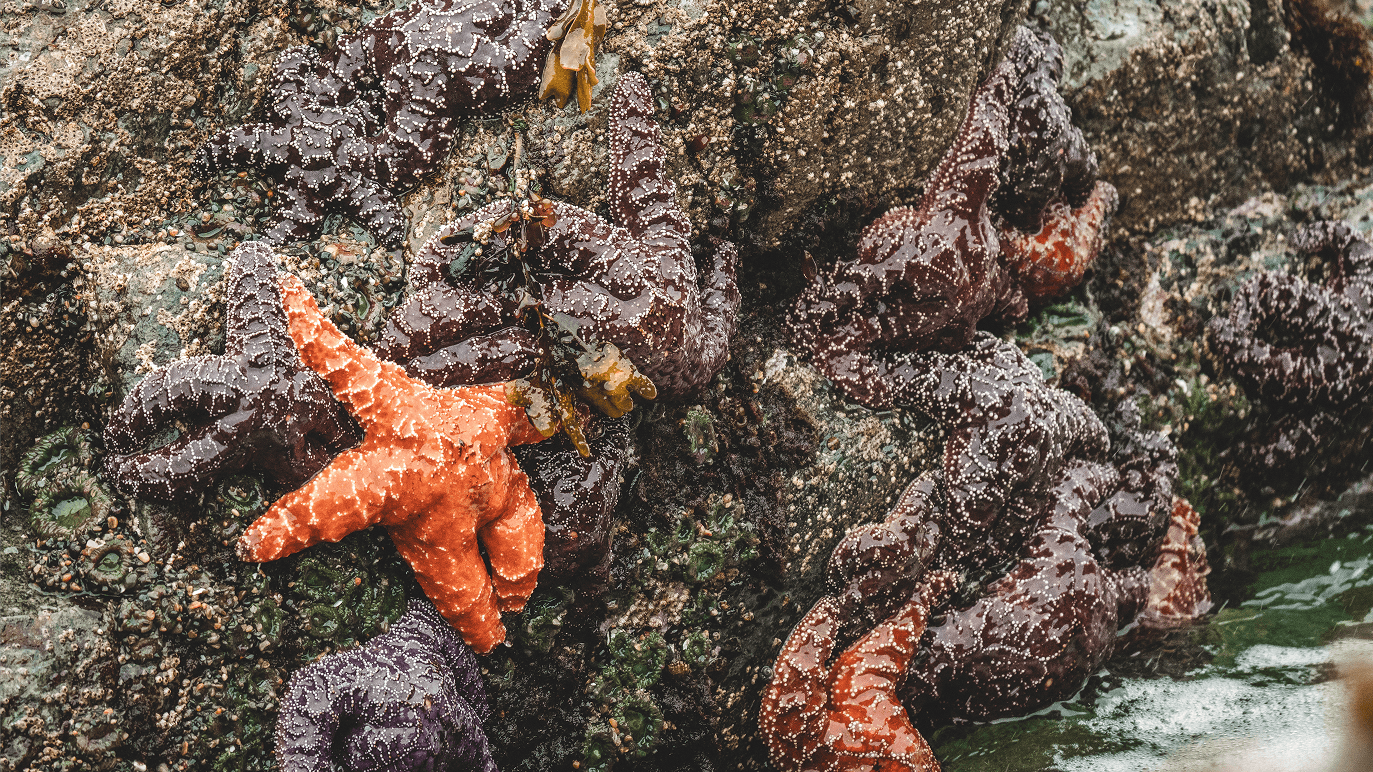
Starfish are just one class among the many unique creatures found in the intertidal zone.
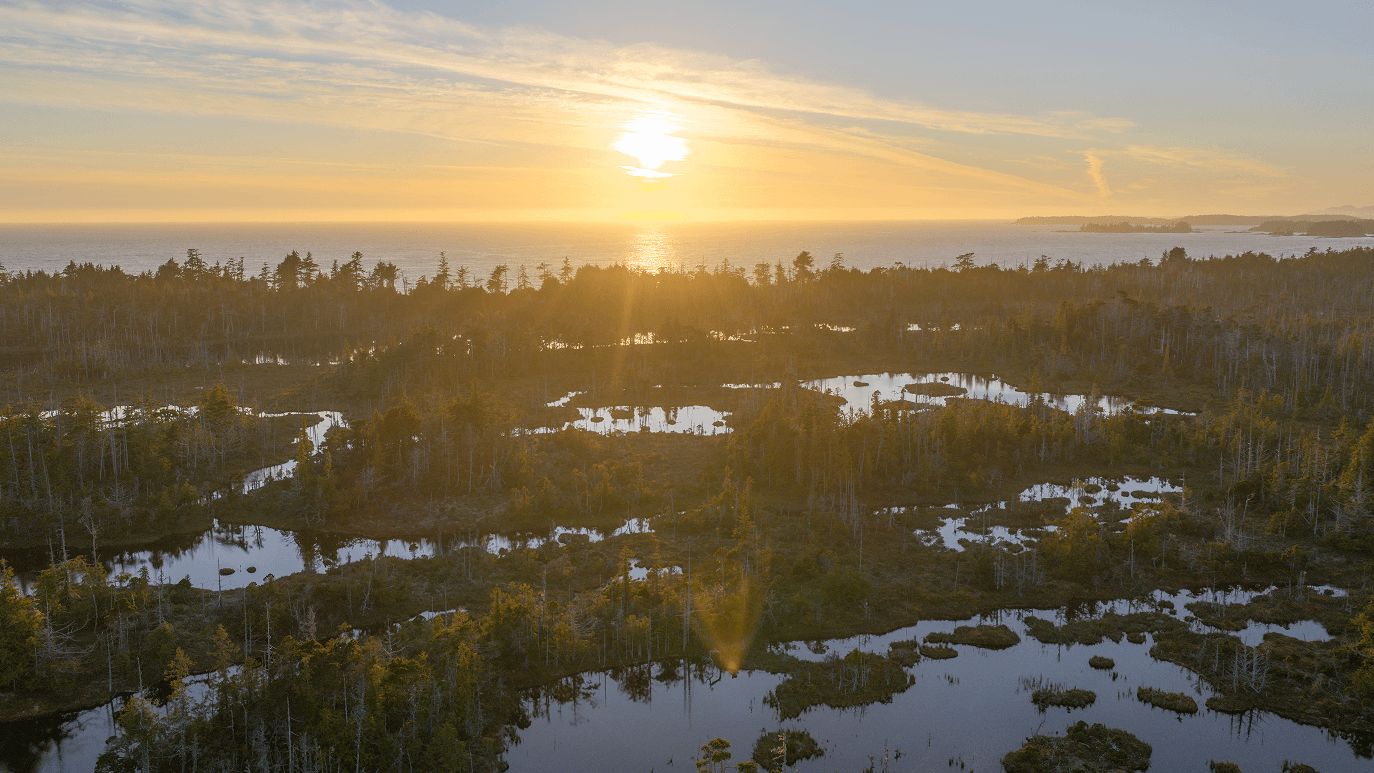
Water is an essential element for ecosystem functions in the temperate rainforest—not only in the intertidal zone, but also far inland.
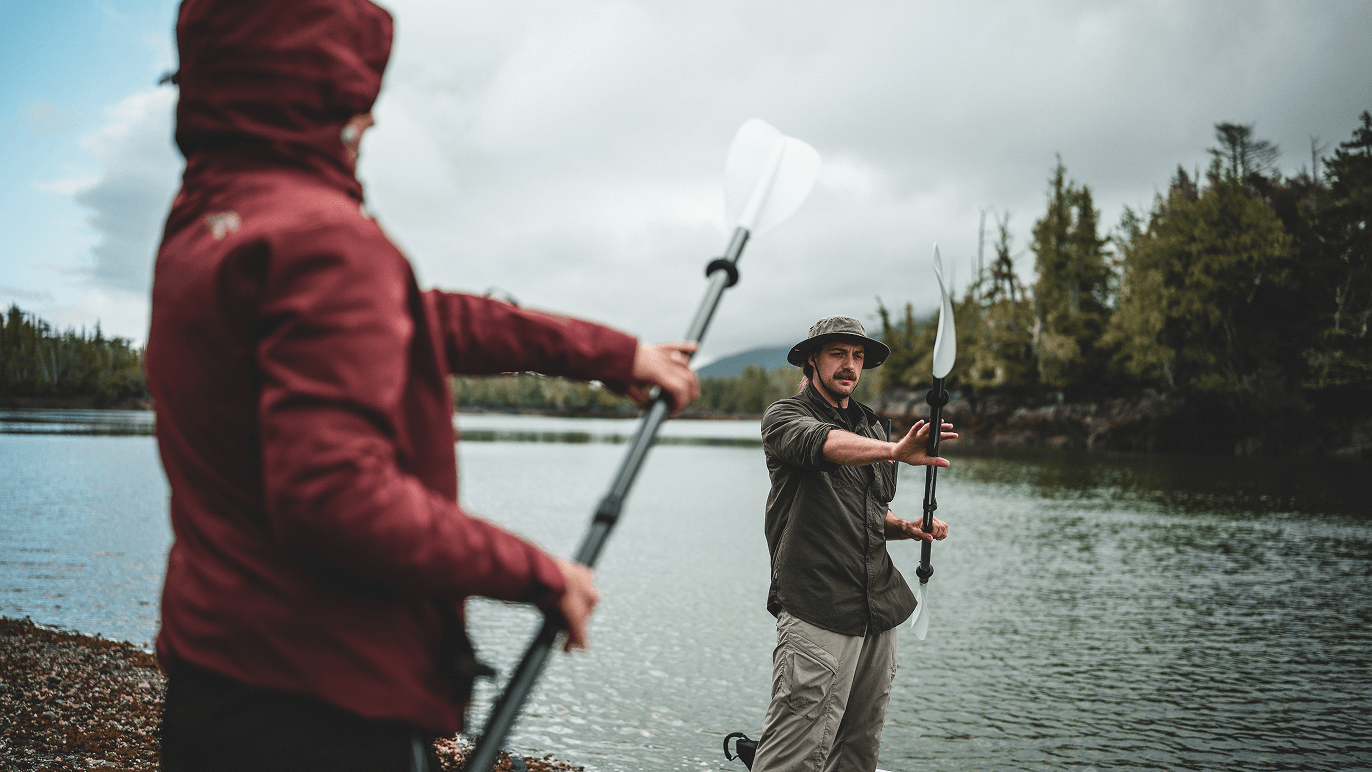
This is exactly where my coworkers were in their element: Sarah, Cody, and some of our partners, in particular, were a regular sight on the beach early in the morning.
A Diverse Team – Diverse Forest Animals
Our focus during expeditions remains on expanding our biodiversity monitoring efforts: Our science team has been tirelessly covering many kilometers (Chris Ketola is clearly at the top of the list—if he were given candy for every additional step, he’d probably reach 50,000 steps a day) and has been analyzing and repositioning numerous wildlife cameras.
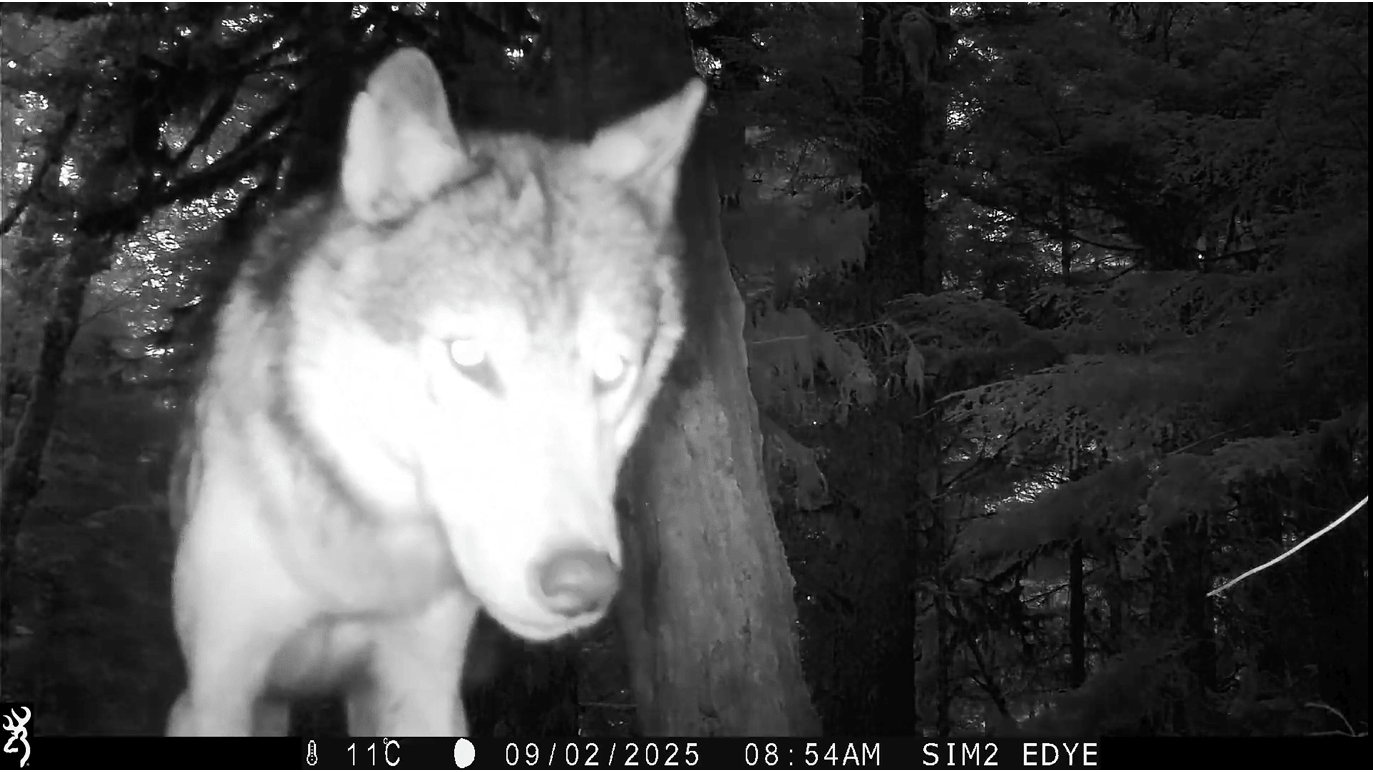
The footage shows a fascinating, undisturbed wildlife scene from our partner CAUDALIE’s nature reserve. The majestic coastal wolves are regularly “captured” on camera.
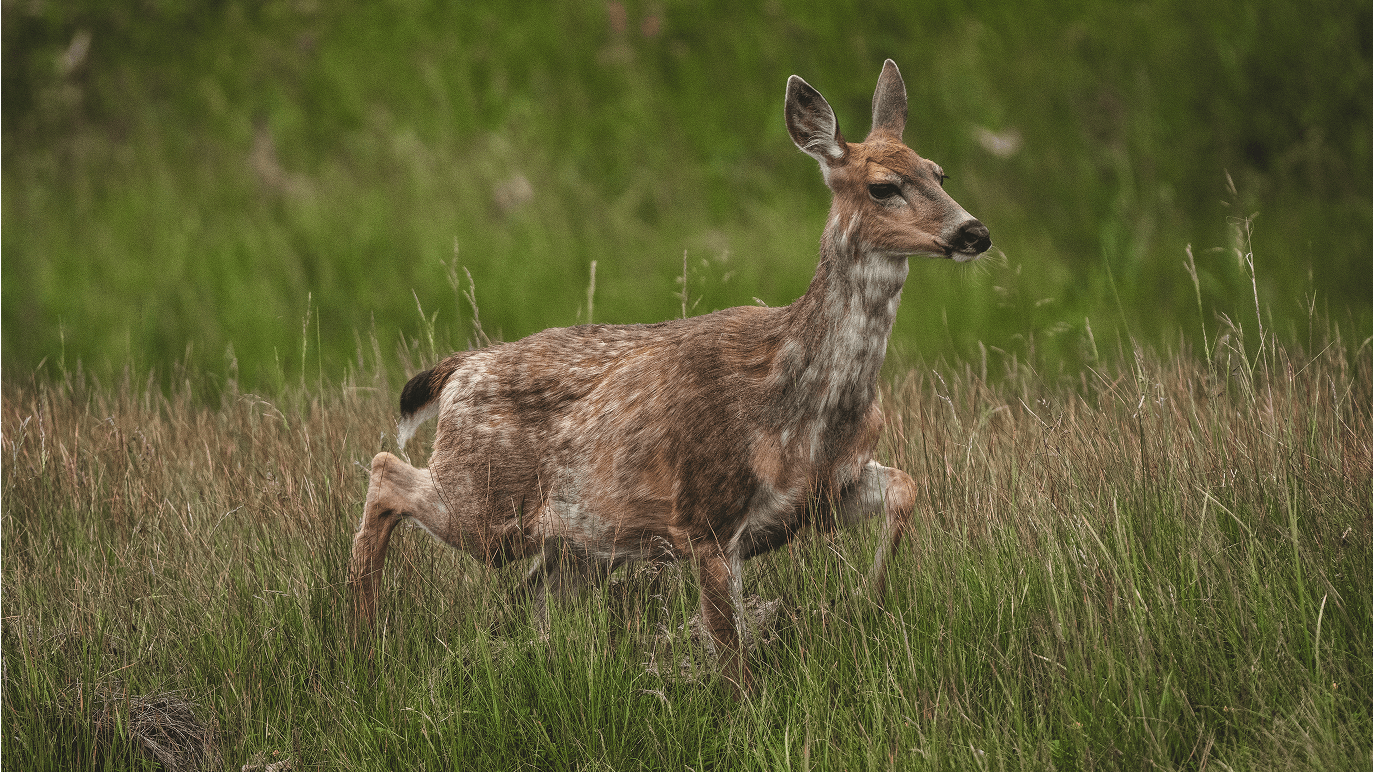
In addition to the camera traps, we were also very fortunate to see many of the reserve’s inhabitants in person, such as white-tailed deer ...
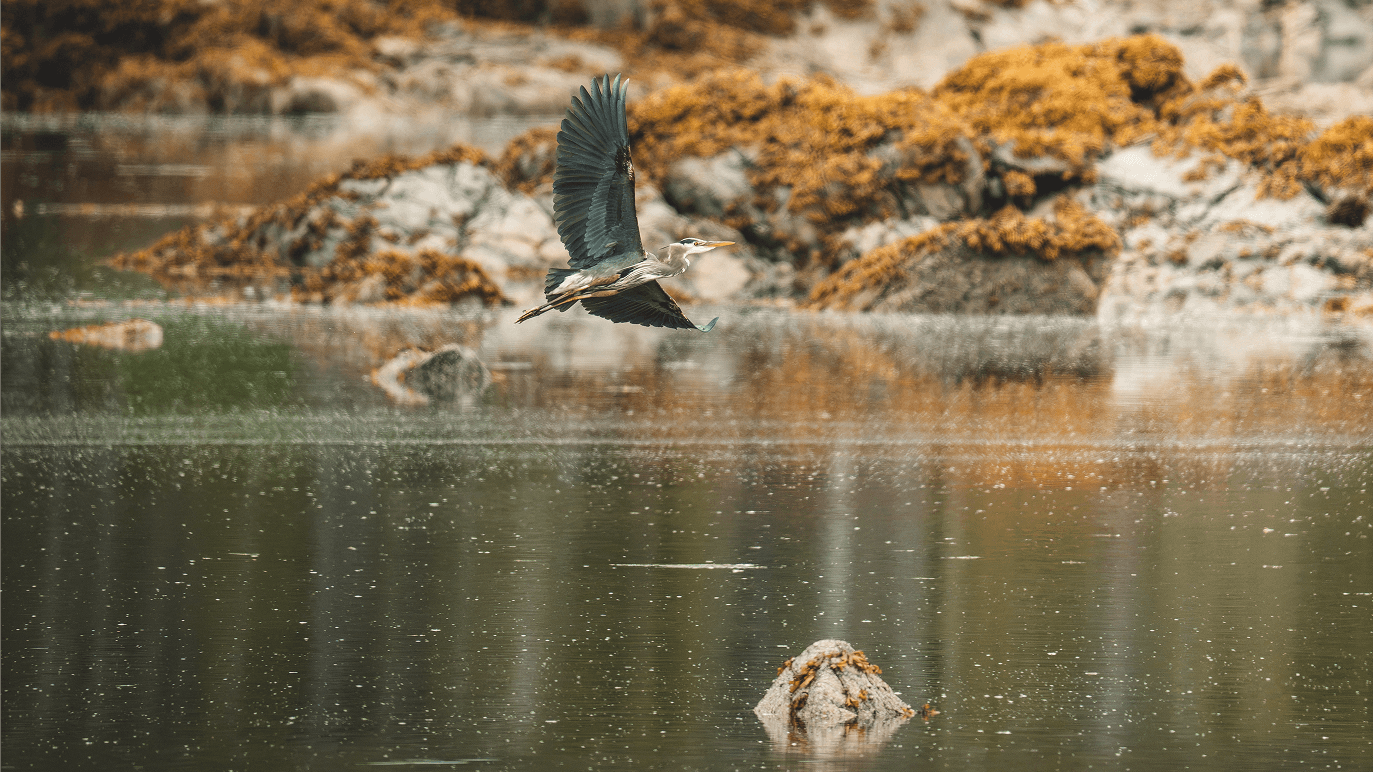
elegant Canadian herons ...
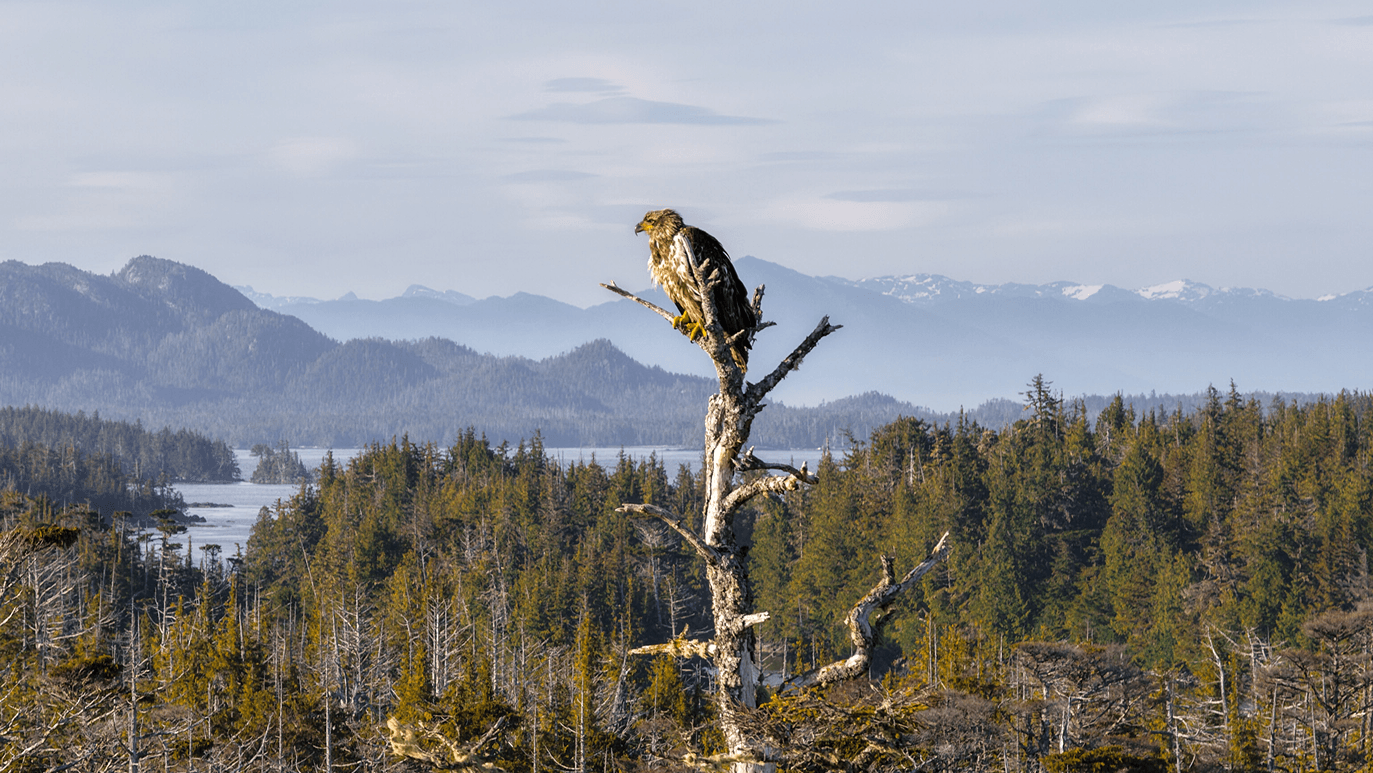
or majestic bald eagles. Although the young birds do not (yet) have their distinctive white plumage, their appearance is still impressive!
A true first …
This year, we were able to set up our first unmanned field station here on Porcher Island. The fully solar-powered station is our first practical experiment with a self-sustaining monitoring system in the heart of the protected area. It collects ecological data year-round without the need for a permanent human presence on site. This allows us to continuously observe changes in the ecosystem, evaluate them scientifically, and soon share our findings with you in near real time. This is made possible by state-of-the-art technology: A solar array powers the system. A weather station continuously measures climate data, audio recorders capture the soundscape of the forest, and a hydrophone records the underwater acoustic world—from whale songs to other underwater sounds. All data from the “ wilderness ” is transmitted via a Starlink system and analyzed using AI. This first Unmanned Field Station demonstrates how cutting-edge technology and consistent wilderness conservation can be combined to collect valuable scientific data even in the most remote regions of our protected areas. What did it take to make this happen? Passion, expertise, and many hours of preparation, tinkering, and on-site installation work by Tom (Land Digitalization). And, of course, funding: The station is part of a long-term monitoring project funded by the Audi Environmental Foundation.
And on to even greater heights!
In addition, this year we ventured into the vertical dimension of the forest for the first time in Canada: Together with professional tree climbers Sophie and Gabriel, we are testing various methods of tree canopy monitoring at heights of over 25 meters—a place where a large portion of biodiversity thrives yet remains surprisingly under-researched. We want to determine which methods are feasible and practical under the given conditions so that we can incorporate them into our long-term monitoring strategy in Canada.
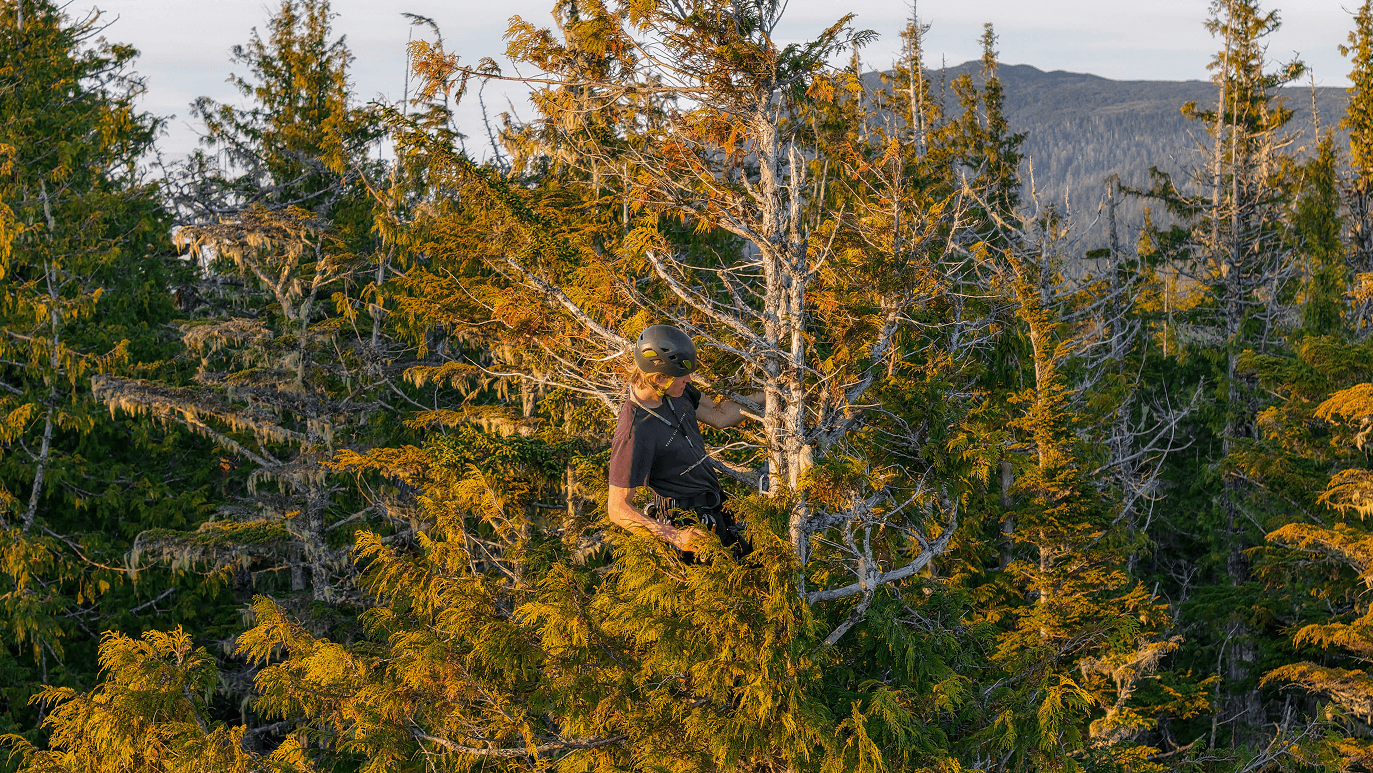
For us personally, the climb was also an unforgettable experience: From a height of over 25 meters, we were treated to completely new views of the rainforest—and with a little luck, we were even able to spot whales passing by off the coast. It was a breathtaking moment that once again demonstrated just how closely the forest and the sea are connected.
Strong ties with the local community
We were able to make progress on two other important issues during the expedition’s outbound and return trips. Part of our team met again with the Homalco First Nation to further expand our long-term collaboration. The focus was on the mutual exchange of knowledge and on how we can work even more closely together in the future on joint environmental education projects and the protection of the wilderness . This dialogue is of central importance to us, as the knowledge of the First Nations —passed down through generations—complements scientific findings in a unique way.
We also used the trip to conduct several Rapid Land Assessments. During these assessments, our team evaluates potential protected areas directly on site: It examines the ecological condition of the areas, documents their conservation value, and holds discussions with private landowners who may be interested in selling their land to Wilderness International. These visits often represent the first step toward permanently protecting valuable wilderness areas.
Photos that document our work are essential.
As you can imagine, we’ve once again produced a wealth of environmental education content in the forest and on the moor so that we can continue to provide our donors with new, exciting insights and facts about the wilderness and our work. That’s why our photographers, drone pilots, and videographers— Mattis Weber and Sebastian “Basti” Unger— are essential members of this expedition!
One of the highlights for us this year was being joined by Pro7 reporter Imke de Vries, who will soon be releasing a multi-part series on our work. Stay tuned. In addition, after a day full of adventures, we’ll be recording the newly launched podcast“Wildbaden—The Expedition Podcast” here with our guests in the evenings.
Reporter Imke De Vries takes a close look at our work and becomes a true member of the team. Together with Chris Ketola (Head Field Researcher) andClaire (Team Communications), she goes on a two-day tour of one of our other sites, where she actively helps set up wildlife cameras.
The Hidden Treasure of the Moors
While these landscapes appear almost minimalist from the air, their true ecological wealth lies meters deep beneath the thick layer of peat, serving as a gigantic carbon sink. The bogs of Porcher Island— living archives of our climate history— are, to me, among the most impressive places of all. Hidden beneath every step are millennia of natural history and enormous quantities of sequestered carbon.
Peatlands store more carbon than almost any other ecosystem on Earth, regulate the water cycle in conjunction with adjacent forests, and are thus a quiet but indispensable ally for our global climate stability.
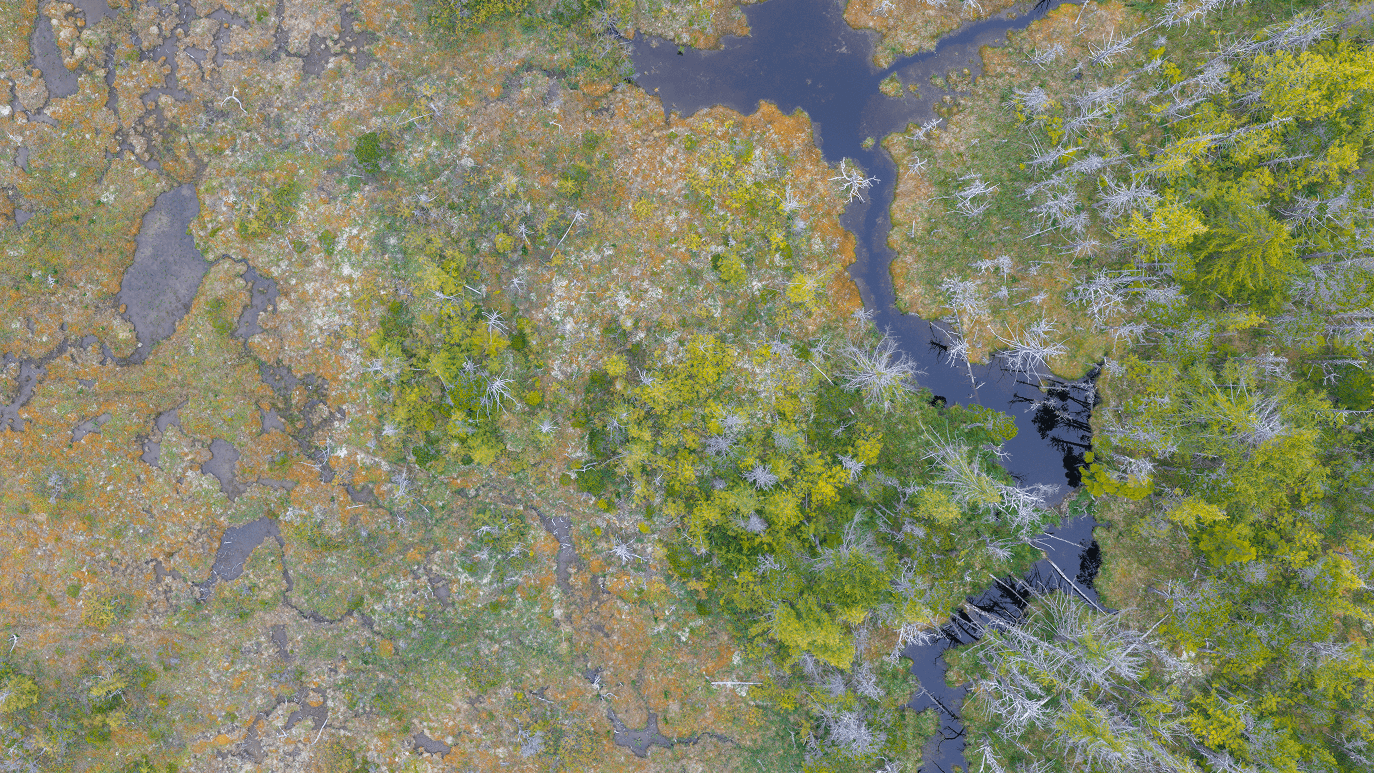
My personal highlight—aside from the forest and the bog themselves? Setting out with Kai and Cody. These two are walking encyclopedias, and every tour we take together feels like a master class in wilderness. Kai in particular —our founder, CEO, and forest scientist —consistently manages to convey the complex interconnections of the temperate rainforest in a way that’s easy to understand, inspiring, and full of infectious passion. Kai has this rare gift of telling the story of an entire ecosystem from an unassuming patch of moss, a fallen tree, or a handful of soil. I listen, fascinated, and am convinced every time: This time, it’ll all stick. That resolve usually lasts until the next bend in the forest—because that’s where the next incredible story is already waiting. An hour later, Kai is already opening the next chapter from the entire scientific library he carries with him. I’ve come to accept by now that his knowledge advantage isn’t a gap to be bridged—but a life’s work.
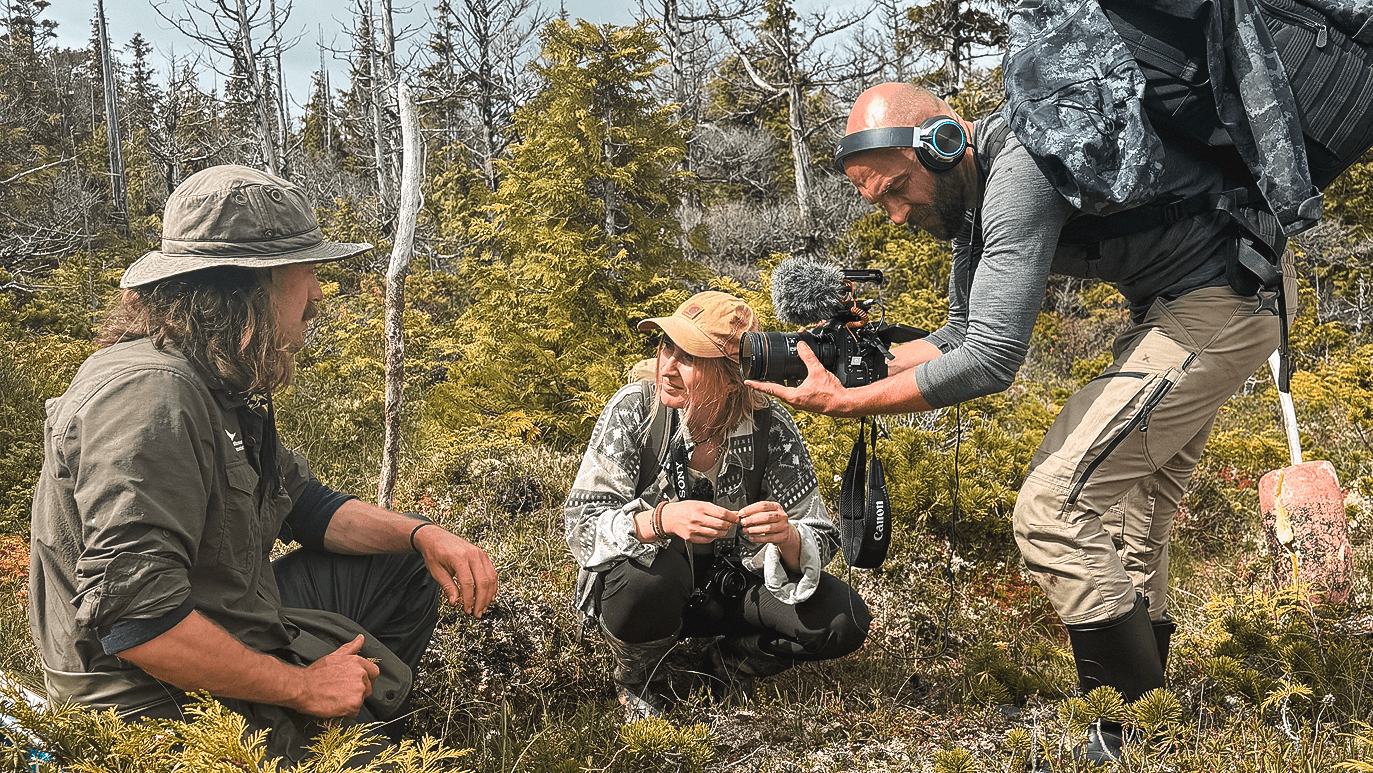
Together with Cody, we explore the Moore Porcher Islands. Reporter Imke is also fascinated by these giant carbon reservoirs!
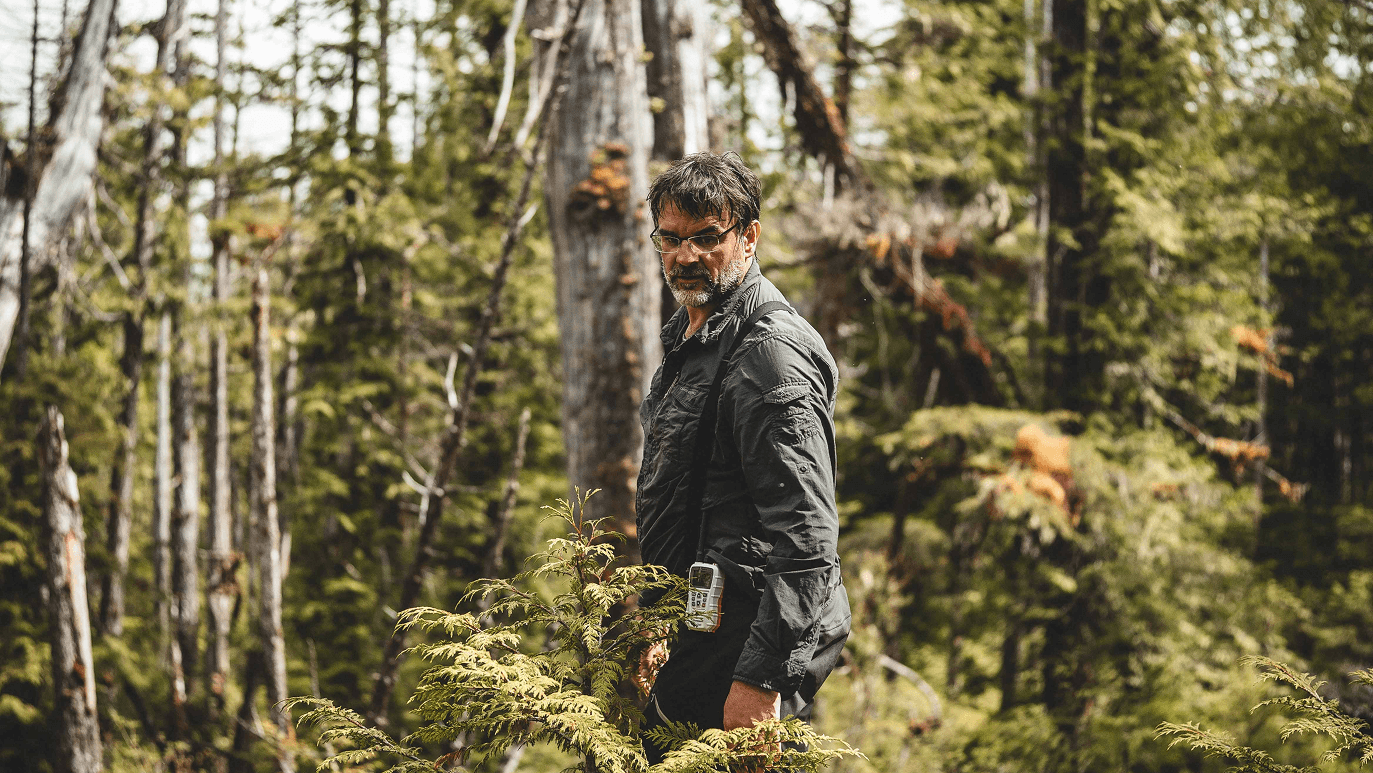
From the moor, we continue into the forest with Kai—the walking encyclopedia of the wilderness.
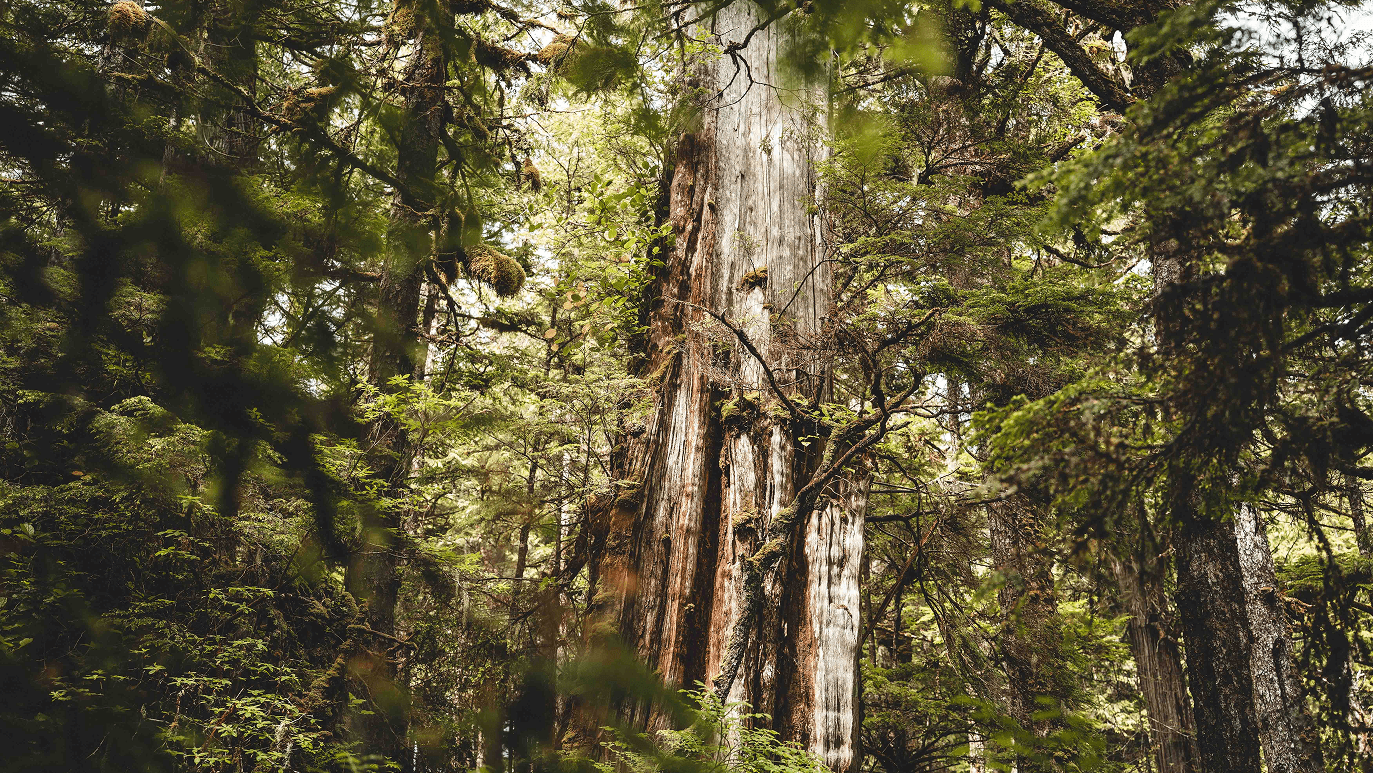
The stories that these centuries-old giant trees can tell often go beyond our imagination.
Experience, learn, protect.
It is precisely these intensive learning sessions that lay the foundation for making our work transparent and tangible to our partners—and for explaining why their commitment is so incredibly important. Joining us on our journey is Manja Hoffner from the “Healthy Earth – Healthy People” Foundation, which was founded by Eckart von Hirschhausen. The foundation is dedicated to inspiring people from the worlds of politics, business, and society to protect the health of our planet and ensure a livable future for coming generations. Together with her and participants from long-standing partners such as GERL., Bühnenkunst, MyMerch, and HomeToGo, we spend days on this expedition roaming through the dense undergrowth, deciphering the fascinating interactions of this unique ecosystem, and eventually even diving into the ice-cold Pacific Ocean. At least Claudi and Dennis are the adventurers of the group—I would definitely describe them, among other things, as our cold-water special forces. Amid vast kelp forests, they explore a hidden underwater world that is not only breathtakingly beautiful but also ranks among the largest natural CO₂ sinks on our planet.
This forest is not some distant place. It is part of the web that sustains us all. And once you’ve been there, you realize that protecting nature isn’t something abstract—it’s actually quite personal.
Manja Hoffner
Healthy Soil – Healthy People, Head of Communications and Media
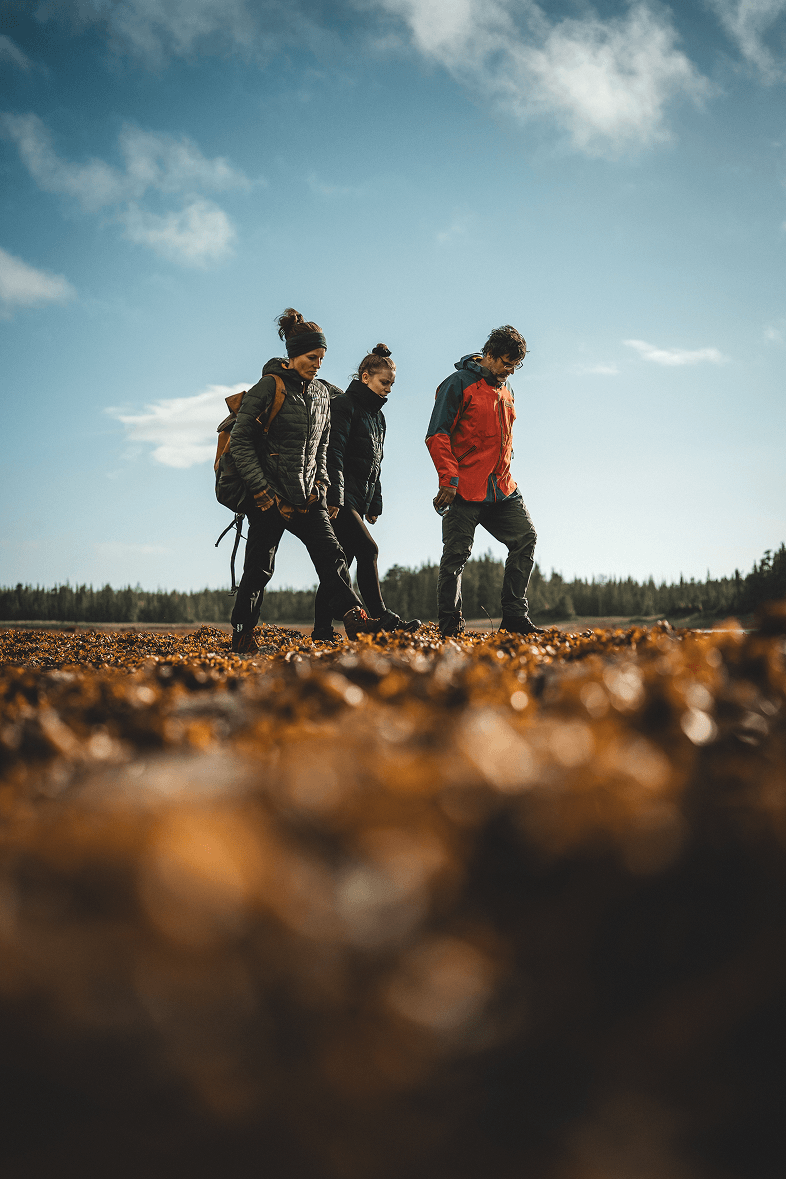
Our science team has once again managed to spark “that” sparkle in all of our eyes, because nothing can replace the experience of being there yourself. Anyone who experiences the Misty Forest with all their senses, finds themselves surrounded by ancient trees, or wanders through millennia-old bogs—or sinks deep (!) into them—immediately feels and understands why this wilderness is so worthy of protection. Out of curiosity, the desire to contribute, and this experience, a genuine, long-term partnership (hopefully 😉) emerges—and that’s exactly why our ambassadors and partners can convey the importance of these forests in an authentic, well-informed, and transparent way.
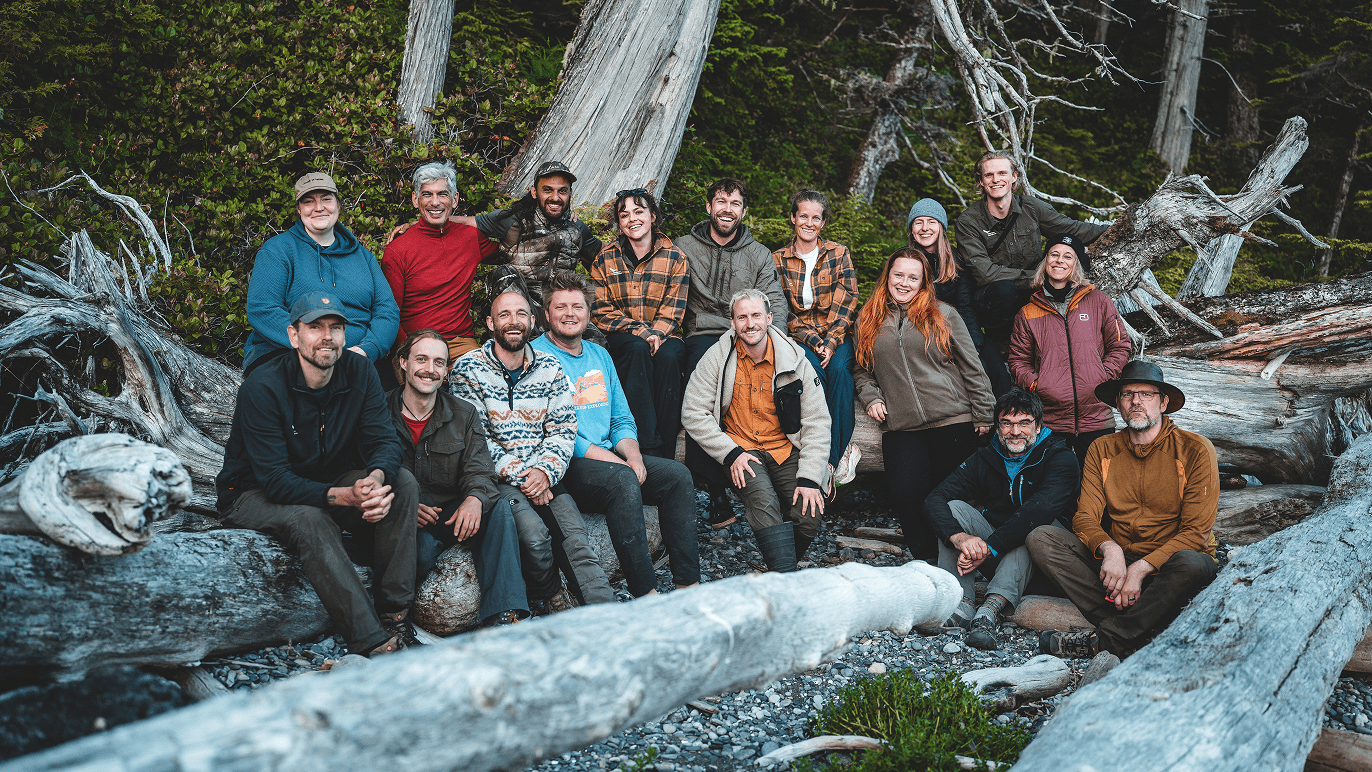
Experiencing, asking questions, understanding connections, and engaging with the wilderness with all your senses—that’s exactly what turns people into passionate ambassadors and makes Wilderness International, in a way, a part of their own story.
Our ambassadors are going all out for the forests!
Yvonne Pferrer and Jeremy Grube have been volunteering with Wilderness International since 2024. They’ve even visited our conservation area in Peru on their own. This year, as part of their tour of Canada, they spent a few days with us, and together with their community, they’ve now protected over 50,000 square meters of forest in Peru and Canada. You guys rock!
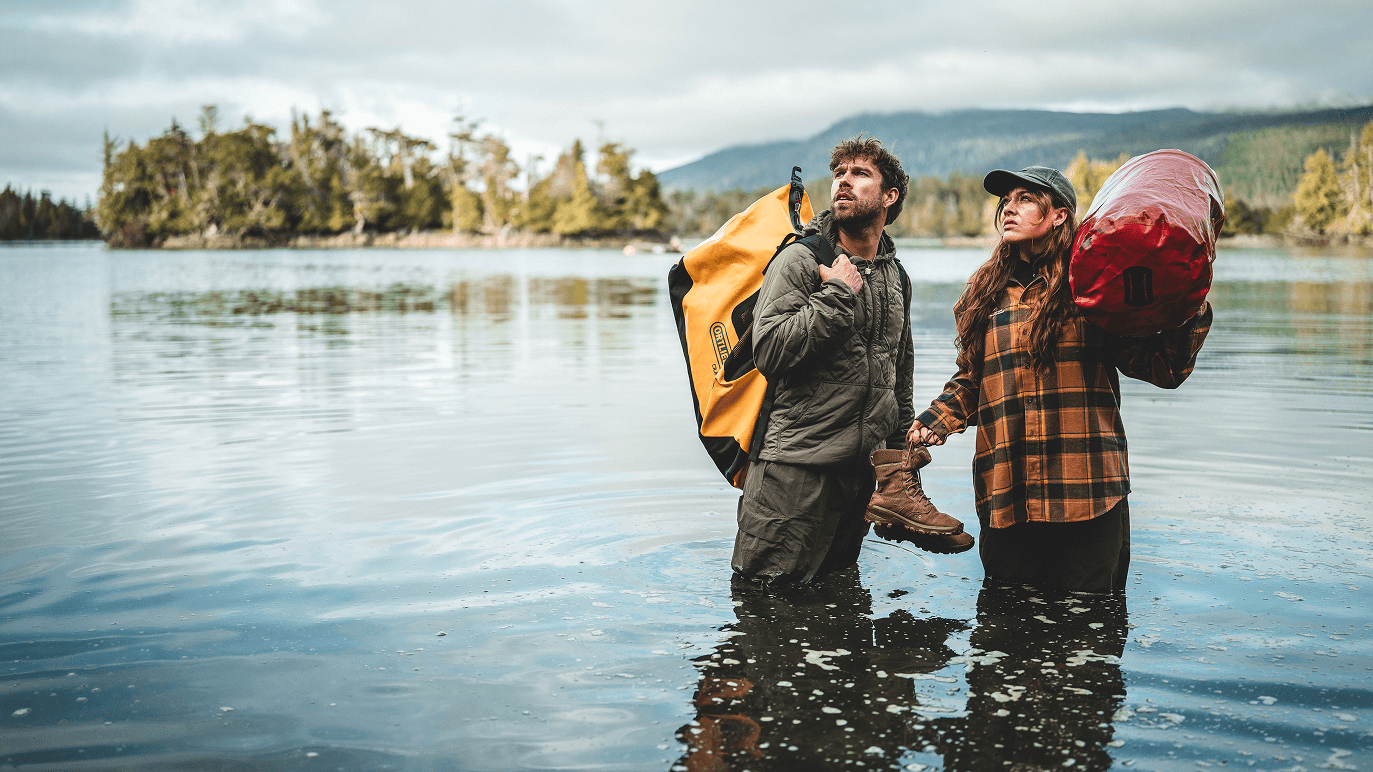
Yvonne and Jeremy in their element—marveling at nature and wildlife! Surrounded by unspoiled nature and encountering bald eagles and other wildlife, Yvonne and Jeremy are constantly reminded of how important it is to stay young at heart and to rediscover the joy and beauty of life’s little things.
Since that expedition, Cindy has also been part of the Wilderness International family. On her Instagram channel, she shows how she’s renovating her house, shares her hands-on knowledge, and critically examines gender roles—in the trades and beyond. Together with her community, she has been advocating for the protection of Canada’s temperate rainforest since July. With every order placed in her online shop, the “Weil Frau Kan(n)ada Wald” automatically grows larger—and is thus protected forever! Because women can.
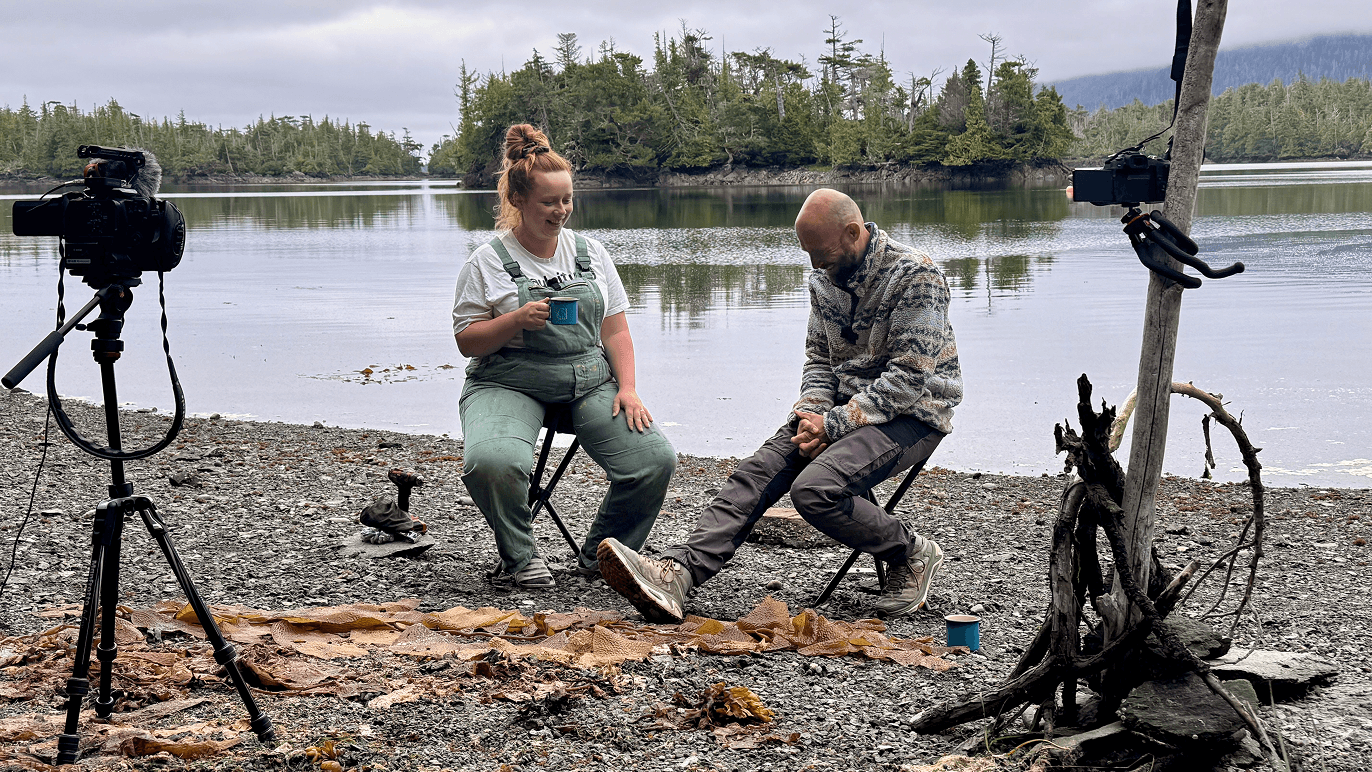
Sound off! Cindy is a guest on Basti’s Wilderness International Expeditions podcast (releasing in late 2026). When the two of them met, their sense of humor clicked in a way I’ve rarely seen before—I almost spilled my coffee laughing … I’d like to take this opportunity to say a quick thank you for the sore abs—and also for the more profound conversations.
Sasan Amir was also joining us for the first time to volunteer for our foundation and capture the wildlife of the Misty Forest—with endless patience and a keen sense for the right moment. From sea otters to bald eagles—his photos tell stories that inspire people to protect this unique landscape. But Sasan doesn’t just document the “ wilderness ”—he also helps ensure its long-term preservation. Together with his vast community , he’s actively protecting the temperate rainforest, demonstrating that inspiring images and concrete conservation efforts can go hand in hand. Thank you for that.
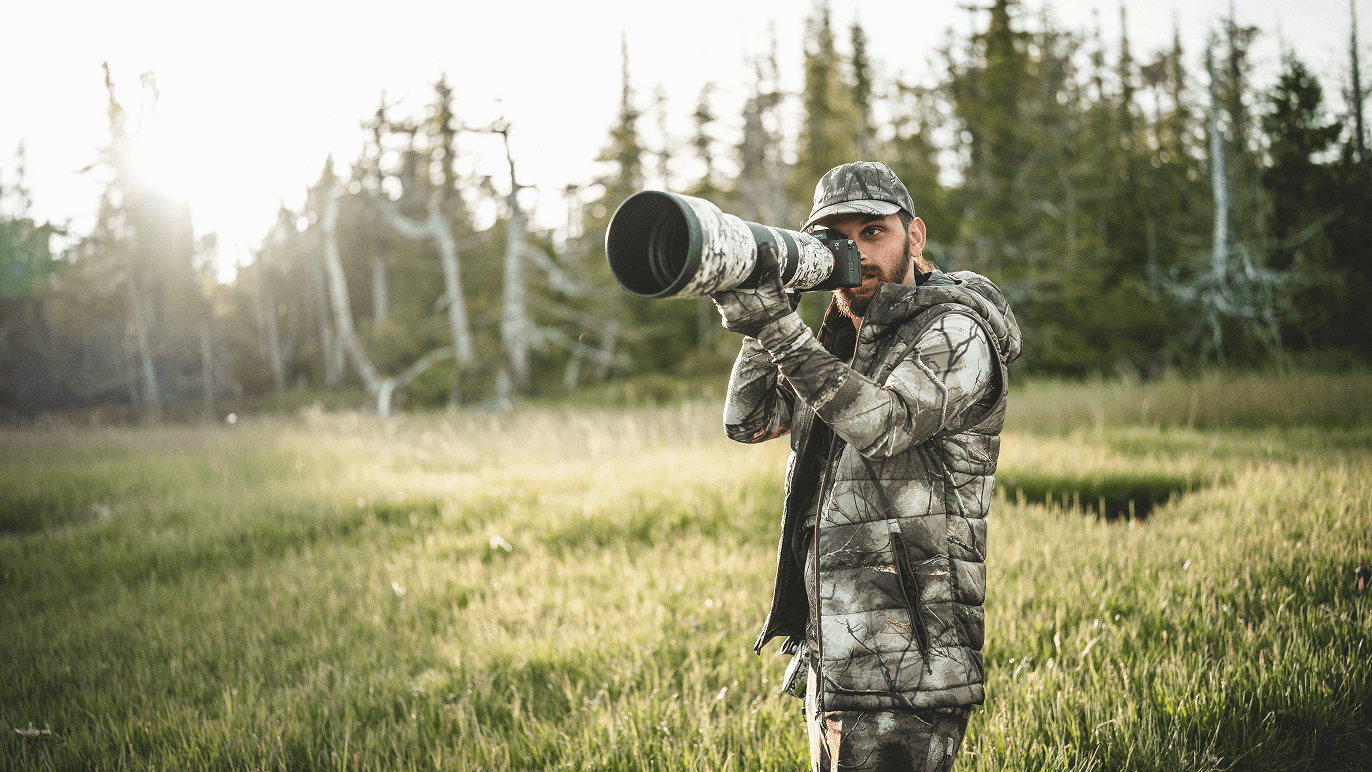
When suddenly no one knows where Sasan is, it’s usually a good sign: He’s sitting somewhere, perfectly camouflaged, waiting for the right moment to snap his next wildlife shot. It was great having you around. And a hell of a lot of fun, too.
Last but not least, there are two more points I’d like to make—especially because I hope that many people in my professional network will read this report as well.
Why do we protect forests in Canada—and not in Germany? I get asked this question about 10 times a week. So here’s the answer again: It’s as pragmatic as it is scientifically clear-cut: In Germany, there are hardly any true primeval forests left, and no contiguous wilderness areas of globally significant size. Our forests have been almost entirely shaped by centuries of forestry management. In Canada—just as in Peru—on the other hand, there are still intact primary forests and millennia-old ecosystems with a biodiversity that is unique worldwide. Their loss would not only be an ecological tragedy but would also have global consequences: Their destruction would result in the loss of irreplaceable habitats, the release of enormous amounts of sequestered carbon, and the irreversible disappearance of key ecosystem services. One particularly fascinating—and often underestimated—aspect is this: intact primary and mixed forests possess exceptionally high biological diversity and natural moisture content. As a result, they regulate their own microclimate and, under natural conditions, are significantly more resilient to large-scale wildfires than degraded or intensively managed forests. This is precisely why these remaining wilderness areas are among the most effective natural allies for preserving global ecosystem services, biodiversity, and climate stability—provided we protect them permanently.
My second thought—or rather, my second wish—is once again directed explicitly at companies. The protection of biodiversity and the conservation of globally significant primary forests should not be relegated to the margins of a CSR report, but should be at the core of a sustainable corporate strategy. Biodiversity conservation is not a side issue of sustainability, but rather the foundation of stable supply chains, resilient business models, and long-term economic success. That is why I look forward to many more conversations—with and without campfires—about innovative, transparent, and measurable partnerships that create real impact—for the long-term protection of threatened habitats, the preservation of biodiversity, and the stabilization of our climate. Because, ultimately, it’s not just about preserving nature. It’s about preserving the foundations of life on which we all depend globally.
My request to you:
That’s why I’m looking forward to many more conversations—with and without a campfire—about innovative, transparent, and measurable partnerships that create real impact—for the long-term protection of threatened habitats, the preservation of biodiversity, and the stabilization of our climate. Because, ultimately, it’s not just about preserving nature. It’s about preserving the foundations of life on which we all depend globally.
After every expedition, I come back with a big grin on my face. Because the future of our world lies in the “ wilderness .” Thank you for joining me on this journey.
#WildernessInternational #ExpeditionCanada2026 #MistyForest #Biodiversity #SpeciesDiversity #ClimateStability #IntactHabitats #CorporateSustainability #EcosystemServices #PrimaryForests
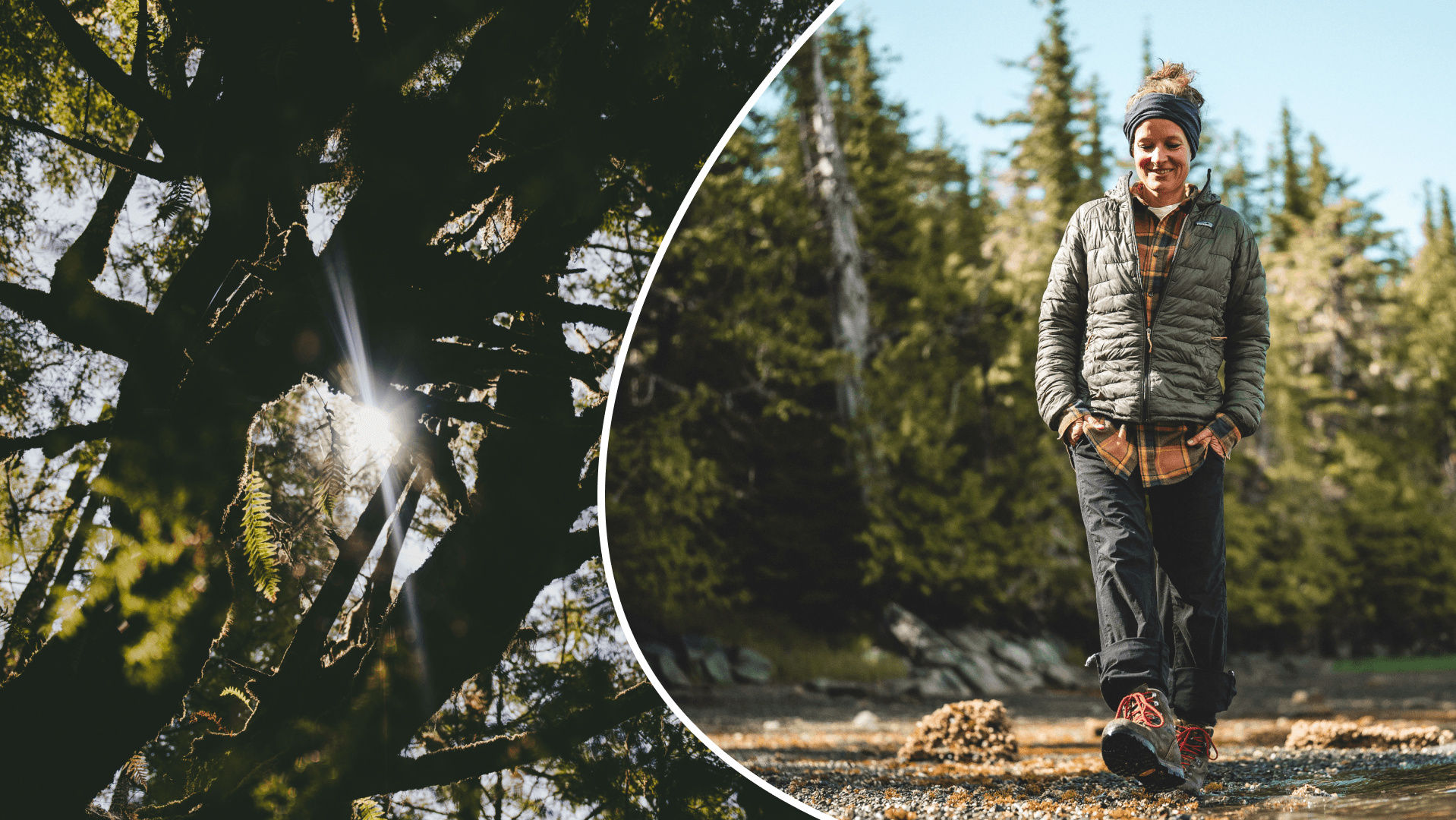

Head of Partnerships, Ambassadors & Special Projects
Towering trees, mountains and valleys shrouded in fog. Greenery as far as the eye can see—my love of travel and the urge wilderness be in the wilderness continue to shape who I am to this day. Through Wilderness International, I dedicate part of my time to preserving these places and protecting biodiversity.
I have spent the last 20+ years working in Marketing & Communications at Red Bull, Google and YouTube, managing large-scale projects and community events, creating campaigns and content, and initiating creator collaborations. I hope that through the foundation's work and effective partnerships, among other things, we will be able to preserve the last 2.8% of intact land habitats on our planet for our and future generations. They are essential as a global lever for CO2 sequestration and are simply beautiful.