
Peru Expedition 2026: Welcome to the Forest of Forests!
Imagine traveling to a place you’ve seen a thousand times – in photos, videos, and illustrations. You think you know what to expect. And then you arrive in the Peruvian rainforest and realize: You had no idea.
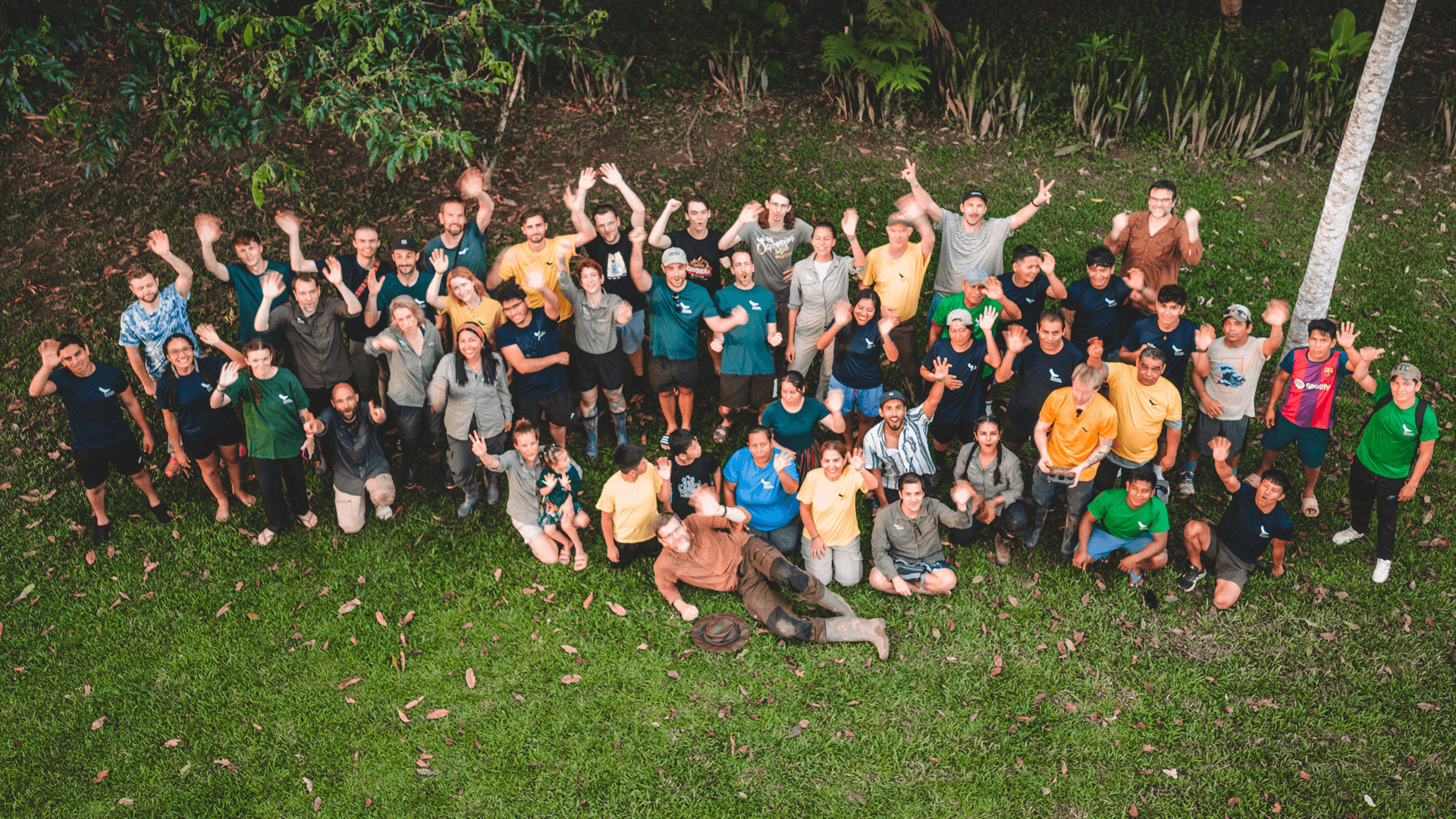
In April 2026, as part of the German foundation team, I had the opportunity to visit the Peruvian protected areas on an expedition for the first time – an experience that had a lasting impact.
My name is Josie. I’ve been with Wilderness International for a year now and am part of the Communications team. As the organization’s spokesperson – and a passionate oversharer – I’d like to share my most memorable expedition experiences with you this year through words and pictures.
I'm packing my suitcase and taking with me …
Whether I’m hiking in the mountains or paddling down the river Spree – my outdoor mantra is: Safety First. Always. That’s why, long before our trip to our conservation area on the Tambopata River, I made up my mind: I want to be fully prepared before the rainforest gets to challenge me.
My preparations therefore included, in particular but not exclusively:
- A first aid training course with our training partner EXTAC
- A detailed vaccination schedule and plenty of mosquito repellent
- Stabilization exercises for the ankle and knee
- And kilos of electrolytes.
Unfortunately, my evening Spanish vocabulary practice quickly gave way to lists of bird species. I may not (yet) know how to order at a restaurant in Spanish – but I can reliably tell a Crested Oropondola from a yellow-rumped cassique. By the way, I was still able to have great conversations with my wonderful colleagues there: in English and using extraordinary bird calls. More on that later.
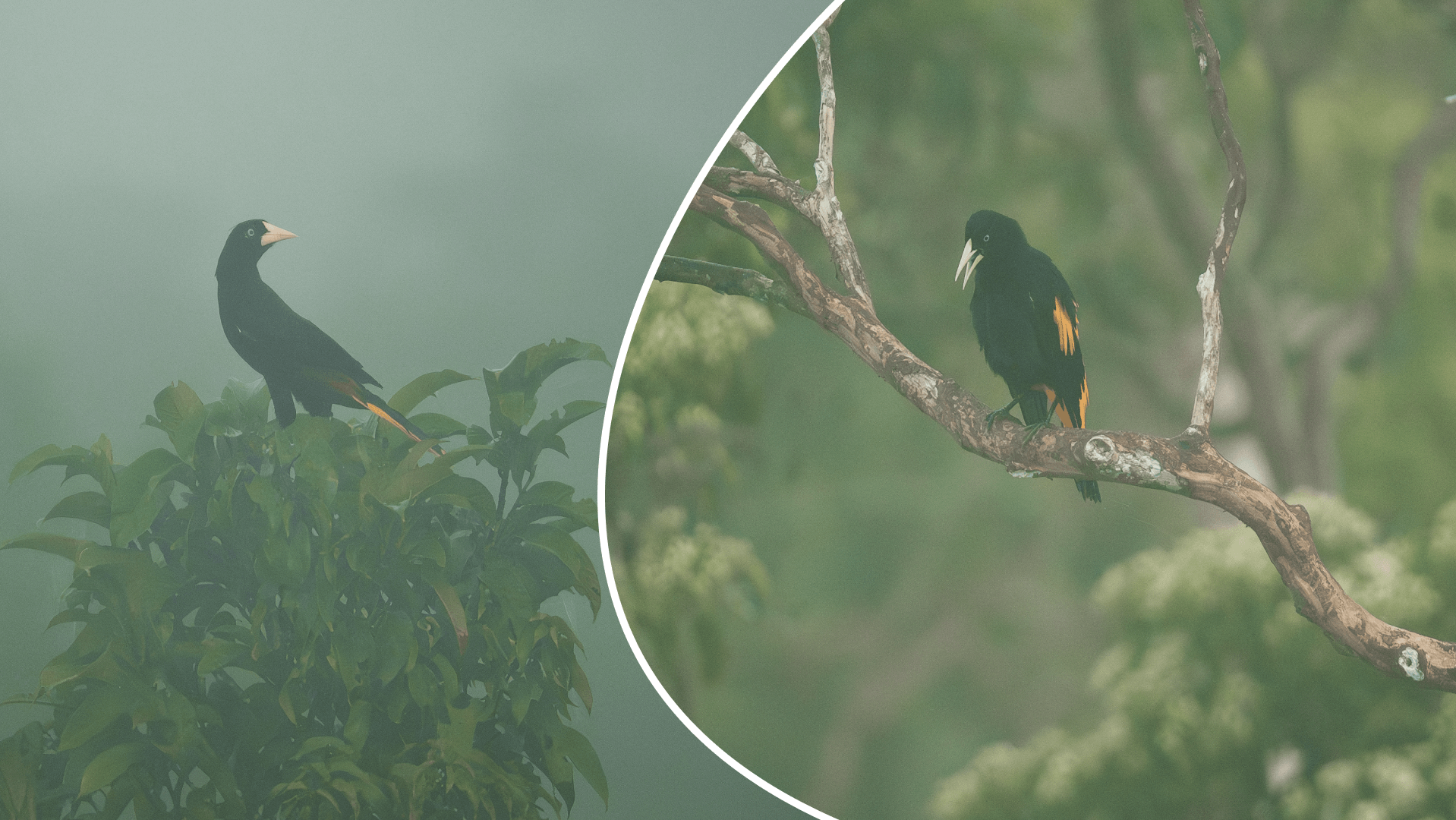
They aren't easy to tell apart: on the left is a crow-billed bird, and on the right is a yellow-rumped cassock.
The journey begins: On to the forest!
On April 19, 2026 – a day that will remain etched deep in my transgenerational memory – my three colleagues Erik, Marten, Tobi, and I (all of us expedition newbies) land in a different world. Over the past 30 hours, we have crossed seven time zones and three climate zones. At the airport in Puerto Maldonado, the sun feels different than in Berlin. We are near the equator. The runways are surrounded by green instead of gray. And it becomes clear to us: We’re going in.
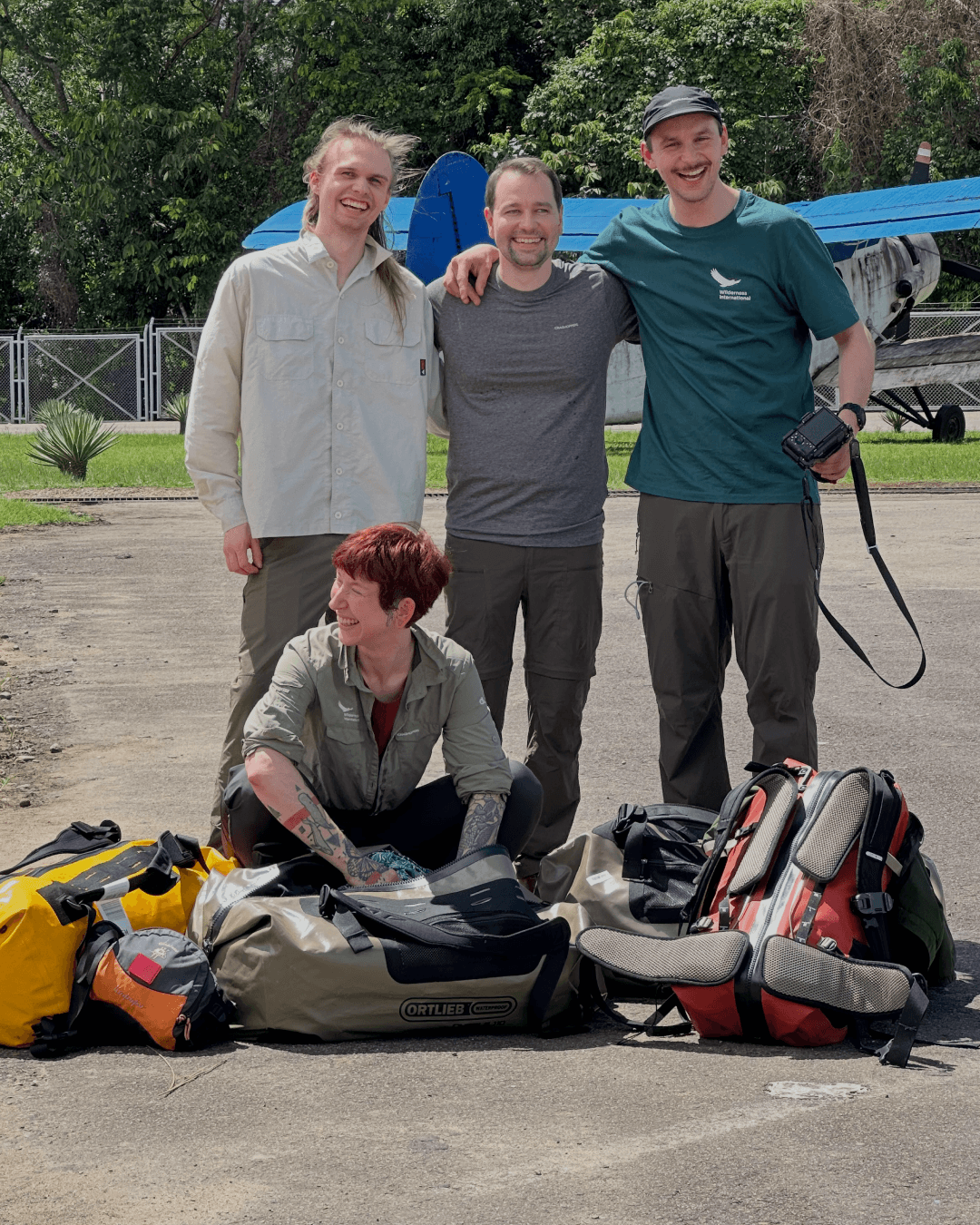
Once we’ve landed in Puerto Maldonado, the journey to our remote conservation areas is far from over.
We’re still three hours away from the Secret Forest, where most of the expedition team is already waiting for us. Not even jet lag can dampen our excitement now. My heart beat's racing – and when our Peruvian colleagues Xiomara, Flor, Chris Kirkby, Thalia, and the rest of the team finally hug us in person at the boat dock, I know: We’ve arrived, even though we’re not even there yet.
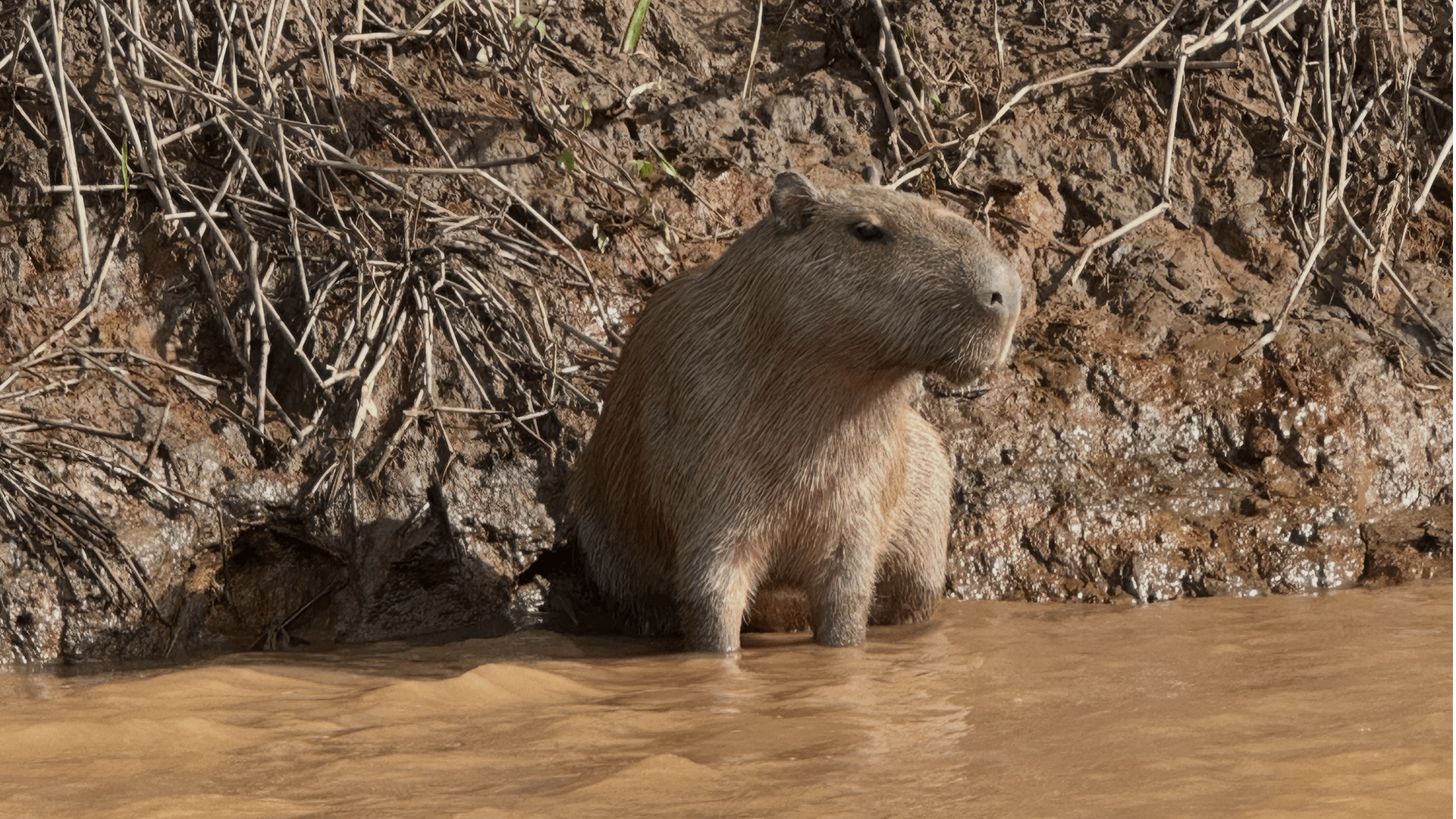
Our first encounter with wildlife: a capybara greeted us on the Tambopata.
Understanding the Unbelievable
If I had to sum up the next few hours, there would be only one word: mind-blowing. The size of the trees, the ever-present sounds of the jungle, the intense scent of the thicket, and the faces of people I usually only see on screen send my synapses into a state of ecstatic frenzy. Error 404: Comprehension not found.
It’s therefore no surprise that my colleagues had to hold my hand several times during our first forest walk with Kai, our forest guide: my first encounters with howler monkeys, tamarins, caracaras, and a laughing falcon in the very heart of the jungle simply overwhelmed me. After a convivial and exceptionally delicious dinner (love and thanks go out to Bladi—the best camp cook in the universe!), I therefore fall into my jungle bed in the 8-person dorm for the first time, tired but also overjoyed.
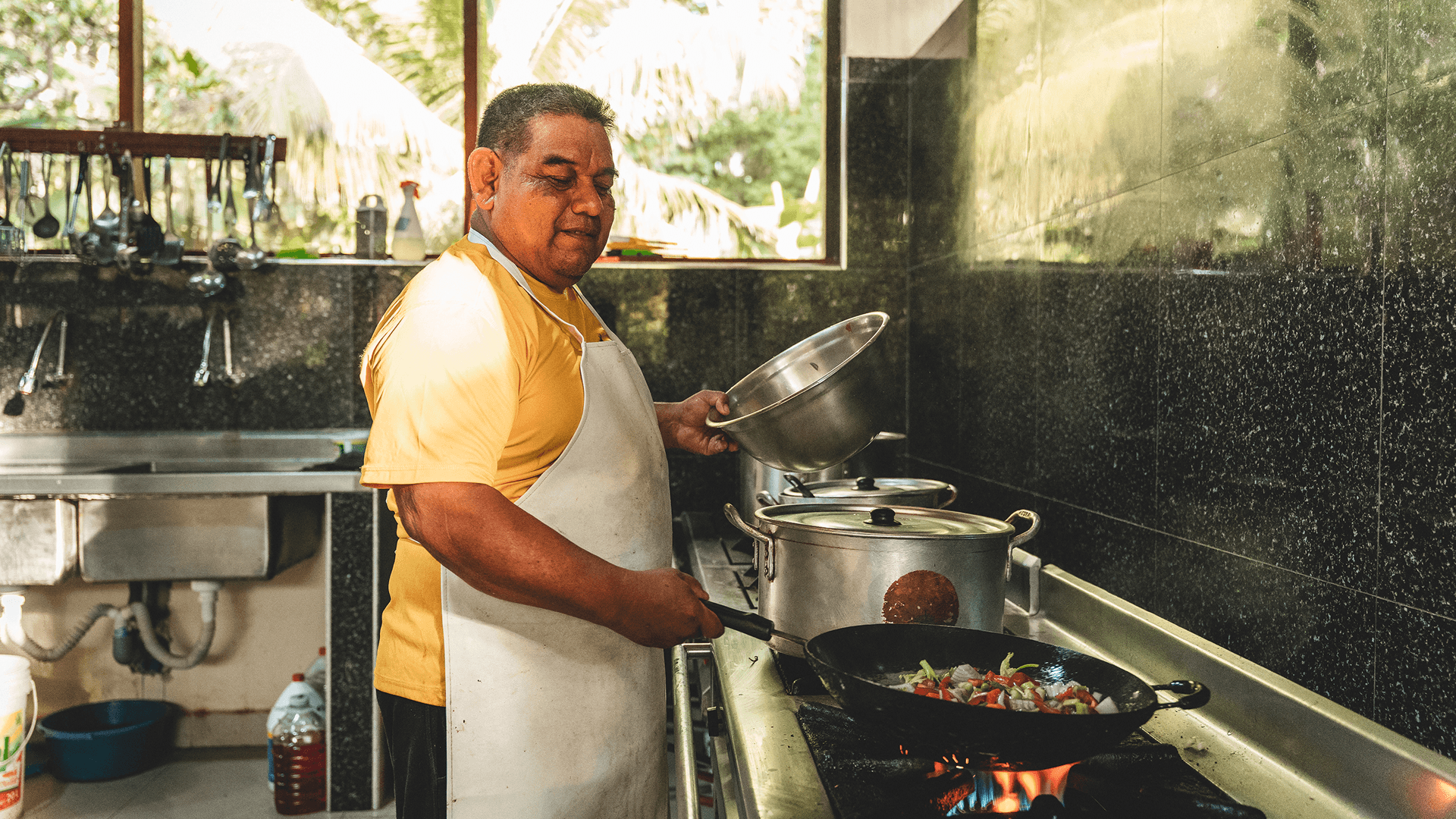
This is where the magic happens: Our team chef, Bladi, personally cooks up even the most unusual (vegan) special requests for us at camp!
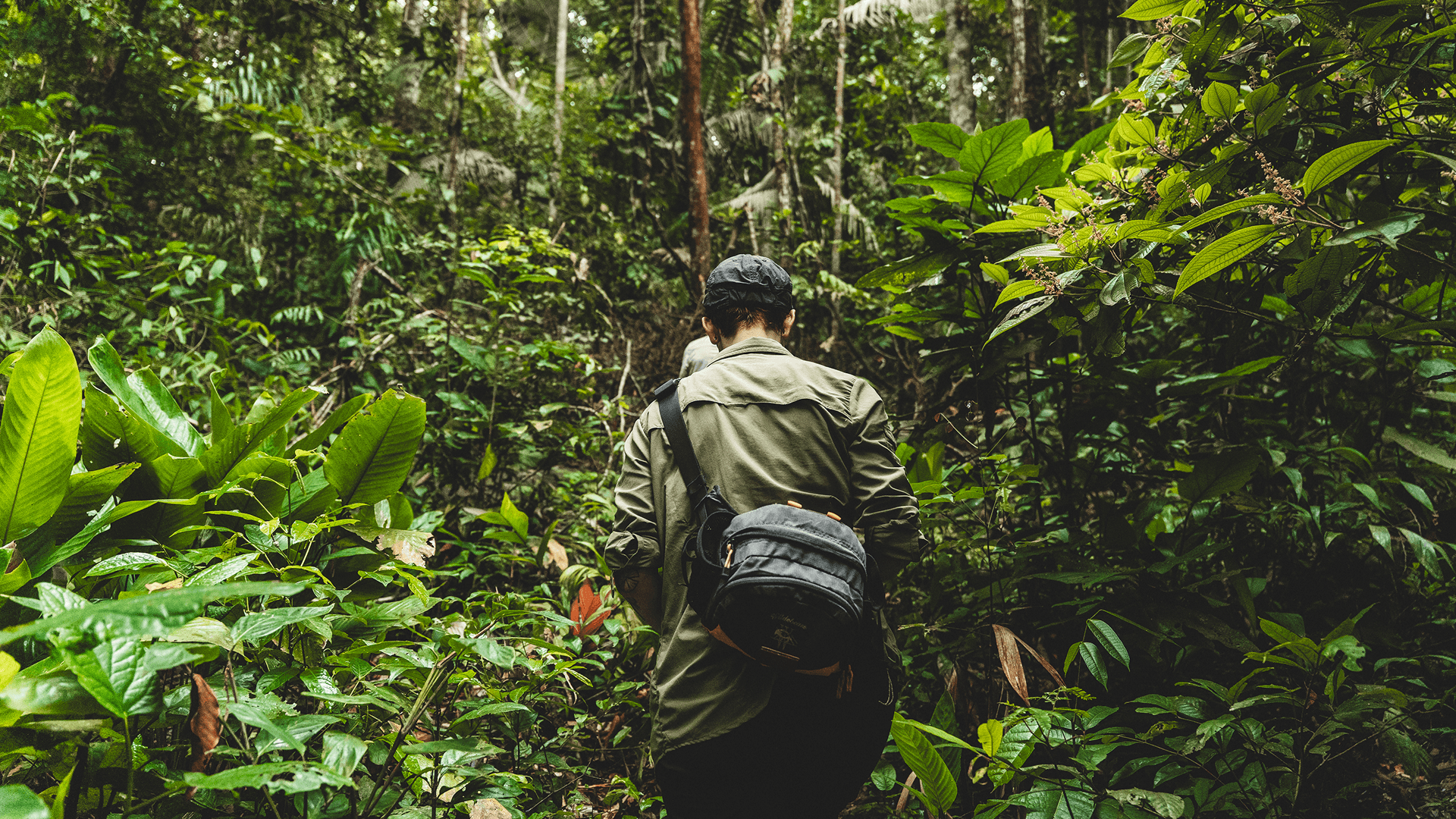
The old-growth forest spreads out like a green wall in front of us—larger and more majestic than I could ever have imagined.
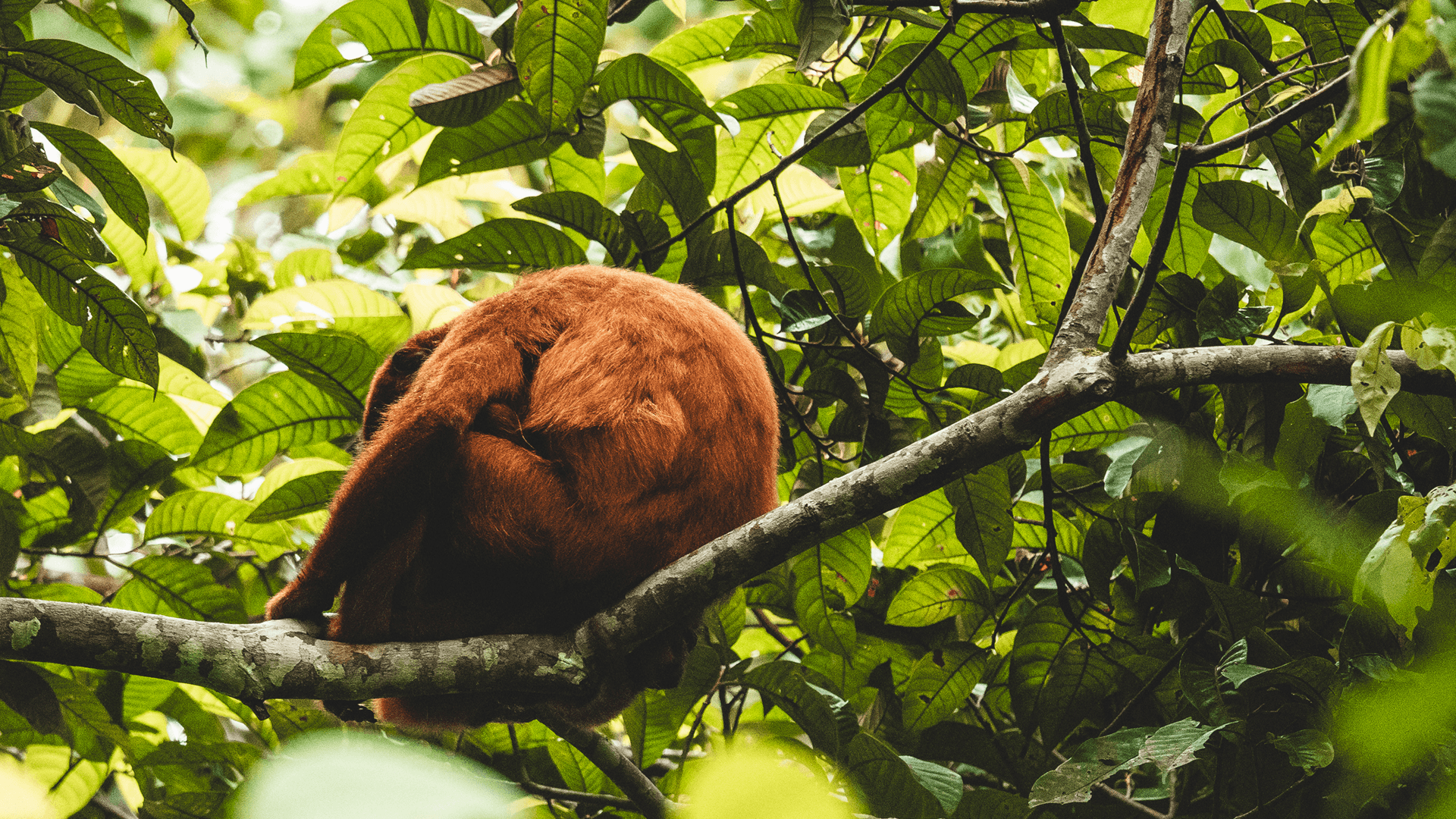
We soon spot howler monkeys taking their midday nap.
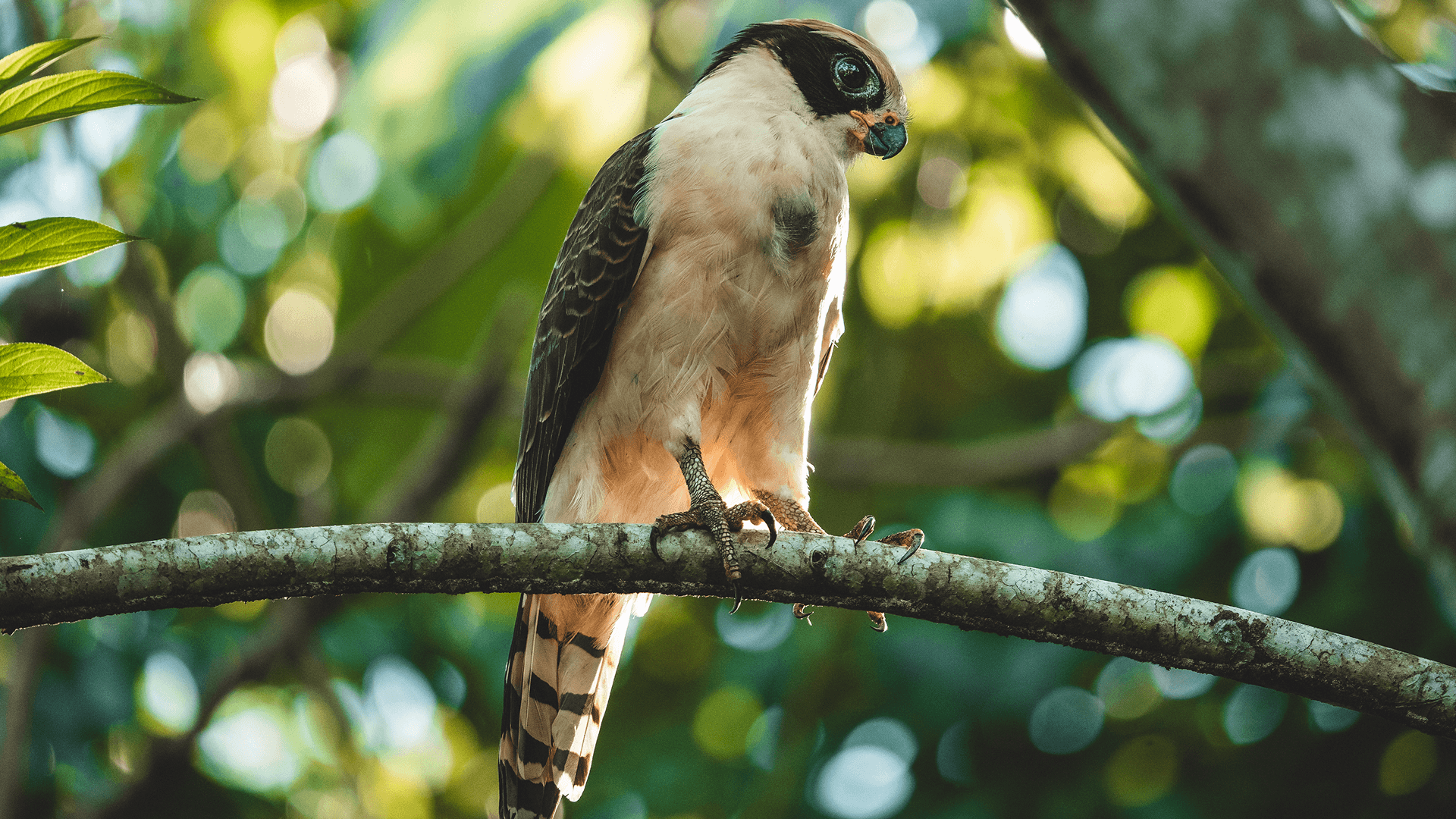
Our entry into the forest does not go unnoticed: a merlin eyes us curiously.
From Colleagues to Connections
“Toot-toot-tooot. Toot-toot-tooot”: That’s more or less what it sounds like to be woken up by a Tinamou’s chirping. From now on, that’s how every day begins for me at the Secret Forest. The initial breathlessness of arrival has subsided, the Peruvian coffee is kicking in—and we get to work. But what exactly is there to do?
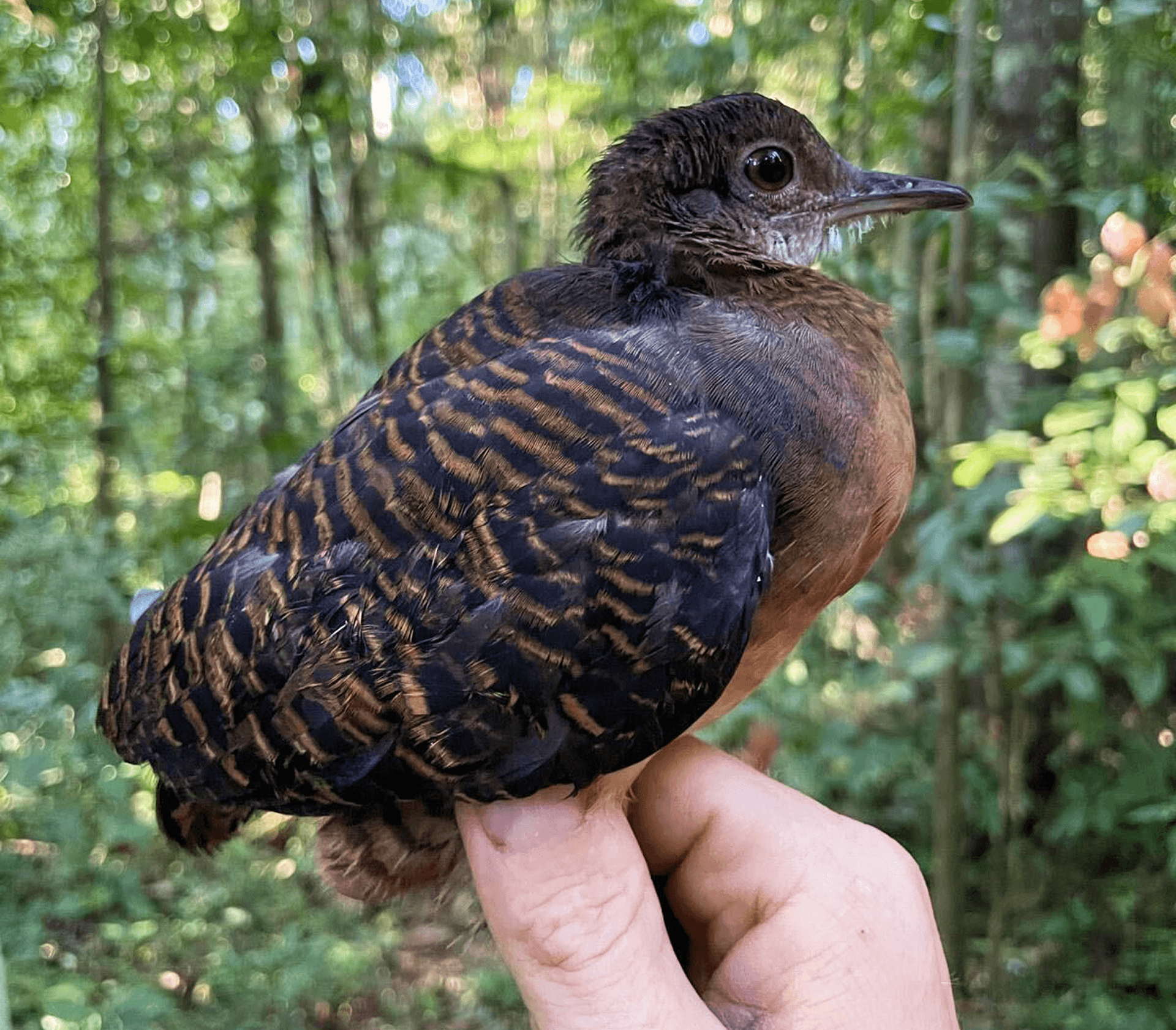
The calls of the Tinamous fill the Secret Forest at night and in the early morning – Head Field Research Coordinator Chris Ketola shows us this natural camp alarm clock during a bird-banding session.
When the German foundation team heads out on an expedition, everyone usually has a long to-do list in their luggage: in addition to conducting rapid assessments of potential new protected areas, the list includes tasks such as data collection, project planning and documentation, content creation, and media management.
We are also often accompanied by educational and corporate partners who support our work on the ground, assess the protected areas, and verify that donations are being used appropriately – this time by DIAMIR, SumUp, Umfulana, and Quantum Systems.
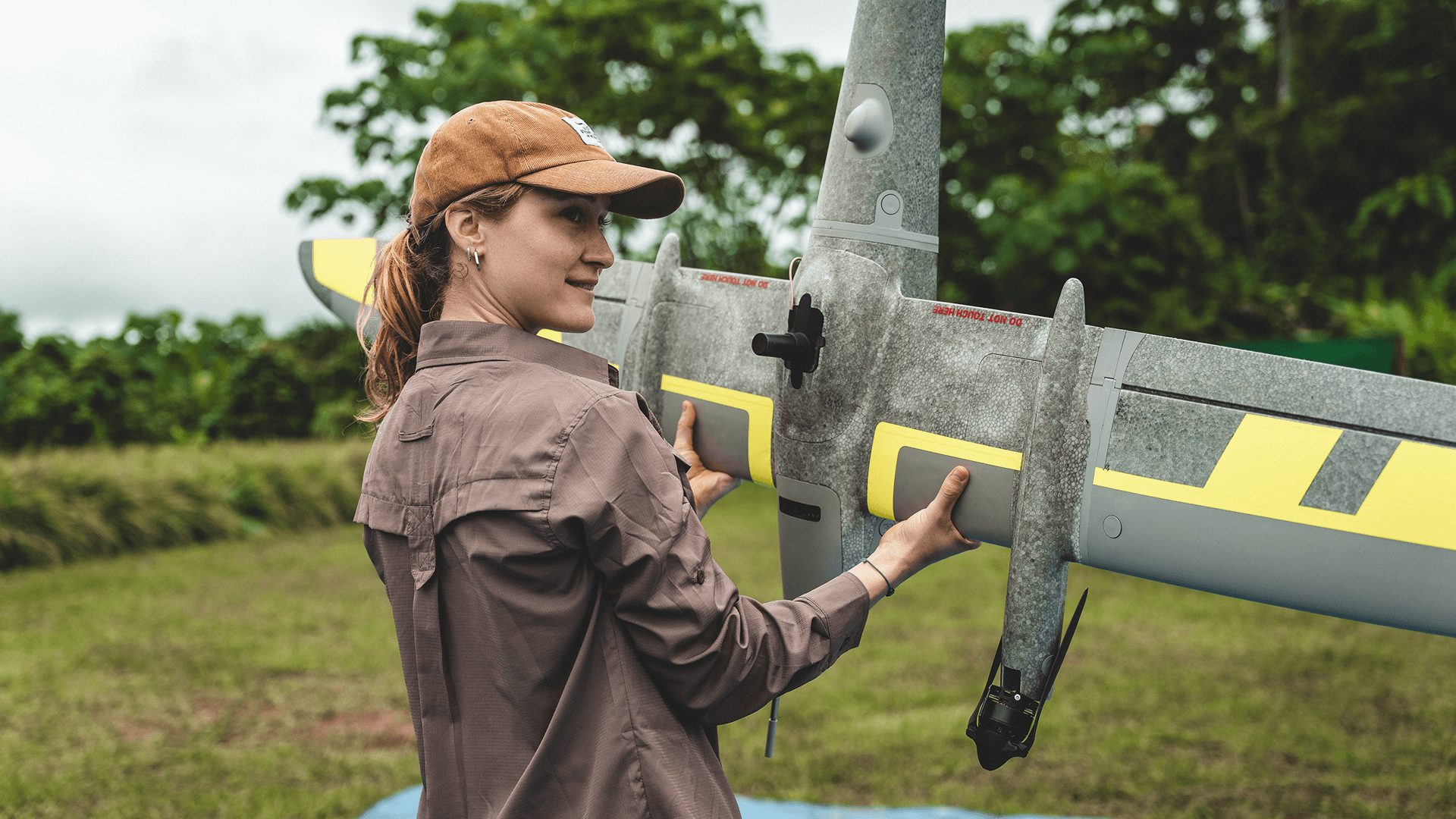
Susanne, a drone pilot and geomatics specialist from Quantum Systems, assisted us on this expedition by flying drones and recording LiDAR data.
In addition to all these activities, we always strive to work as closely as possible with our Peruvian colleagues, learn from them, and – perhaps the most important goal of the expedition – create shared memories and forge lasting bonds for all our important international projects.
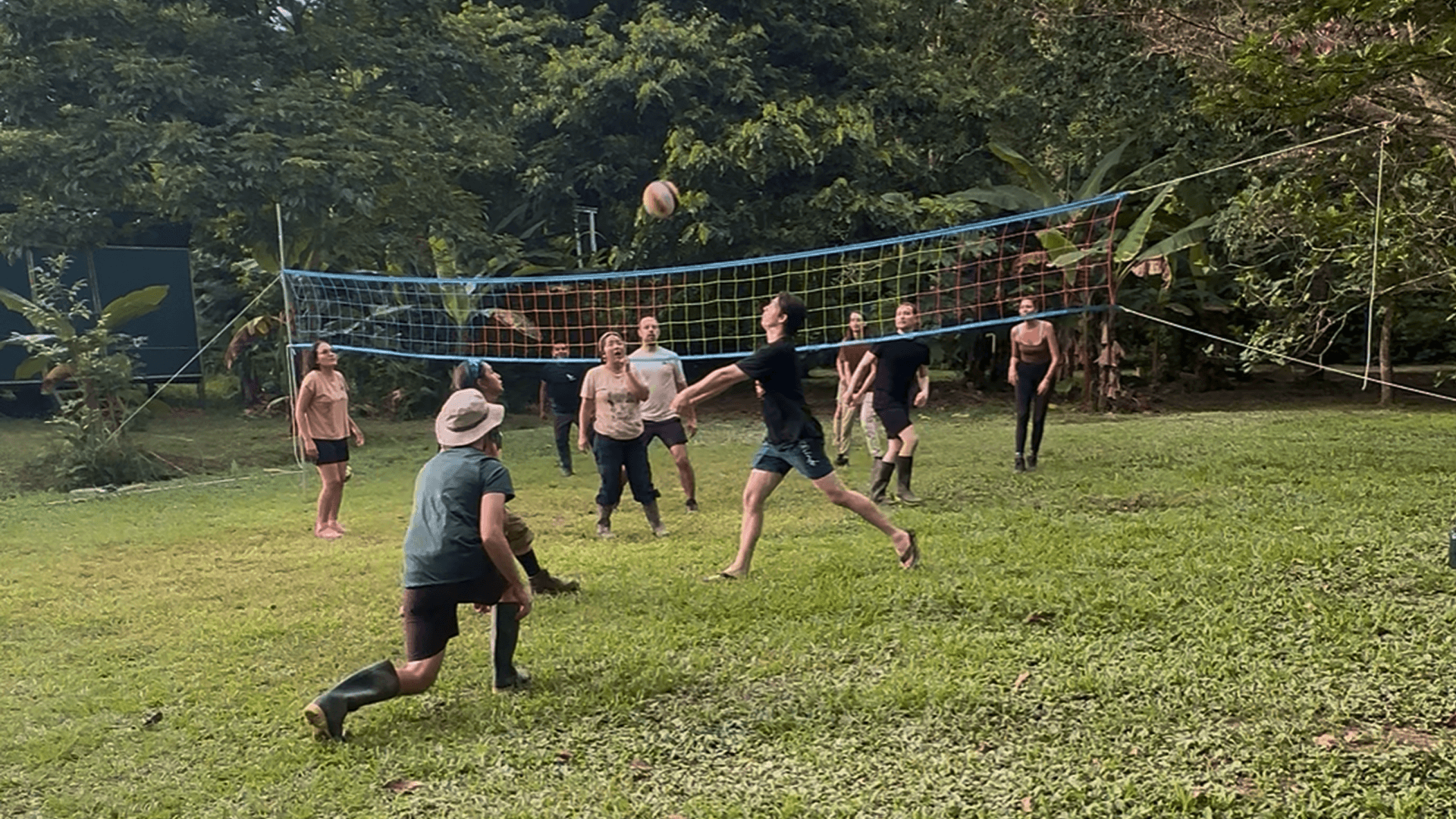
Despite all the tasks on our to-do list, we make sure to set aside plenty of time for team-building on every expedition. No video call can replace a hard-fought volleyball match!
Botany and Agroforestry with Alejandro and Gianlucca
As much as the animals in the Secret Forest fascinate me, I have a lot of catching up to do when it comes to plant life. And I’m not the only one! Our colleagues Gianlucca Monteverde, Botany Coordinator, and Alejandro Hilares, Agroforestry Coordinator, took the curiosity of their guests from Germany as an opportunity to give us insights into their projects: agroforestry, botany plots, and wild bee conservation.
What we've learned from Agroforestry and Botany
What we've learned from Agroforestry and Botany
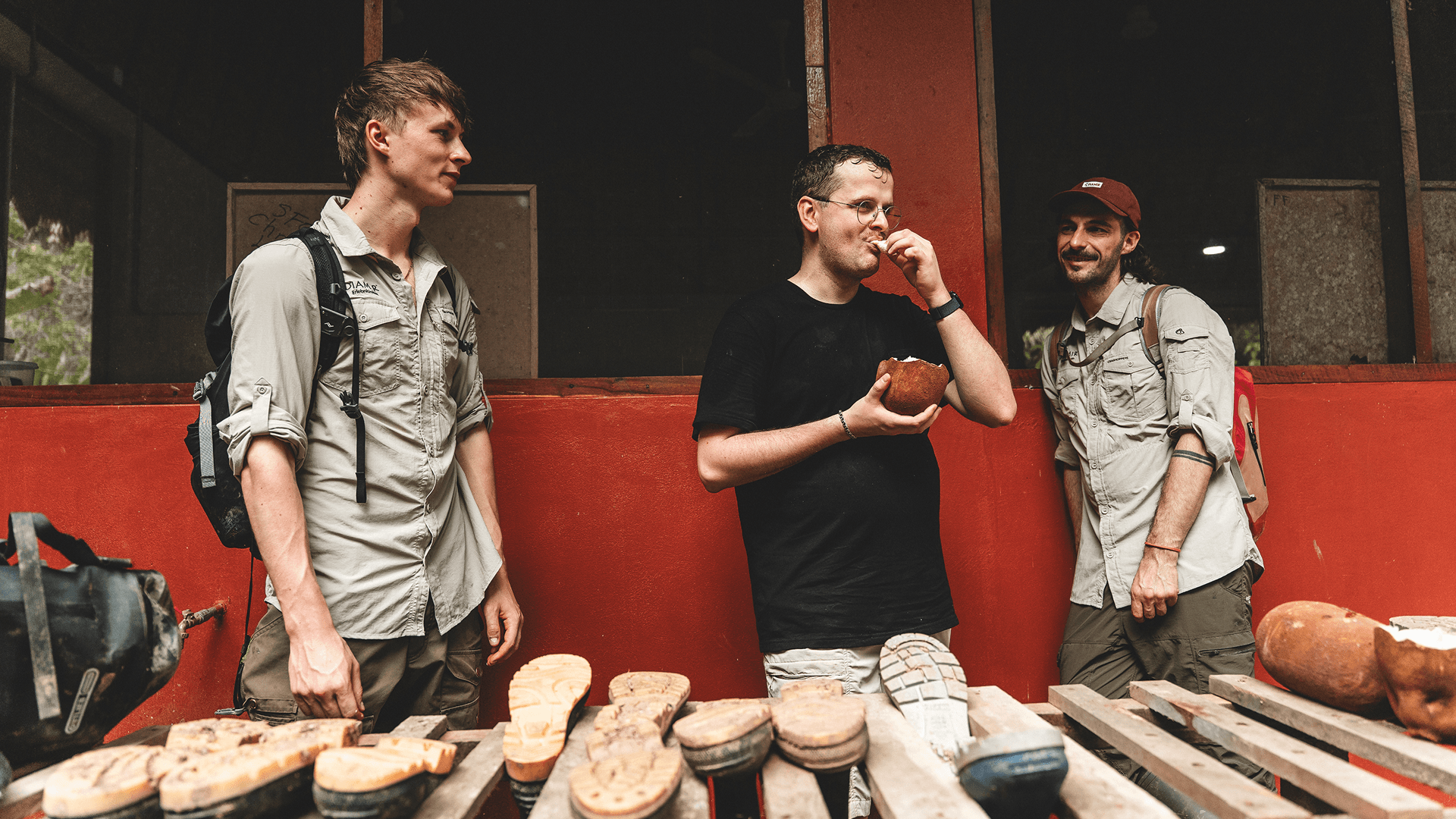
The crops grown in the agroforestry system aren't just cultivated—they're enjoyed, too! They're an important part of the camp's food supply. Our partners at DIAMIR and SumUp also enjoy the sweet copoazu.
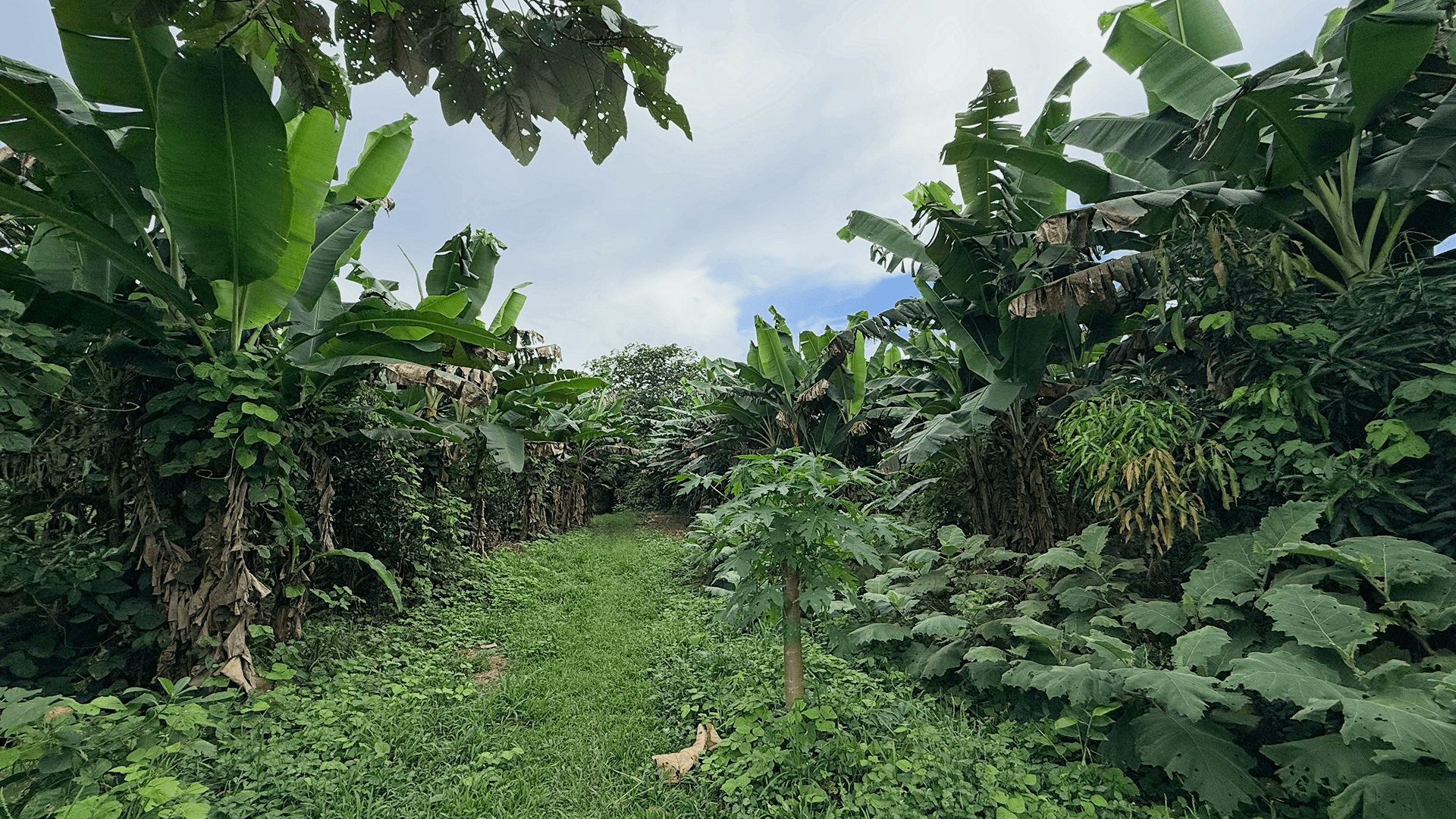
Our agroforestry project demonstrates how a sustainable alternative to clear-cutting and monoculture farming can work …
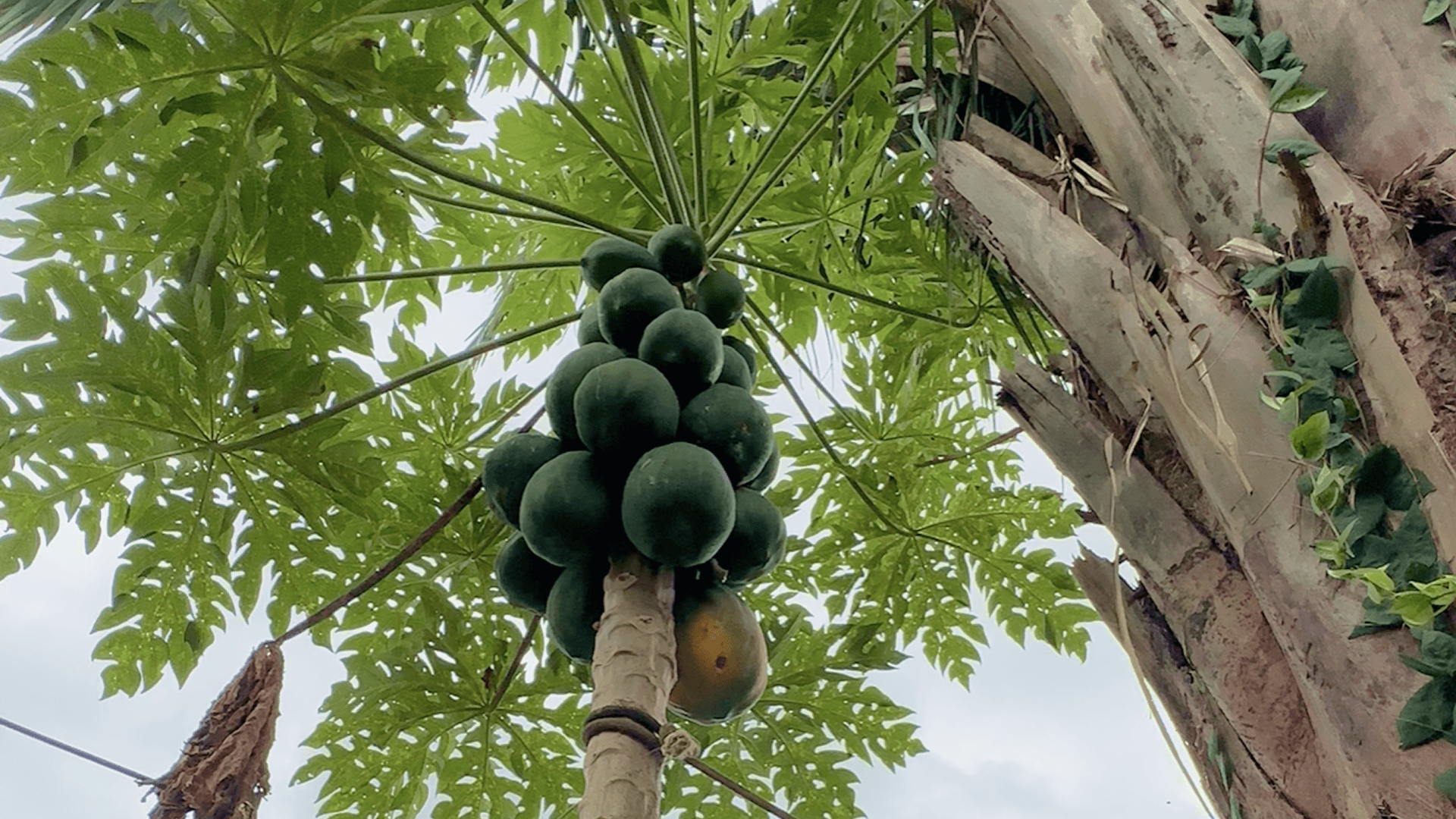
Wild trees and shrubs grow among the papaya trees and other crops, promoting biodiversity in the area and helping to maintain the soil’s nutrient content over the long term.
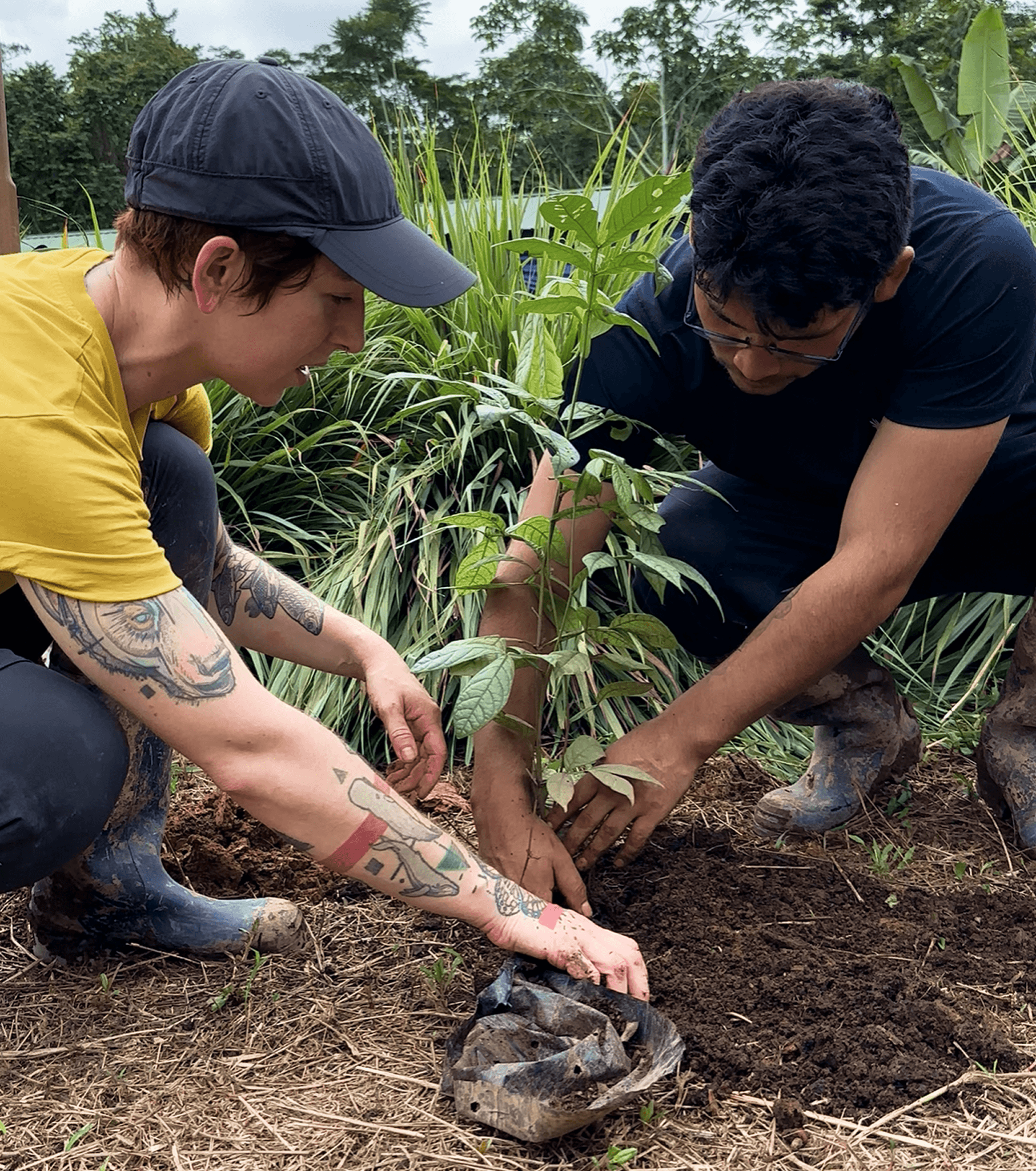
Together with Alejandro, we’re planting fast-growing inga beans – they’ll provide shade for the new seedlings next year.
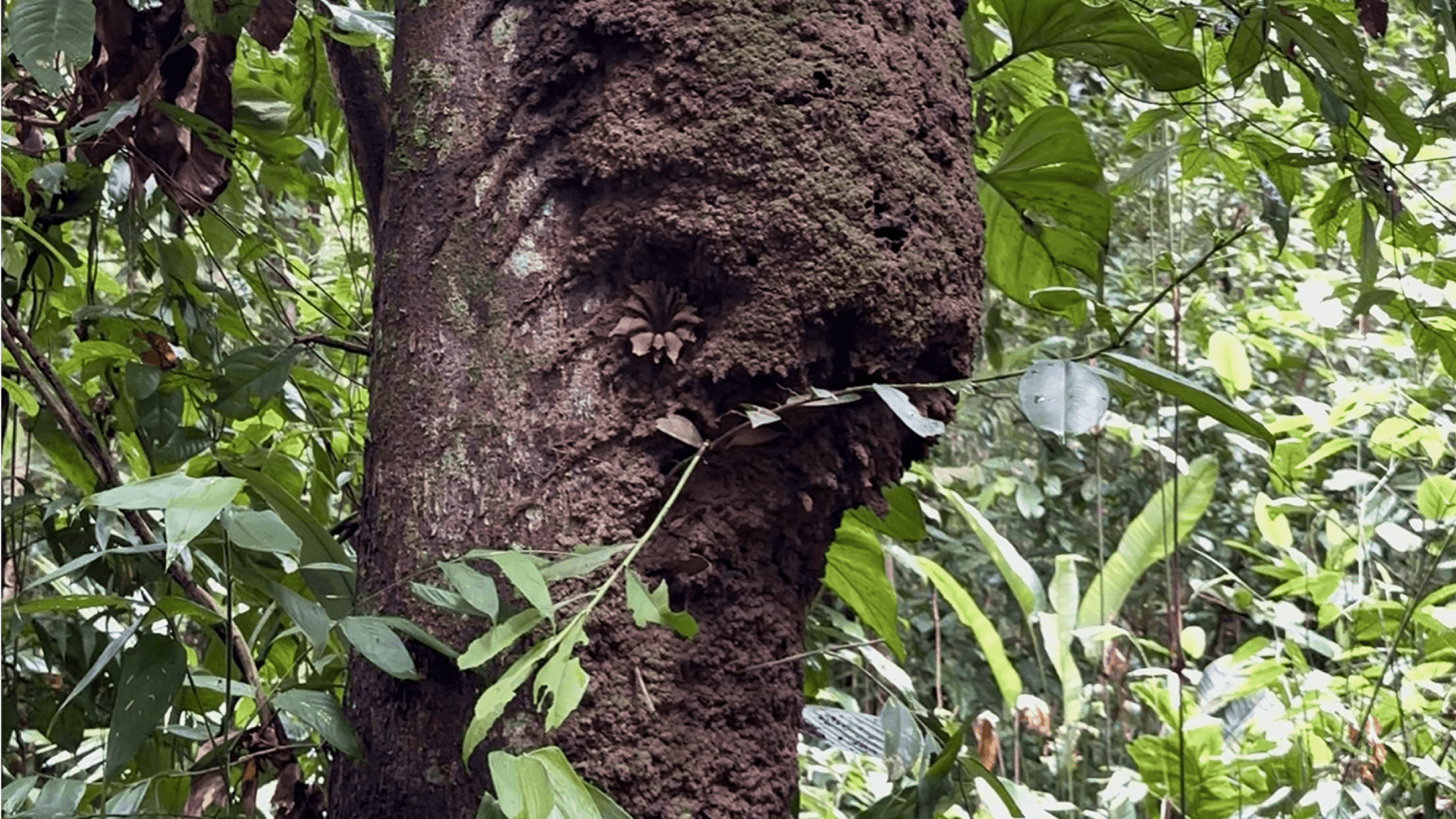
The stingless Melipona wild bees that live in this hive are the top pollinators in the agroforest and the Secret Forest – even in one of our botany plots!
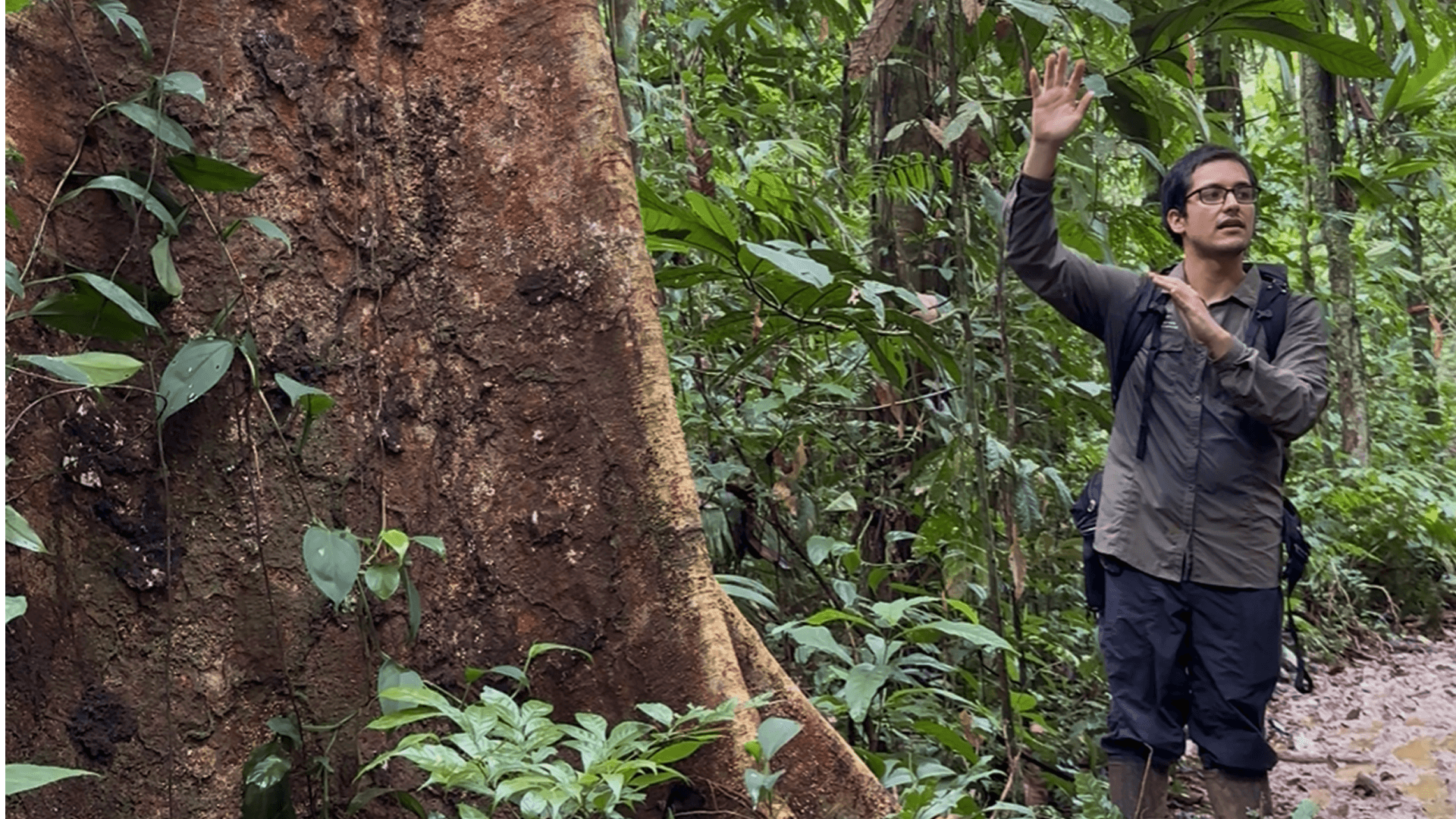
Gianlucca explains the three most important steps of his work in the plot: establishing sample plots, counting and measuring trees, and finally identifying the tree species.
Listen, who's singing over there?
Have I actually mentioned that I love birds? Despite all my responsibilities and to-do lists, I didn’t let anything stop me from indulging in a personal pleasure during the expedition: bird watching. Fortunately, my passion didn’t go unnoticed for long, and our colleague Keyko Saravia, a bird research assistant, quickly turned the bird point count at camp into an official activity for me and our corporate partners.
Together with Head Field Research Coordinator Chris Ketola, Keyko counts, documents, and identifies the birds in our protected areas. Unlike my humble hobby, Keyko’s birding is, of course, a scientific endeavor! Just like bird ringing, the data from the bird count provides insights into the diversity of the bird population in the Secret Forest and its long-term trends. Keyko’s most important tools, which she never puts down all day: binoculars and a hyperbolic microphone, used to specifically filter bird calls out of the ambient sounds of the forest and identify their sources with certainty – often even their sex!
A call or a song?
Calls are short, innate sounds used for communication; all birds use them to warn others or establish contact. Songs are melodic, more complex sequences of notes that are used primarily by males to mark their territory and attract mates.
Ornithological Highlights with Keyko
Ornithological Highlights with Keyko
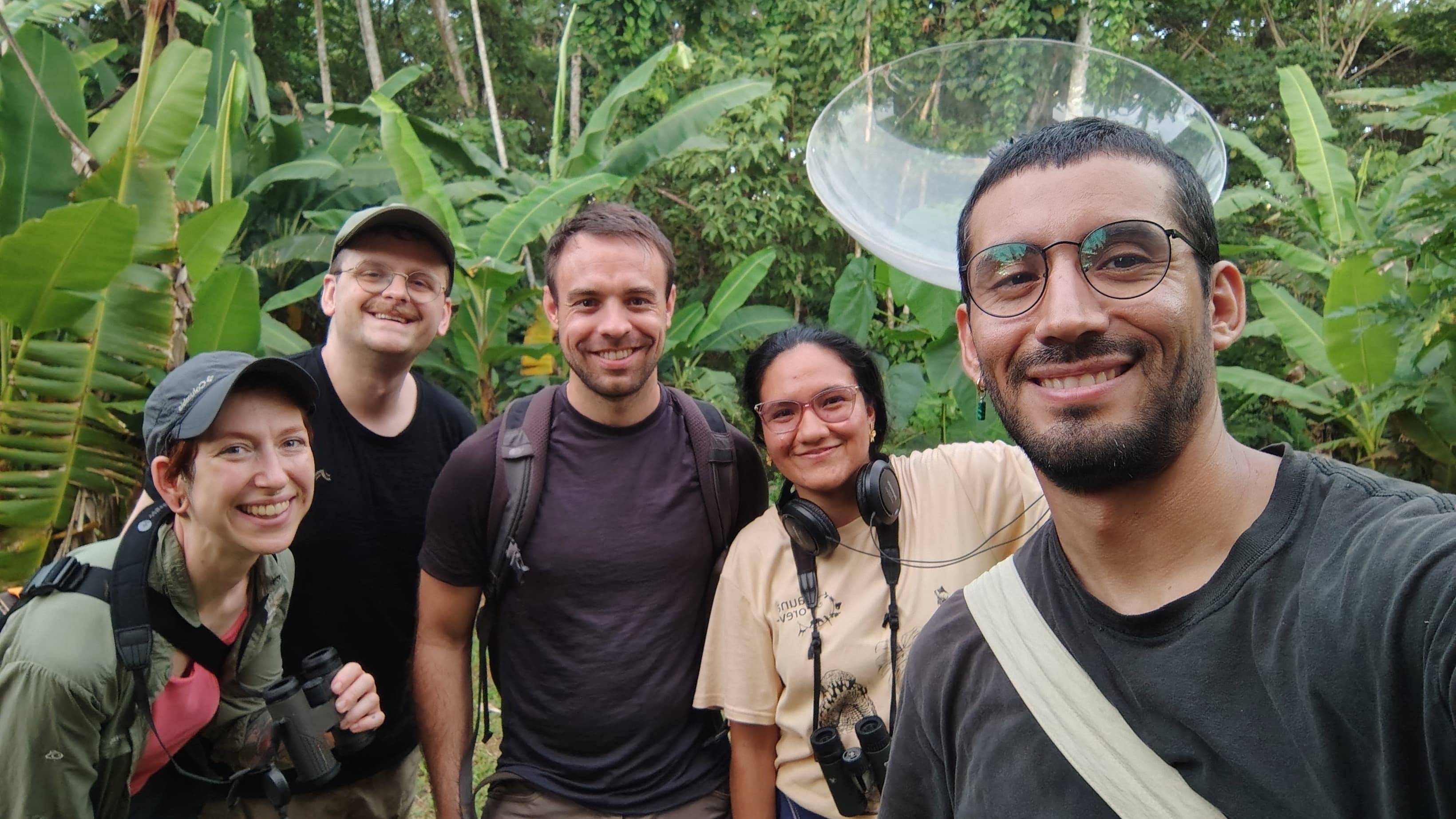
Thanks to Keyko's expertise and with the help of the hyperbolic microphone, we were able to accurately identify all the bird sightings.
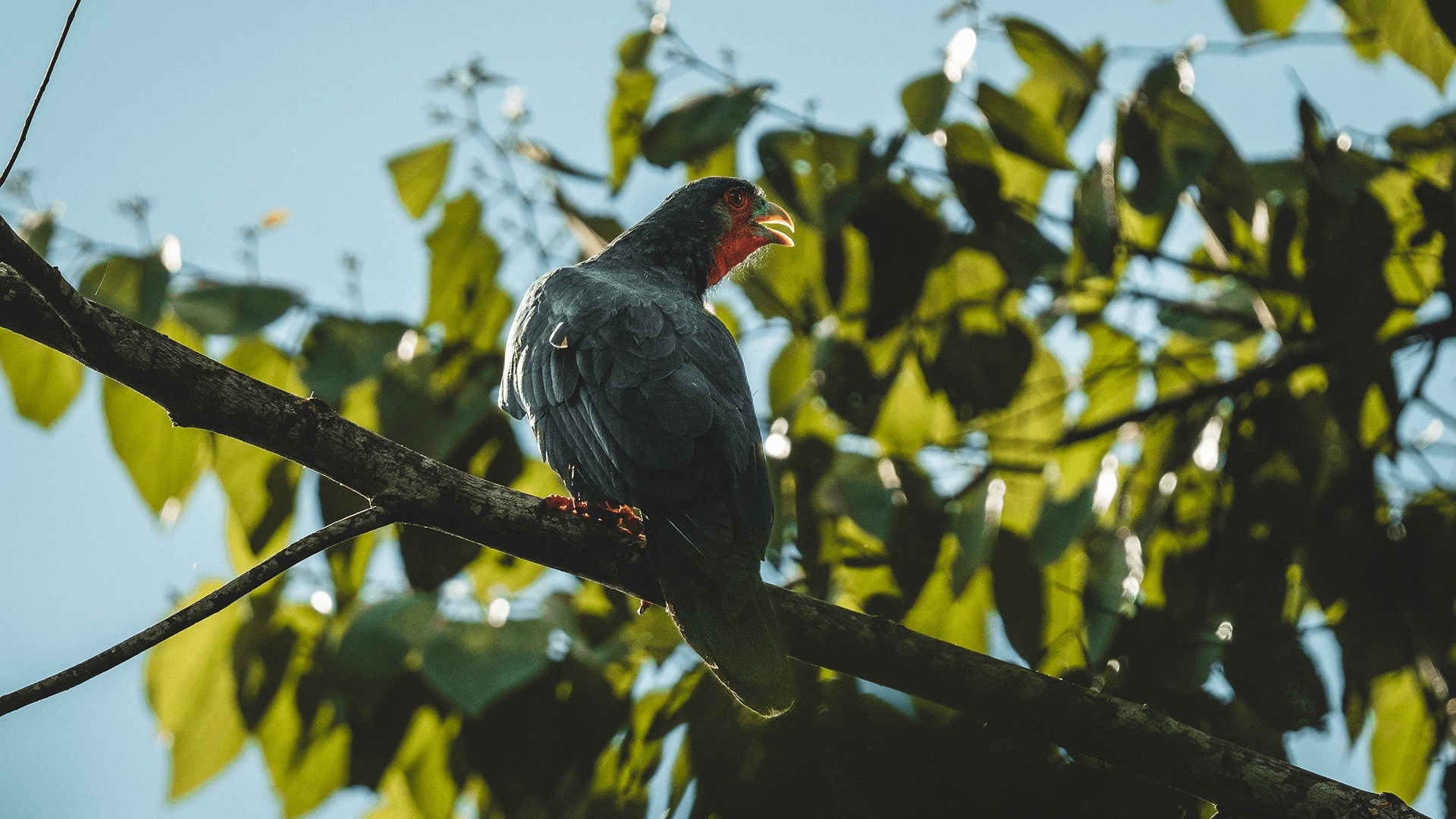
Who’s watching whom here? Red-throated caracaras announce their presence with loud calls.
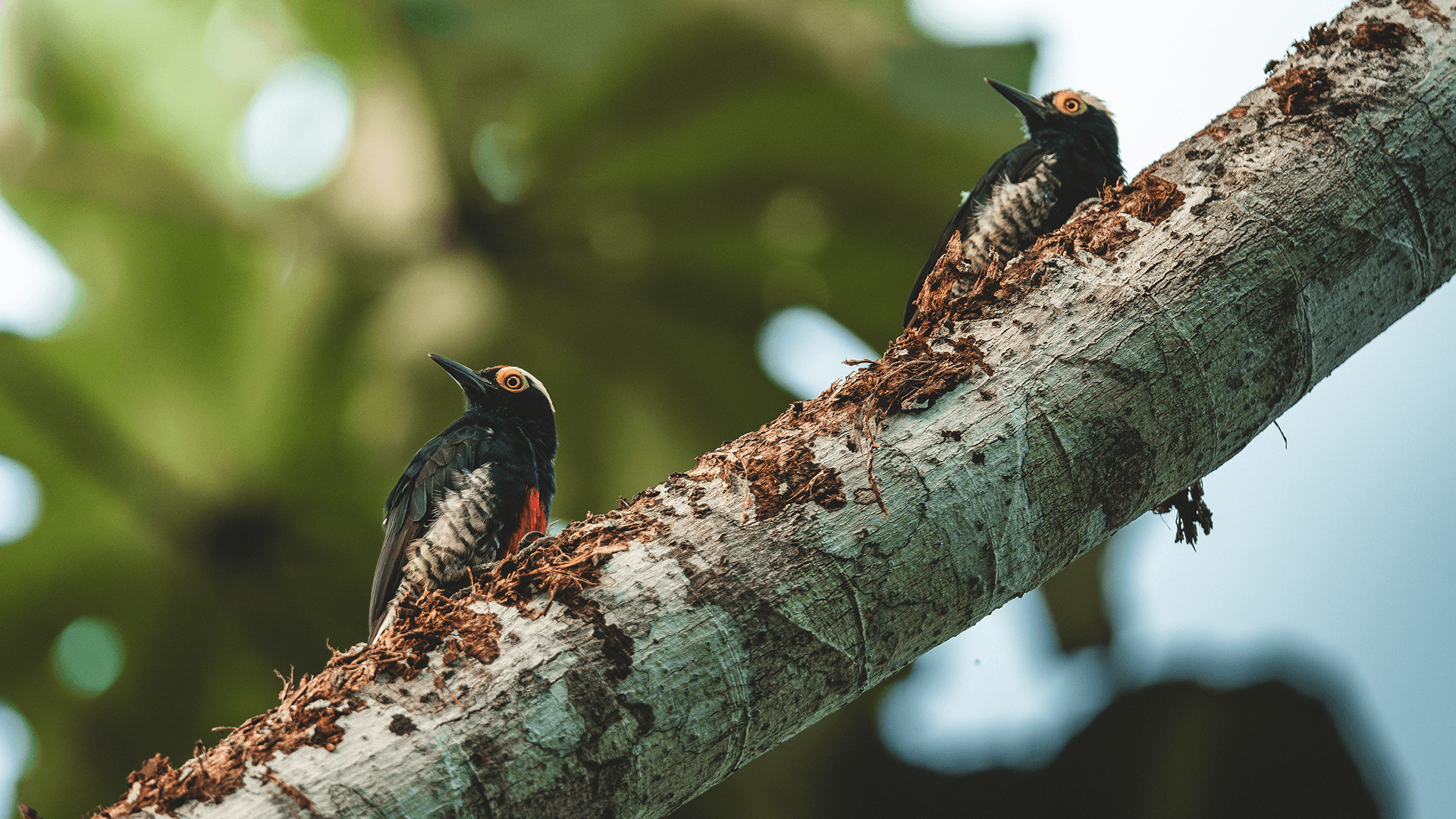
The yellow-crowned woodpeckers have breathed new life into a dead tree trunk in the camp with their nests.
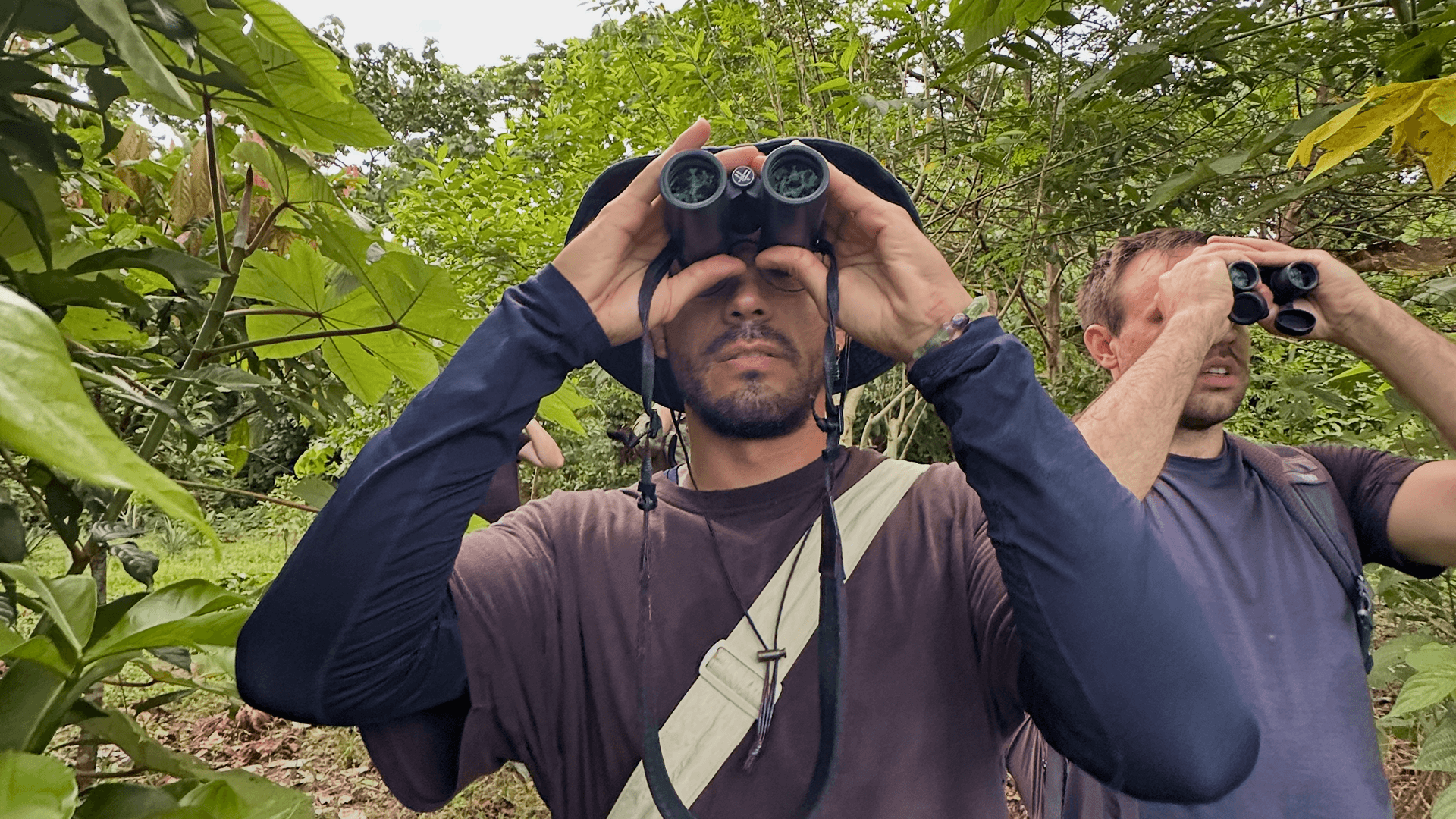
Esteban and Benjamin from Umfulana spot a very special bird at the camp...
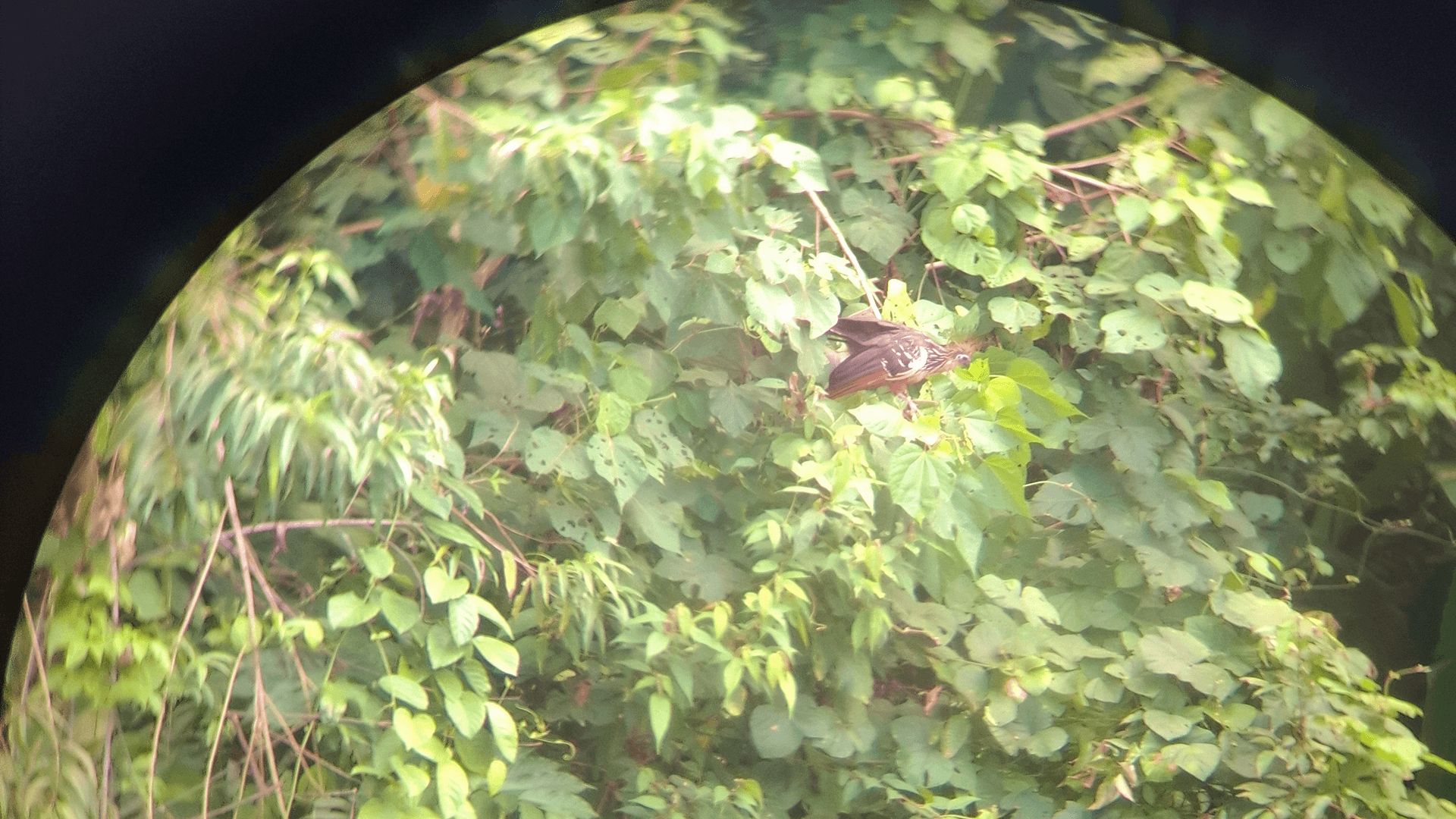
Through our binoculars, we watch a hoatzin having lunch.
Birding is my Cardio – The Canopy Tower
Birds on the ground are one thing—birds 45 meters up are another. Many bird species in the tropical rainforest live exclusively in the treetops. To document these as well, we’ll join Chris Ketola and Forest Guardian Felix at sunrise tomorrow to climb the seemingly endless steps of the dizzying Canopy Tower, located not far from our station.
The view from the observation deck quickly makes us forget the exertions of our early morning workout: the early morning fog is lifting. The sun rises and the forest awakens noisily from a night’s rest that isn’t really a rest at all. On this picture-perfect morning, a Capped Heron, various Macaws, a Crested Oropendola, and two White-Chested Toucans fly right into our view. And my birding cravings are satisfied for the rest of the day!
Incidentally, point counting is considered the gold standard in species monitoring—after all, no AI can match that level of reaction speed and identification skill!
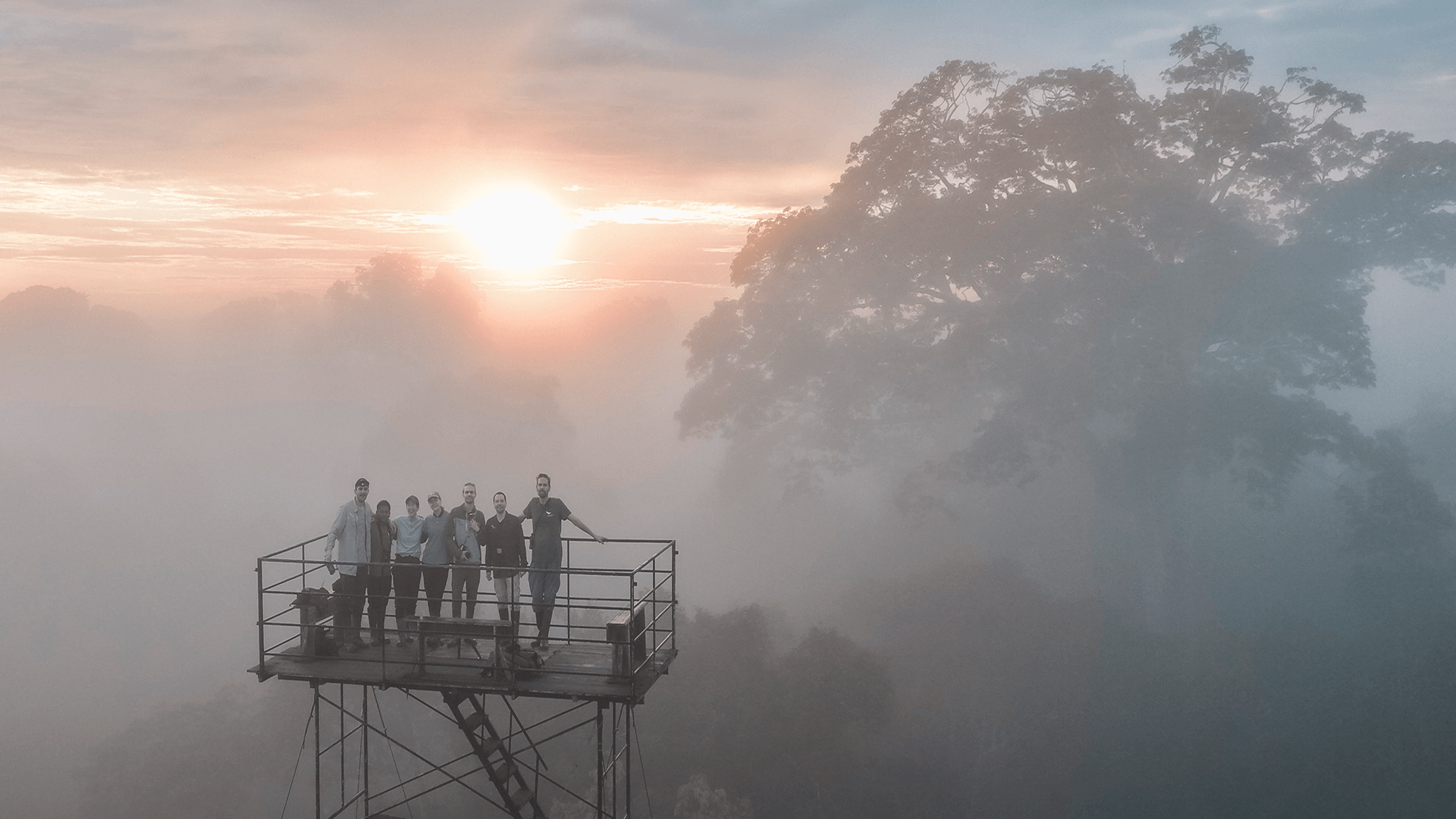
It’s not just the forest that makes our expedition experiences unforgettable – it’s also the people with whom we have the privilege of sharing them.
A Short Time in the Forest – Lessons for a Lifetime
“Quit while you’re ahead” – after a week in the rainforest, I just can’t stand hearing that saying anymore. Too many questions seem to remain unanswered, too many conversations left unfinished, too many volleyball matches left undecided.
Today, an ocean may once again separate me from my colleagues Felix, Chris, Nadine, Keyko, Ariana, Alejandro, Bladi, Gianlucca, and everyone else but the values we share, the stories we’ve told, and the happy moments we’ve experienced during this short time together will forever bind us in spirit. And of course, Slack and WhatsApp help, too.
I traveled to Peru thinking I knew what to expect. For a whole week, I was proven wrong every single day. Whether it was unexpected encounters with wildlife or sudden changes in the weather: the rainforest offers no guarantees. The wilderness does whatever it wants. That’s just its nature (badumm-tss) – and that’s exactly what makes it so unique. So worth protecting.
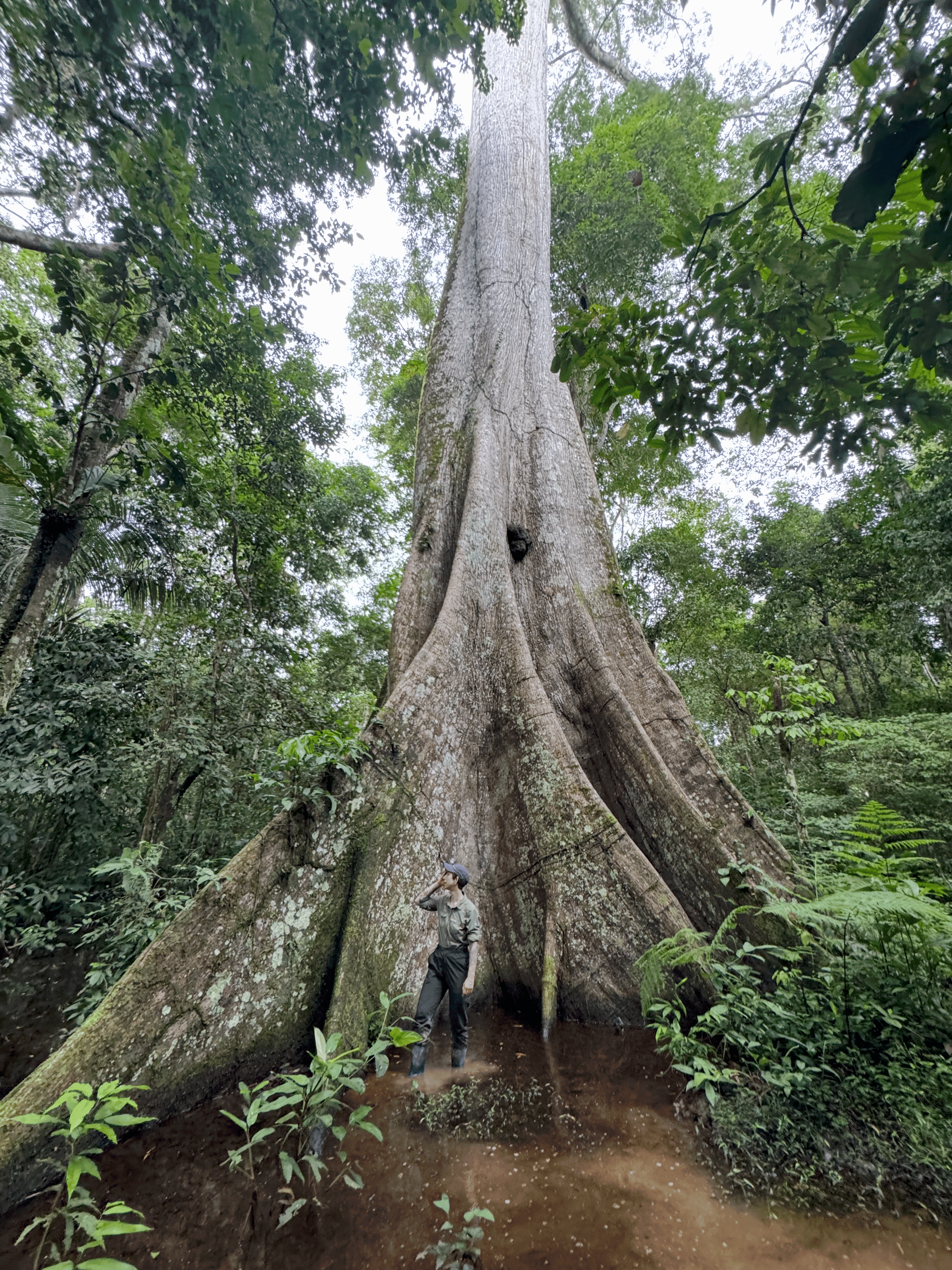
The rainforest didn't just move me. It gripped me with all its majesty, and I'm sure it will never let me go.
Beyond the connections I’ve made, the friendships I’ve formed, and the knowledge I’ve taken home with me, one thing stands out above all else:
Here, in the heart of our protected areas in the Peruvian rainforest, the original balance of power between humans and nature has been restored. It has always been this way. We are guests here; we must submit to its rules. And that is how it should remain forever.

Josie joined the foundation's communications team in July 2025. She wilderness her love of wordplay and wilderness primarily in the areas of partner communications, campaign planning, and social media.