
Wilderness International expands research network in Canada for scientific ecosystem analysis
What's it about?
Wilderness International reports on the expansion of its research alliance in Canada through a strategic alliance with the Bamfield Marine Sciences Centre (BMSC) and its network, the Pacific Marine Science Alliance (PMSA). This includes renowned institutions such as the University of Calgary, the University of British Columbia, Simon Fraser University, the University of Alberta, and the University of Victoria. The collaboration focuses on researching the connections and dependencies between terrestrial and marine ecosystems and providing practical training for young environmentalists.
We laid the foundation for our partnership with the Bamfield Marine Science Centre during our Canada expedition in 2025.
Real field research to complement academic work
The 2025 expedition to Porcher Island served as a pilot project to evaluate the integration of young researchers into the operational processes of Wilderness International. Michael Zhang, a biology student at the University of Calgary, accompanied the team to apply theoretical knowledge of biological sciences under real field conditions, which often cannot be adequately covered in the university curriculum.
Dr. Sean Rogers, Executive Director of the Bamfield Marine Sciences Centre, emphasizes the relevance of this cooperation:
Research-based experiential learning is at the heart of our work at Bamfield Marine Sciences Centre. It's fantastic that Wilderness International Canada is partnering with our undergraduate students to enable them to experience fieldwork in areas like Porcher Island, and I know that experiences like these are formative for our students.
Dr. Sean Rogers
Executive Director of the Bamfield Marine Sciences Centre
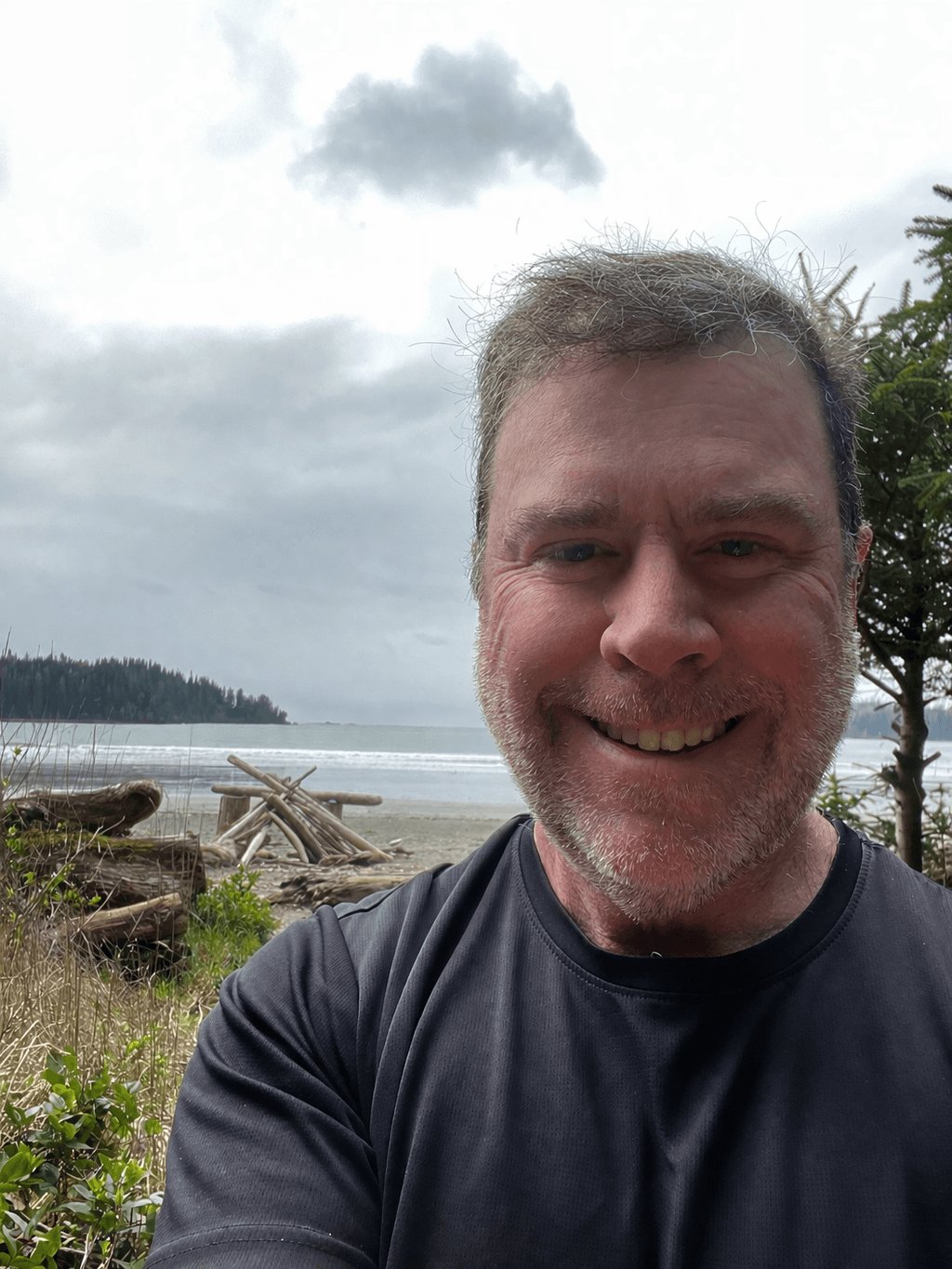
Zhang supported the daily research work, from biodiversity monitoring and moorland research to his own species inventory of the tidal zone, and summarized his experiences in a final report.
It is extremely rare for students to get involved in fieldwork at this stage. Seeing how knowledge can be applied to make a real impact on the world was an eye-opening experience.
Michael Zhang
biology student

Zhang's first field visit gave him the opportunity to gain key experience that will qualify him as a researcher and environmentalist of tomorrow:
- Logistical hard work: Nature conservation involves not only data analysis, but also carrying heavy equipment across rough terrain and living together in a tent camp for weeks on end.
- Field methodology: Under the guidance of experts such as Chris Ketola (biodiversity) and Prof. Jürgen Kreyling (moorland research), he learned how to use camera traps and acoustic sensors and how to take soil samples with a moorland drill.
- eDNA & biodiversity: Michael assisted in setting up Malaise traps for insects, whose samples are identified using eDNA analysis to create a genetic database of local fauna. In addition to creating a species inventory, this can also be used to discover and inventory new species.
Kick-off for further local research and educational work
Michael Zhang's successful participation on Porcher Island marked the operational starting point of a long-term synergy. This "trial run" was essential for establishing joint communication channels, synchronizing logistical interfaces between Wilderness International and the university network, and creating a foundation of mutual trust. Based on this positive evaluation, Wilderness International is now significantly expanding its activities in British Columbia.
In close coordination with the university network and local partners, further projects are already planned to firmly anchor the protection of coastal rainforests in science and society:
- Joint land management & First Nations Partnership: In cooperation with local First Nations, models for the joint management of university forest areas are being examined. The aim is to combine indigenous knowledge of the land with science and to permanently remove the areas from commercial use.
- Joint field research: The upcoming field phase on Porcher Island will expand baseline monitoring. Scientists from the university network will also gain access to hard-to-reach wilderness areas in order to close knowledge gaps.
- Science communication & education: Through this cooperation, research data obtained is not only used academically, but also prepared for joint educational programs. This inspires young people at an early age to recognize the importance of intact ecosystems.
This synergy makes it clear: research and active nature conservation must not be viewed as separate disciplines. They must support one another in order to remain truly capable of taking action in the current global climate crisis. We look forward with great anticipation to the upcoming projects within this network. For we are convinced that only through this close integration of scientific evidence and hands-on conservation can we turn the tide in time to preserve the unique beauty and ecological integrity of the wilderness the future.


News

Drones for transparent wilderness protection - Peru Expedition June 2021
For us, transparently protecting the forest means: for you, the exact square meter ...Drones for transparent wilderness protection - Peru Expedition June 2021
For us, transparently protecting the forest means: for you, the exact square meter ...Drones for transparent wilderness protection - Peru Expedition June 2021
For us, transparently protecting the forest means: for you, the exact square meter ...