
The greatest threats to the tropical rainforest
In 2024 alone, Peru lost 203,000 hectares of forest—a vast area roughlyequivalent to 80% of the state of Saarland.¹ But why is that?
What are the causes of tropical rainforest destruction?
If you look for the cause of the ongoing destruction of the Amazon rainforest, the answer is quite simple: us.
By being human...
- keep spreading further and further,
- more and more land for housing,
- Transport routes and
- require food production and
- tap into new resources,
we are causing more and more forests to be cut down—not just in the Amazon.
The Madre de Dios region in the Peruvian Amazon—the region where our conservation areas are located—is considered the most biodiverse place on Earth. It is home to many hectares of intact primary forest—and yet, even there, we humans have left our unmistakable mark.
Primary forests are defined as old, intact forest ecosystems that have been little or not at all affected by human activity. They are characterized by a high level of biodiversity that has also not been impacted by introduced invasive species. However , this does not mean that primary forests must be free of human presence. In the Amazon region in particular, many indigenous communities have lived in harmony with nature for hundreds of years and use forest resources sustainably to maintain their traditional ways of life.
Urbanization and the Interoceanic Highway
Between the Rio Madre de Dios and the smaller Tambopata River, it cuts across the rainforest like an ugly scar: the Interoceanic Highway—a transcontinental highway 2,600 km long that connects Peru and Brazil. On the map, you can clearly see how people are spreading out along this highway (as well as along the Madre de Dios River, which is also a major transportation artery), how settlements and cities are emerging, and how cleared and agriculturally used areas are steadily “encroaching” deeper and deeper into the rainforest.
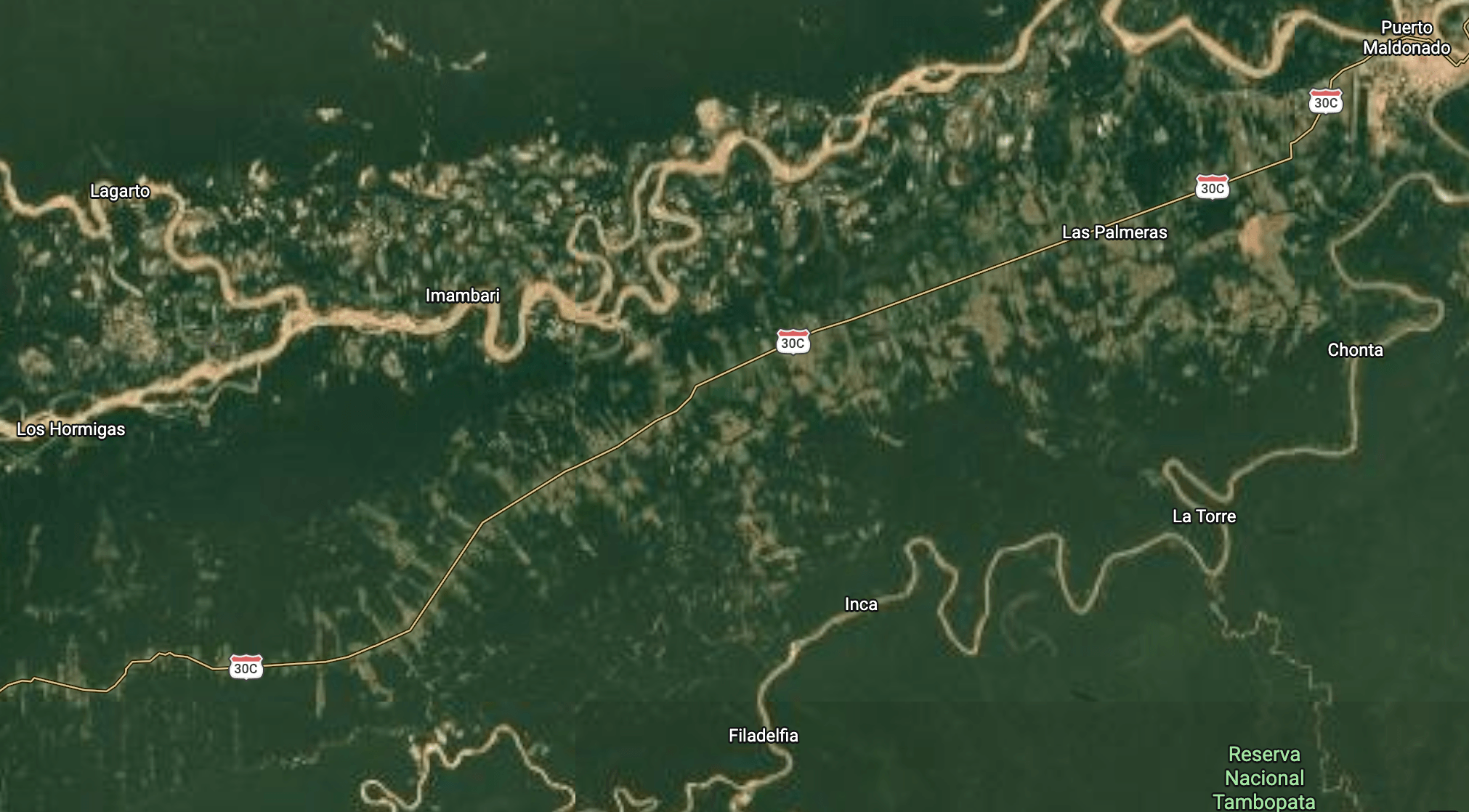
Source: Google Maps
Wood Industry & Agriculture
The timber industry is also interested in opening up new transport routes and building roads—not through the rainforest, but right into the heart of it. The most valuable trees are felled directly by loggers, and the comparatively inexpensive tropical timber (e.g., mahogany)is transported straightout of the forest.² This selective logging often takes place illegally.
A Vicious Cycle: Between Slash-and-Burn Farming and Livestock Raising
This is followed by the complete clearing of the land. Often, the remaining large trees are felled, left to dry over the summer, and months later the entire area is burned. After this so-called slash-and-burn clearing, small farmers plant some crops—usually cassava, bananas, or papayas—amidst the jumble of half-burned, fallen tree trunks, which slowly rot and serve as fertilizer for a while.
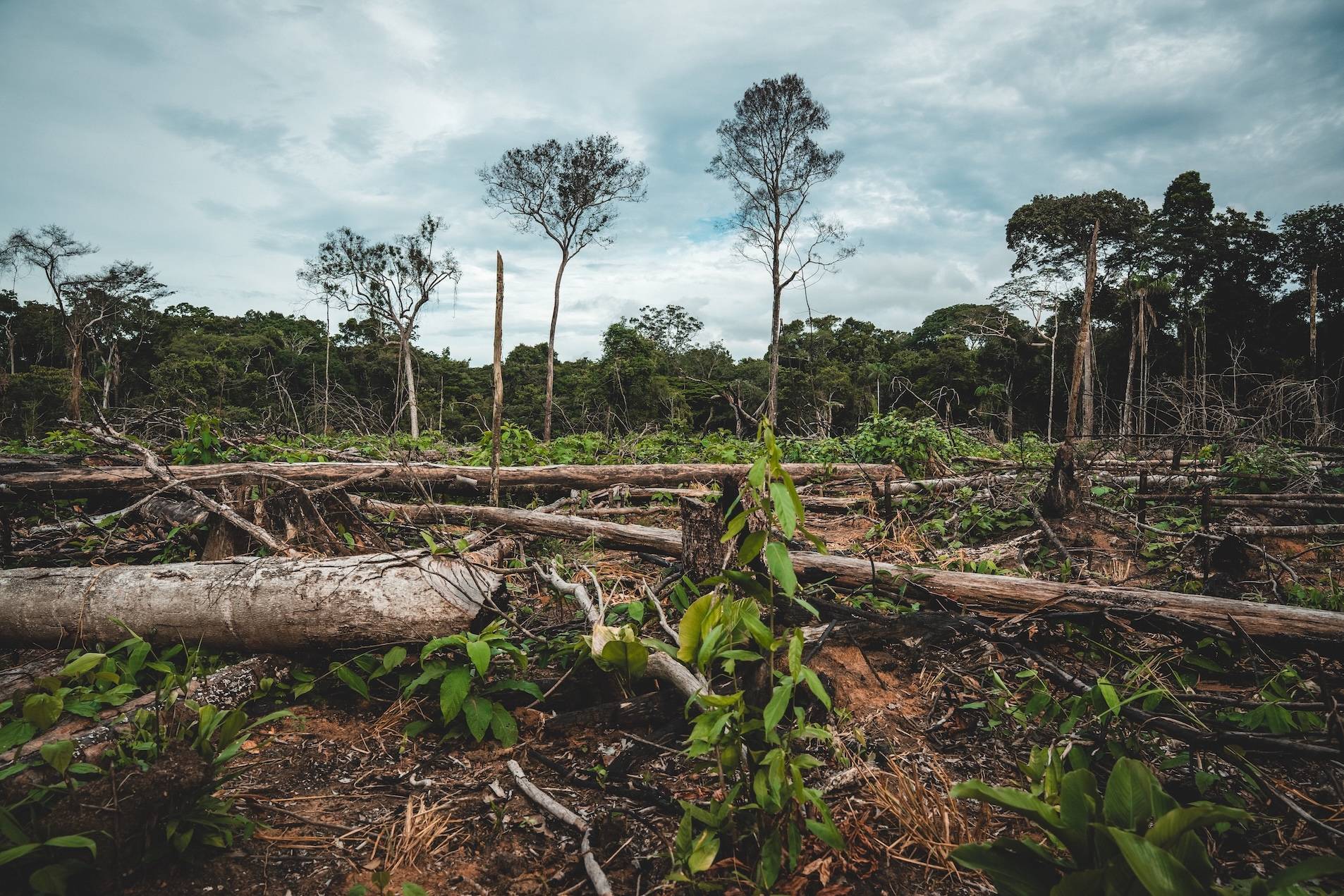
A sad sight of destruction: a clear-cut area near our protected areas.
But after just 2–3 years, the soil is depleted and no longer produces the desired yields. The land is fertilized again, grass is sown, and the following year the area is used for livestock grazing, but the cattle find hardly anything to eat, which is why this too comes to an end after just a few years. After that, the land could only be used by applying enormous amounts of fertilizer—which is hardly economically viable for the region’s farmers. So they move on and clear the next forested area, often located right next to it.
In Brazil in particular, where most of the Amazon rainforest is located, large areas are being cleared specifically for soybean cultivation. This is less the case in Peru. Despite the 2006 soy moratorium, about one-fifth of the soybeanscome from illegally deforestedareas³, and they findwilling buyers—especially—in EU countries. Not for human consumption, but for the production ofanimal feed. In Germany, too, nearly half of the soy meal used to feed so-called livestock came fromBrazil in 2022.
Illegal gold mining
We see and hear them regularly on the Tambopata River, even very close to our conservation areas: the roaring drills of the gold mines. The vast majority of gold mines in the region are operated illegally. Their mobile mining operations are located directly on the river and thus in public space.
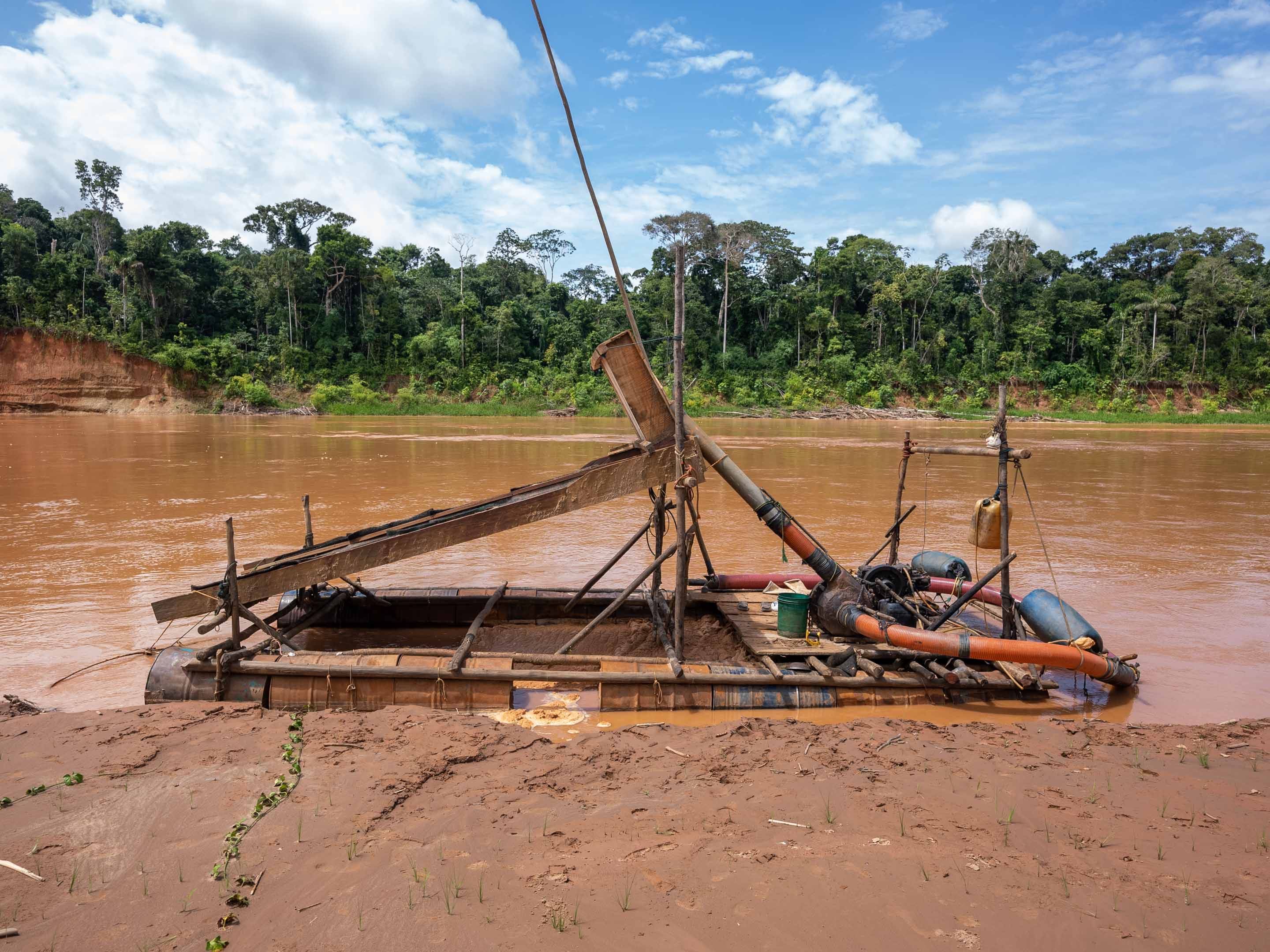
Unfortunately, we see gold mines like this all the time on the Tambopata River.
Nevertheless, their presence has serious consequences for the surrounding ecosystem and the health of the people working in the mines. Vast amounts of mercury, which is needed to extract the gold from the ground, end up in the river and poison people and animals. Yet despite the fact that the day laborers working there are constantly putting their health at risk, the lucrative business remains a draw. By Peruvian standards, the people working in the gold mines earn an extremely high income—sometimes between $50 and $200 a day!
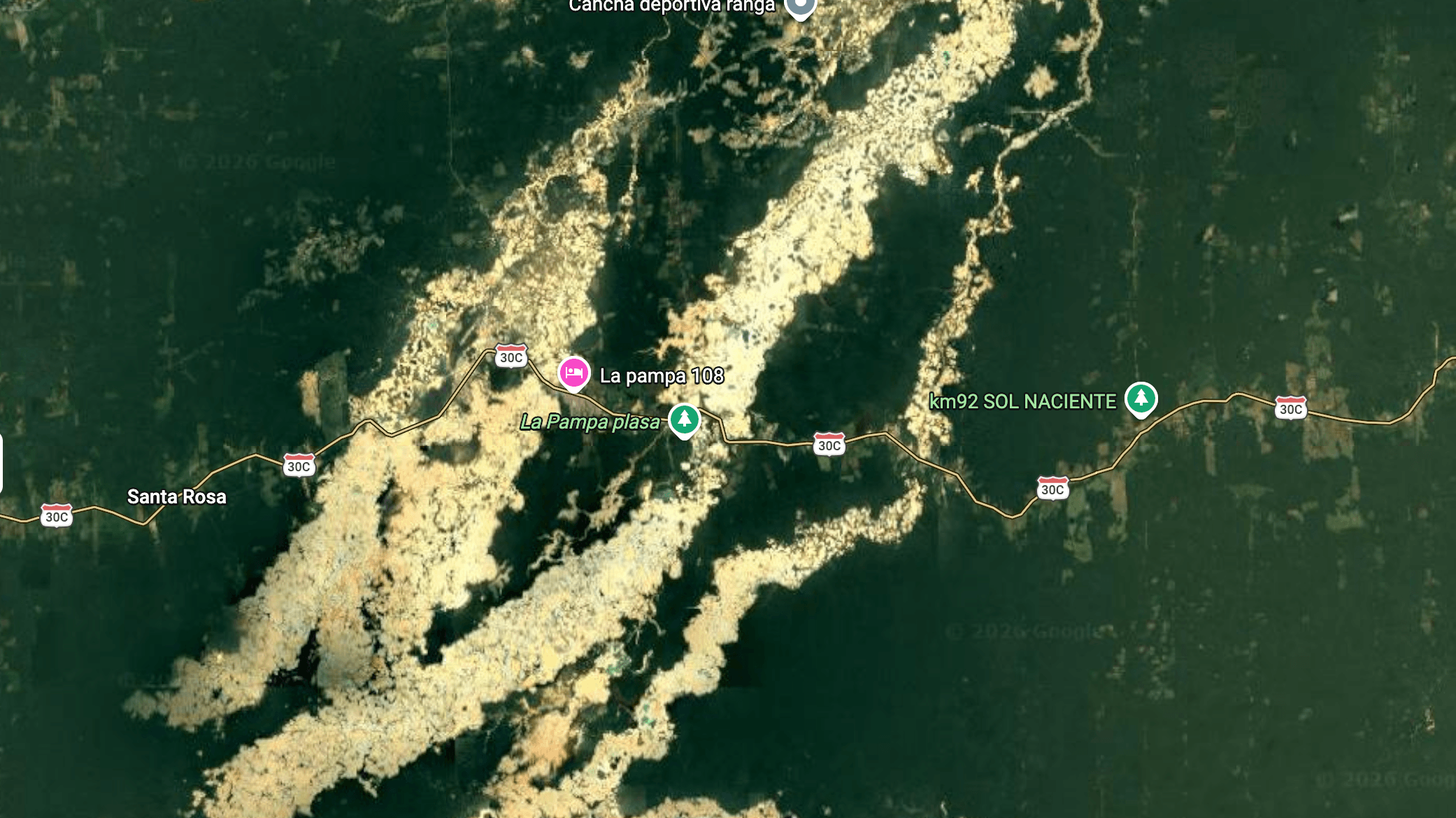
Like scars, the traces of the gold mines cut through the rainforest. (Source: Google Maps)
The gold prospectors are pushing deeper and deeper into the forest, setting up camps there, clearing the rainforest in their search for gold, and leaving behind deepcraters. In La Pampa, about 100 km west of Puerto Maldonado, the full extent of the damage becomes clear: illegal gold mining has alreadydestroyed over 70,000 hectares of rainforest there—an area nearly the size of the entire city of Hamburg.
What remains is bare earth, muddy pits, and rust-brown water holes—a wasteland contaminated with pollutants. It is unlikely that the ecosystem there will ever recover. Yet gold mining techniques that do not rely on mercury have long been available, such as gravity separation, which takes advantage of the difference in density between gold and other minerals. Shaking tables, vibrating boxes, and washing pans are used in this old and simple method toseparate the particles from one another.²⁰ That would at least solve part of the problem.
Another, more recent method of gold extraction is the recycling of electronic waste. Disused cell phones and computers, for example, contain considerable amounts of the precious metal, but until now, it has been difficult to recycle them efficiently and sustainably. A research team at Flinders University in Australia has developed a new process thatdoes notuse any toxic chemicals at all21. Perhaps “urban mining” is the alternative to illegal gold mining in the middle of the rainforest?
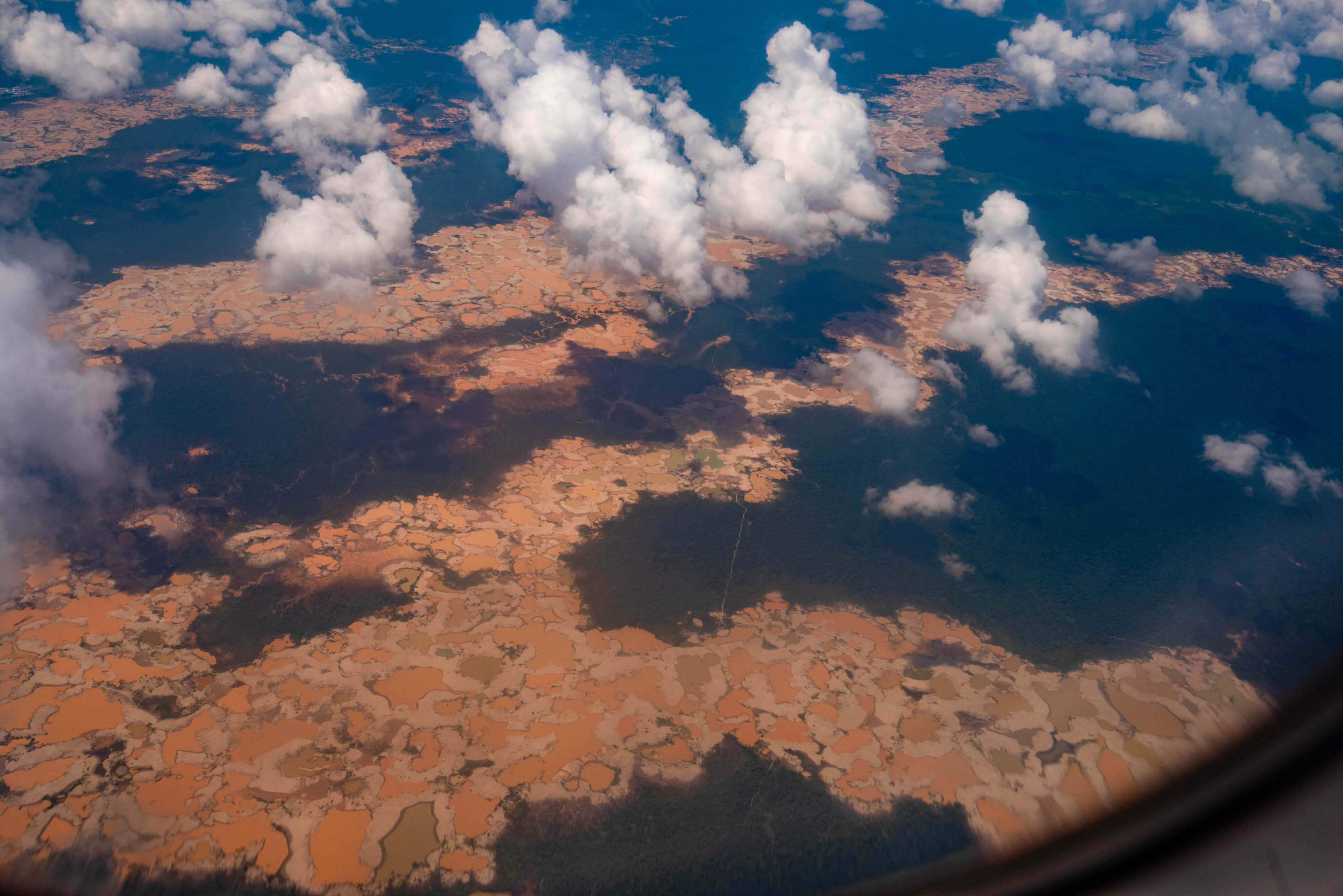
A wasteland where a healthy rainforest once stood. This is the result of illegal gold mining.
What are the consequences of rainforest deforestation?
The destruction of large areas of rainforest has negative consequences for the forest itself, the global climate, our livelihoods, and our daily lives—even thousands of miles away.
A vicious cycle
The forests of the Amazon Basin are the largest contiguous rainforests on Earth. This makes them not only a massivecarbon sink, but also a source of their own weather —a unique water cycle that carries rain from the Atlantic Ocean up to 5,000 kilometers westward across the continent.
A single large rainforest giant can exhale and evaporate over 700 liters of water daily, therebyinfluencing both the local and global climate.⁷ The only thing that sustains this water cycle is the vast extent of the contiguous rainforests.

Evaporation over the rainforest—a gigantic river in the sky.
If more and more forest is destroyed, it will be able to produce less and less rain. A destructive cycle begins—a self-reinforcing effect: Less rain leads to longer dry spells; drought is followed by heat; and this heat, combined with the lack of water, causes the rainforest to disappear even faster. In 2005, 2010, and 2015–2016, the Amazon region has alreadyexperienced three extreme droughts.⁸ Scientists estimate that with a temperature increase of about 4 degrees Celsius and a deforestation rate of 20–25%, the Amazon rainforestwould turn into a vast steppe.⁹
Droughts and water shortages naturally have negative effects on local communities, which depend on the rainforest and its rivers for water and food. The quality of the air we breathe also suffers significantly as a result of deforestation. Forests not only produce the oxygen we need to live, they also filter fine particulate matter—such as heavy metals and soot particles produced by industrial and vehicle emissions—out of the atmosphere. And yes, even though it seems unbelievable, exhaust fumes emitted here reach forests in North and South America in just a few days. Everything is interconnected.
Loss of a massiveCO2 reservoir
The world’s forests and peatlands sequester enormous amountsof CO2 —both in their living biomass and in the soil. The Amazon alone stores enough carbon to offset 15–20 years’ worth of current humanCO2 emissions.¹⁰ When such carbon-rich ecosystems are destroyed, they release moreCO2 thancould everbe sequestered again within a timeframe relevant to humans11. Every tree that is felled and removed from the forest will eventually rot or be burned—whether as paper recycled seven times over or as a piece of furniture passed down through generations. A carbon stock that has built up over millennia in the forest’s biomass is thus released back into the atmosphere as carbon dioxide within a very short time. 10–15% of all annual emissions arecaused by deforestation and the drainage of forestedpeatlands12 —a situation that must be stopped immediately.

Trees cut down in the Peruvian rainforest also end up here in Europe as furniture or everyday items.
Decline in biodiversity
Tropical rainforests are home to 50–75%, and according to some estimates even 90%, of all animal and plant species on ourplanet.¹³ The Madre de Dios region is considered the most biodiverse place in the world. In our protected areas in Tambopata, we have so far been able to
- 477 Birds,
- 62 Amphibians and Reptiles and
- comprise 92 mammal species (including 48 large mammal species and 44 bat species).
By comparison, Germany is home to only 21 species of amphibians, 15 species of reptiles, and 25 species of bats.
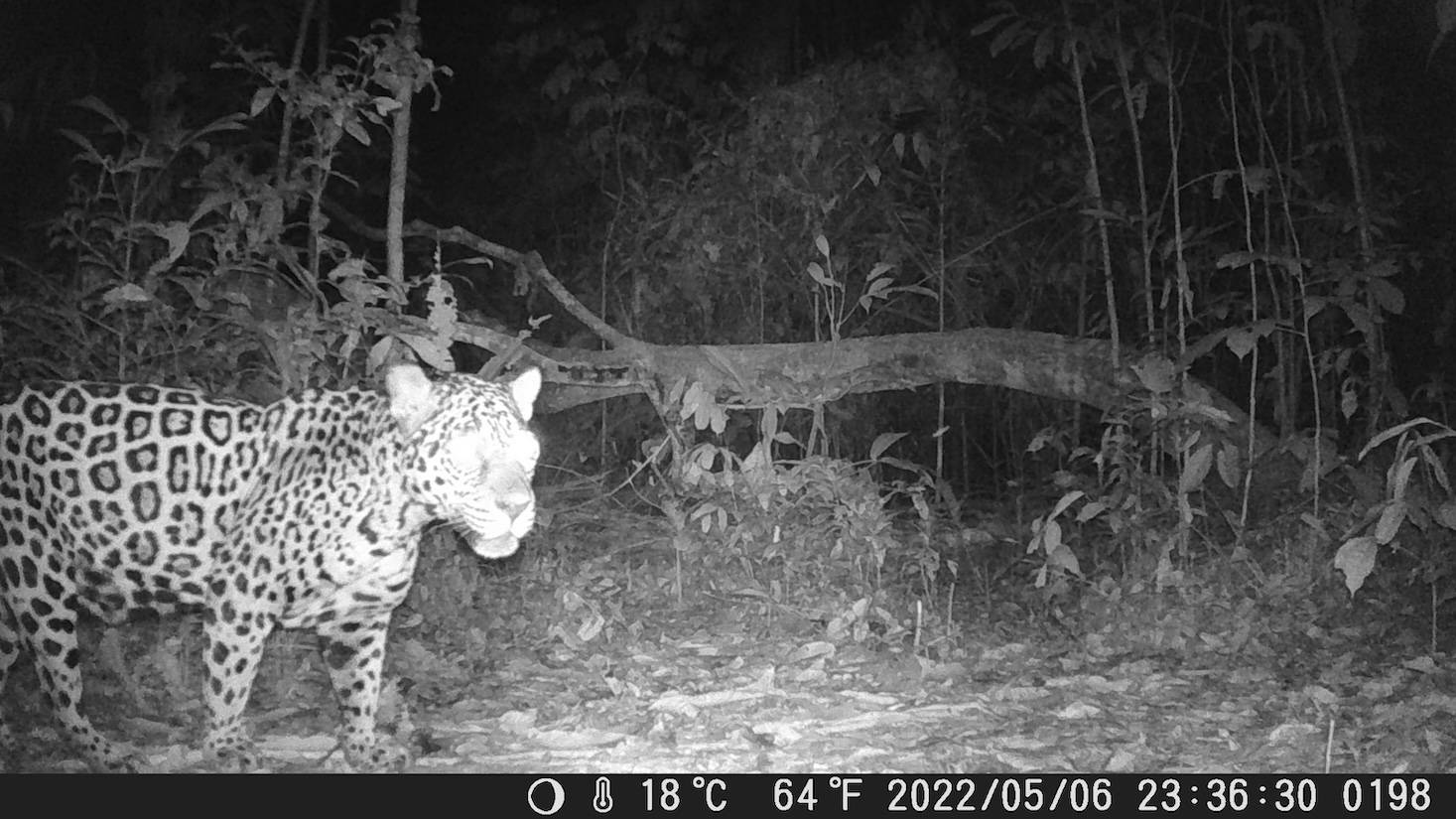
Wildlife cameras help us study the wildlife in our protected areas.
But this biodiversity is under threat. Worldwide, over 42,000 species are listed as threatened on the IUCN Red List—that is about 28% of all assessedspecies14. Nearly 40% of all tree species worldwide are now threatened with extinction, primarily due to deforestation, agriculture, andclimate change15. A species goesextinct every few minutes16, and the trend is on the rise. Furthermore, the abundance of living organisms is also declining. Looking at vertebrates alone, their numbers have more thanhalved compared to 197017.
Deforestation is synonymous with habitat loss, and this is the main cause of biodiversity decline. Not only are animals driven from their habitats—highly specialized, endemic species can become completely extinct due to the loss of their specific habitat. The extinction of “just” a single plant species is often linked to the extinction of another 10 to 30 animal and plant species, as most organisms in the rainforestare interdependent18. Millions of species have thus disappeared along with the forest in recent decades.
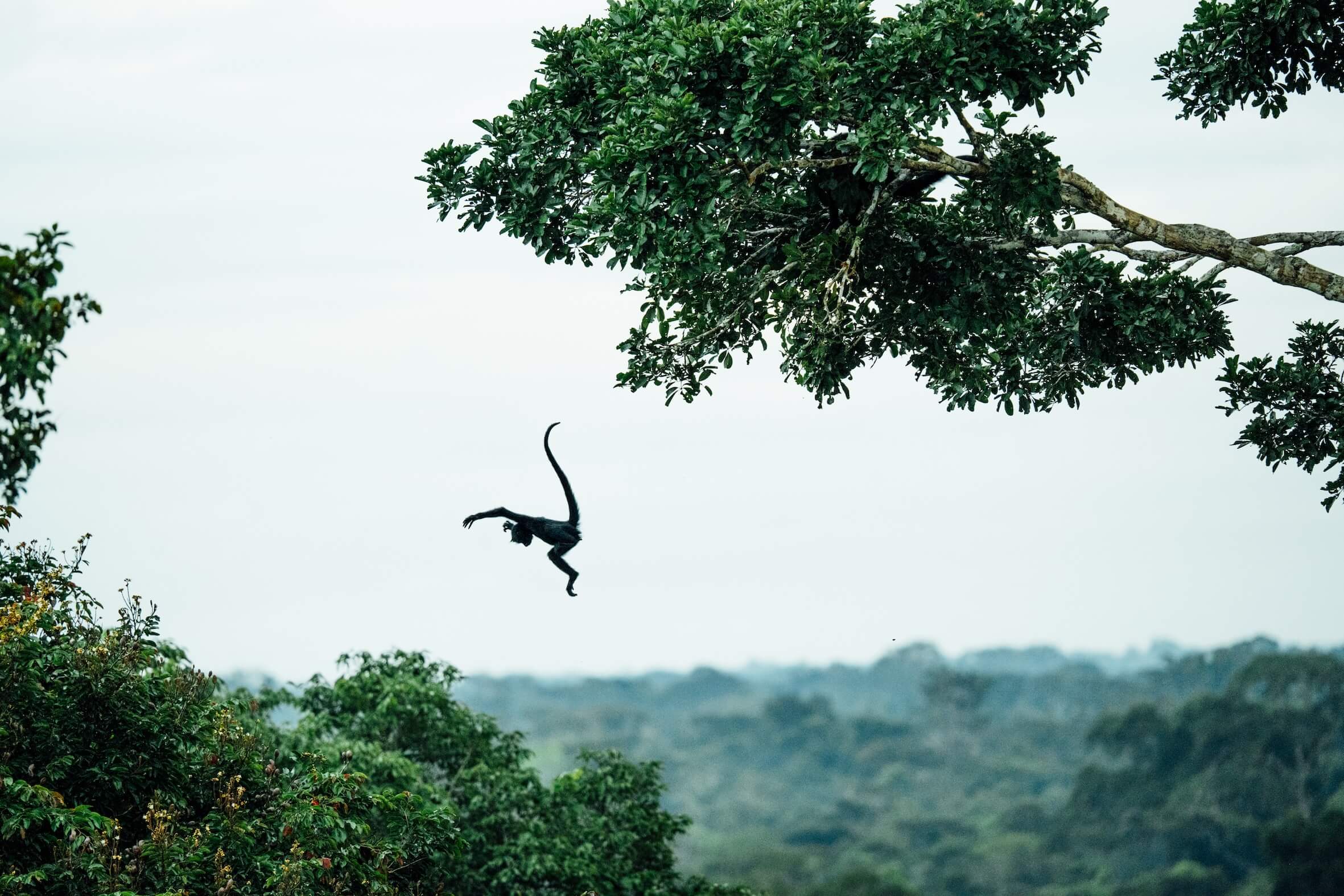
A positive example from our protected areas is the spider monkey. These had largely disappeared from the area but are now slowly returning.
Scientists are debating whether the loss of biodiversity might actually affect us even more severely than the collapse of the global climate. The decline in genetic diversity has a direct negative impact on ecosystem functions. Agricultural systems become more vulnerable to disruptions, which in turn negatively affects our food system. Animal pollinators areindispensable for more than 75% of our food crops (fruits and vegetables) as well as our agricultural crops. Without them, not only is global food production at risk, but other plant resources—such as those needed for medicines—may no longer be available to us, since the rainforest is also the world’s largest pharmacy.

Some examples of animal pollinators in the rainforest are these beautiful butterflies. Unfortunately, butterflies are rarely seen here in Germany anymore.
We humans depend on nature and the biodiversity of intact ecosystems —whether we like it or not. Food, medicine, textiles, water, and heat are just a few of the things that nature provides us with every day, completely free of charge. So by continuing to destroy them, we are inevitably harming ourselves as well.
Measures to combat deforestation
The reasons why rainforests are being cleared are complex. This is not mindless destruction—often, people see deforestation or gold mining as the only and quickest way to improve their financial situation and feed their families. Very few can afford long-term investments. Furthermore, there is a lack of expertise, training, and opportunities for alternative sources of income such as ecotourism or agroforestry.
That is exactly where our projects in Peru come in; we strive to provide as many Peruvians as possible with an alternative source of income, for example through our forest guardian program. We also see an important part of our work in fostering knowledge and understanding of the forest and its inhabitants at an early age, for example through our agroforestry project, our environmental education program WIPerú Educa, or local research grants that we award to young Peruvians. In this way, we and the team at Wilderness International Peru support the local population in better understanding the forest—and how important and worthy of protection it is. In doing so, we work very closely with surrounding communities.
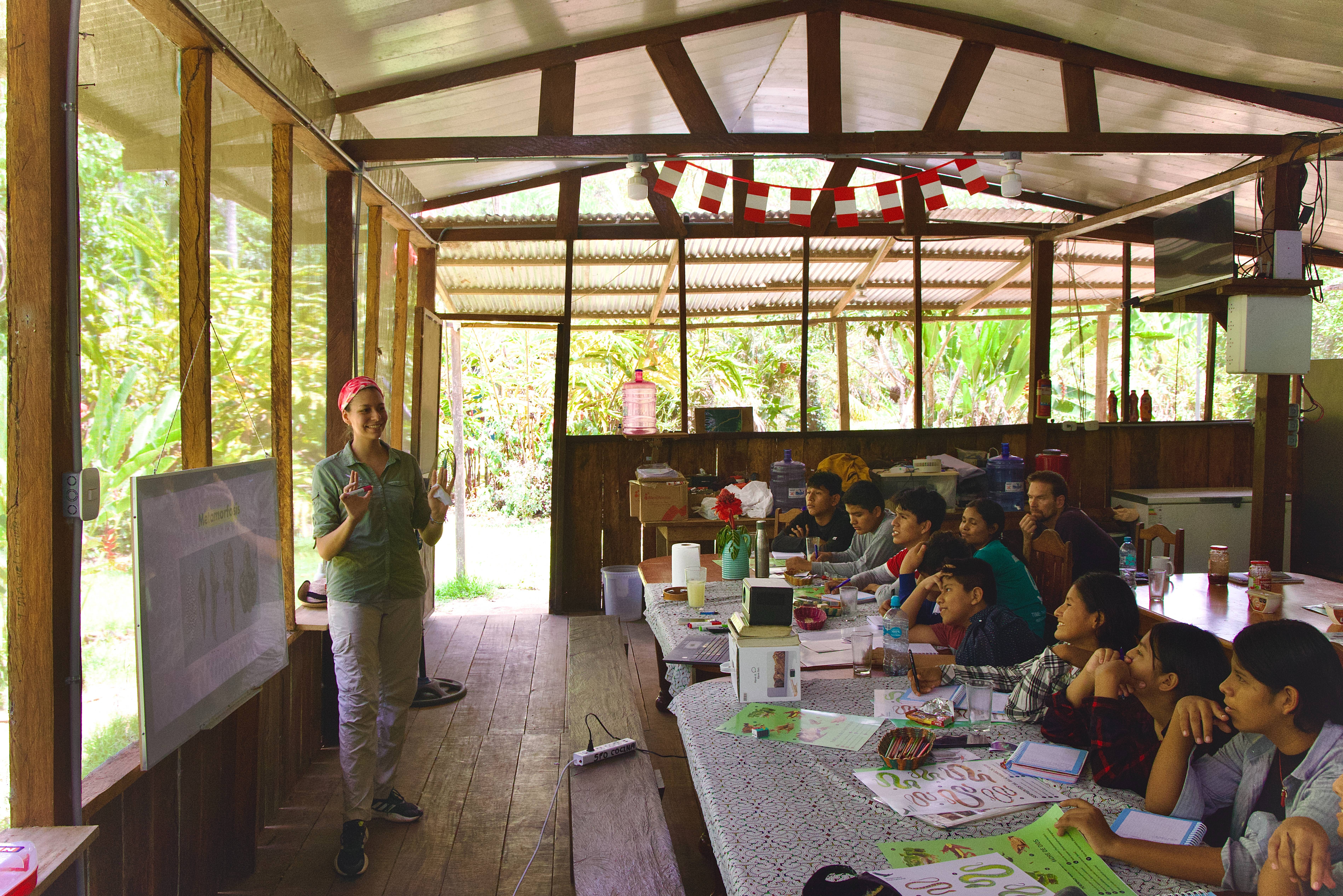
As part of our environmental education program, we share important information about forests—with both children and adults.
Programs such as REDD+ also help reduce deforestation. REDD+ (Reducing Emissions from Deforestation and Forest Degradation) is a United Nations program that provides financial incentives to countries to protect their forests rather than clear them. This makes preserving the rainforest economically more attractive and can help reduce deforestation. At the same time, it promotes sustainable use and better monitoring of forests. The system is not perfect, and despite its many advantages, REDD+ has also faced criticism; nevertheless, it remains a key component of global forest and climate protection.
In general, it helps to educate people about structures and patterns so they can make climate-friendly decisions. Even raising awareness about more sustainable consumption choices here in Europe has a major impact on the rainforests in North and South America. In the end, everything is connected. When we’re looking for a new piece of jewelry, it makes a difference whether it’s made from recycled or newly mined gold—and where that material comes from. It makes a difference whether we buy new furniture made from tropical wood without a second thought, or choose to shop secondhand instead.
Even small changes in our daily lives can make a big difference. This article is intended to help raise awareness about this issue. Thank you for your interest!
Sources:
2https://www.faszination-regenwald.de/info-center/zerstoerung/holzeinschlag/
3 https://science.sciencemag.org/content/369/6501/246/tab-pdf
7 Lejeune, Q., Davin, E. L., Guillod, B. P., & Seneviratne, S. I. (2014). Influence of Amazonian deforestation on the future evolution of regional surface fluxes, circulation, surface temperature, and precipitation. Climate Dynamics, 44(9–10), 2769–2786. https://doi.org/10.1007/s00382-014-2203-8
8https://www.regenwald-schuetzen.org/presse/der-amazonas-vom-regenwald-zur-steppe
9 https://www.researchgate.net/publication/323341184_Amazon_Tipping_Point
11 Noon, M.L., Goldstein, A., Ledezma, J.C., et al. (2022). Mapping the irrecoverable carbon in Earth’s ecosystems. Nat Sustain 5(22), pp. 37–46 https://www.nature.com/articles/s41893-021-00803-6
12 Friedlingstein, P. et al. (2021). Global Carbon Budget 2021. Earth Syst. Sci. Data, 14, 2022.https://doi.org/10.5194/essd-14-1917-2022
14 IUCN (n.d.). IUCN Red List of Threatened Species. Retrieved February 21, 2025, from https://www.iucnredlist.org/
15 More than one in three tree species worldwide is threatened with extinction - IUCN Red List. (n.d.). IUCN. https://iucn.org/press-release/202410/more-one-three-tree-species-worldwide-faces-extinction-iucn-red-list
16 Bernards, M. (December 7, 2022). Adaptation or extinction: What climate change and land use mean for biodiversity. News from Goethe University Frankfurt; Goethe University. https://aktuelles.uni-frankfurt.de/en/news-in-brief/adaptation-or-extinction-what-climate-change-and-land-use-mean-for-biodiversity/
17 WWF & ZSL (Zoological Society of London) Institute of Zoology. (2022). Living Planet Report 2022 – Building a nature-positive society (R. E. A. Almond, M. Grooten, D. Juffe Bignoli & T. Petersen, eds.) [Report]. WWF. https://www.wwf.de/fileadmin/fm-wwf/Publikationen-PDF/WWF/WWF-lpr-living-planet-report-2022-full-version-english.pdf
20 https://www.prominetech.com/de/news/what-are-five-common-vein-gold-extraction-processes/
21 https://www.scinexx.de/news/technik/gruene-goldgewinnung-aus-elektroschrott/
Text: Ulrike Pröschild


News

Drones for transparent wilderness protection - Peru Expedition June 2021
For us, transparently protecting the forest means: for you, the exact square meter ...Drones for transparent wilderness protection - Peru Expedition June 2021
For us, transparently protecting the forest means: for you, the exact square meter ...Drones for transparent wilderness protection - Peru Expedition June 2021
For us, transparently protecting the forest means: for you, the exact square meter ...