
How effective is our forest protection really?
To verify this, we regularly have our work reviewed externally. In the past, our approach has been recognized with the PHINEO "Wirkt" seal for transparent and effective work.
In order to reassess our impact, we commissioned a comprehensive process assessment from the German Federal Working Group for Environmentally Conscious Management (BAUM e.V.) in spring 2025. The assessment was carried out by Rainer Kant, Senior Advisor for Biodiversity and Ecosystems at BAUM e.V., one of Germany's most prominent sustainability experts.
Result of the expert opinion
Wilderness International has a proven track record of effective, transparent, and sustainable conservation. Our foundation's work is regarded as "a pioneering model for the protection of wilderness areas."
.png)
About the expert: Rainer Kant – Senior Advisor for Biodiversity & Ecosystems with a focus on Forest Ecosystems at BAUM e.V.
Rainer Kant is considered one of Germany's most experienced experts on biodiversity and forest ecosystems. For over 20 years, he has been assisting companies, foundations, and public institutions in developing sustainable environmental strategies.
He teaches environmental sustainability at the Hamburg School of Business Administration and has authored numerous guides and specialist publications on the interface between forests, business, and biodiversity. His expertise makes him one of the few people in Germany who can evaluate the impact of nature conservation projects from both a forestry science and an economic perspective.
From the Peruvian rainforest: Rainer Kant shares his insights and impressions from Wilderness International's protected areas – and why we were successful in the expert review process.
Objective and methodology of the report
The process assessment was commissioned to independently review the impact, transparency, and sustainability of our work and present the findings in a comprehensible report, based on the Phineo impact measurement, which we passed in 2023 after a six-month process.
The following objectives were set in descending order for the preparation of the report:
- Evaluation of the processes of the core area in terms of effectiveness, including additionality.
- Identification of the added value of WI projects from a corporate perspective, including their potential uses for reporting requirements and their business benefits in the non-reporting area.
- Suggestions for process improvements to further develop the projects.
- Proposals for measuring and visualizing forest ecosystem services and changes therein.
To answer these questions, Kant combined qualitative and quantitative methods:
- On-site visit to Peru (April 2025) in the protected areas of the Secret Forest.
- Interviews with Wilderness International staff, partner organizations, scientists, forest guardian, and representatives of local communities.
- Analysis of internal documents, research reports, monitoring data, maps, and financial flows.
- Comparison with international reference data (e.g., Global Forest Watch, Planet Forest Carbon Diligence, MAAP Reports).
- Assessment based on international sustainability criteria, including additionality, permanence, transparency, and measurability.
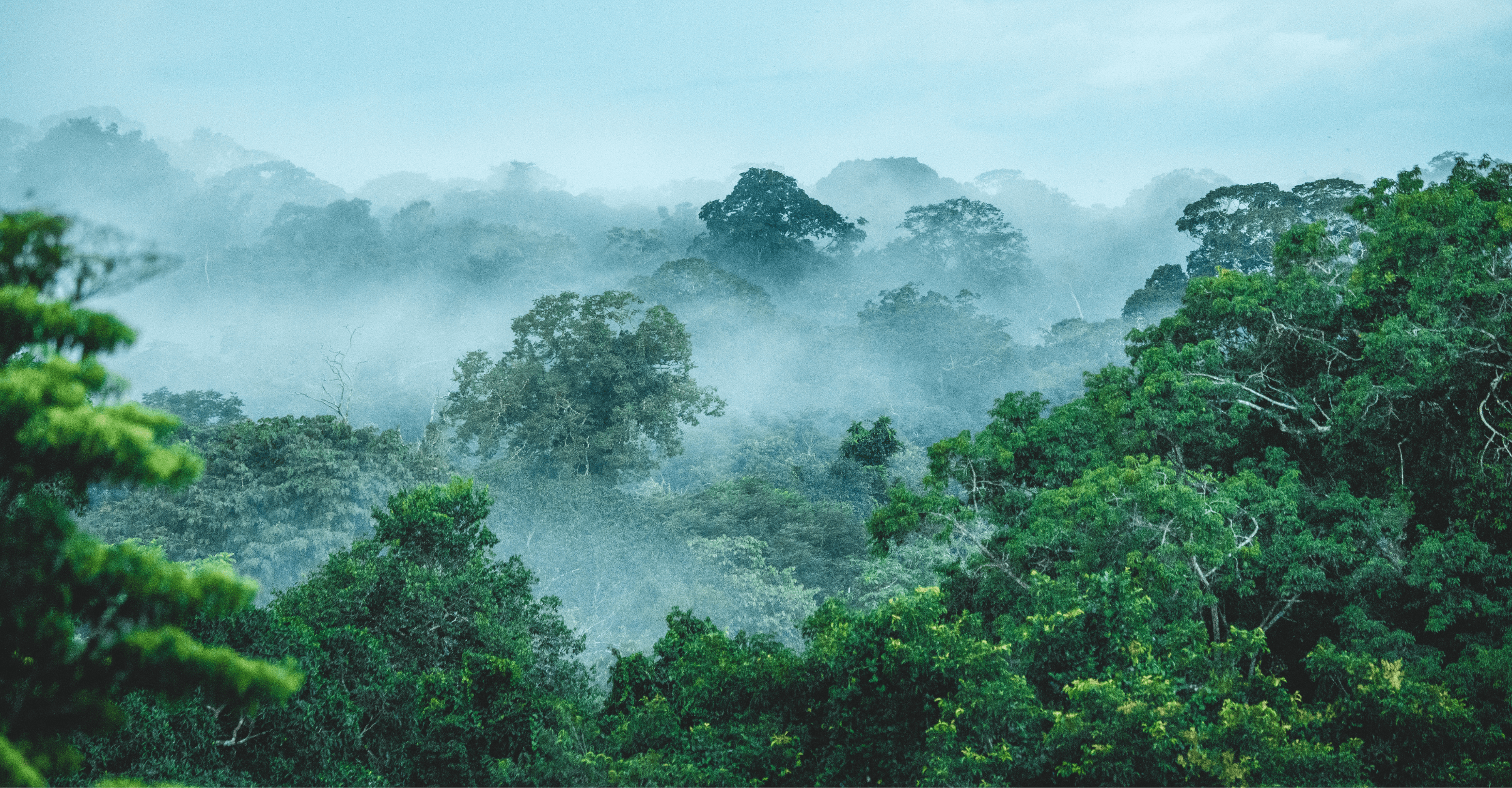
Rising mist in the Secret Forest: With the light of the rising sun, life awakens in our protected areas in Peru.
Results: Proven effective forest protection.
The objectives set out in the foundation's statutes are fully met.
The CO₂ storage capacity and annual growth are scientifically plausible.
The additionality and permanence of the conservation projects have been verified.
Our conservation projects take a holistic approach.
The objectives set out in the foundation's statutes are fully met.
Wilderness International is highly successful in achieving its statutory goals. The foundation successfully protects ecologically valuable wilderness areas through legally secure land acquisition and long-term earmarking.
It also promotes education, research, intercultural exchange, and the transfer of environmental technologies with innovative projects in Canada, Peru, and Germany. The measures are broad in scope, well documented, and demonstrate an effective link between nature conservation, scientific work, and social engagement." – Rainer Kant, BAUM e. V.
The CO₂ storage capacity and annual growth are scientifically plausible.
Wilderness International's statement that an average of 60 kgCO2/m2 (equivalent to 600 tCO2/ha) isstored in its protected areas is fundamentally plausible. It is at the upper end of the typical values for intact primary forests in the tropics and temperate rainforests – and is particularly realistic if, as is the case with WI, 1) old, intact stands are protected, 2) deforestation or degradation is excluded, and 3) a mixed area approach is used for Peru and Canada. [...]
WI's assertion that primary rainforests continue to sequester carbon is research-based and factually accurate. An increase of 3.02 tCO2/ha/year(11 tCO2/ha/year) is consistent with research findings for intact primary forests. The reference to Cook-Patton et al. (2020) is correct. WI's decision not to include the increase in its calculations is in line with a cautious and responsible modeling approach." – Rainer Kant, BAUM e. V.
The additionality and permanence of the conservation projects have been verified.
The report verifies that our conservation projects meet three key international criteria for forest conservation projects:
- Additionality: The protection would not have been provided without our protection project.
- Permanence: Long-term security is provided by property titles.
- No leakage: Thanks to the holistic approach, there is no shift in deforestation to neighboring areas.
Regarding the quality criterion of additionality, the report states: "Due to the complex drivers of deforestation in Madre de Dios, and especially in the immediate vicinity of WI's protected areas, the additionality of the tropical forest protection project has been demonstrably proven.
Without the purchase, protection, and diverse activities (concession areas, area control through regular patrols, agroforestry and school projects, etc.), it can be assumed that the protected forest areas would no longer exist at this point in time or in the coming years.
Only about 25% of Canada's original temperate rainforest remains. These last remaining areas are threatened by logging companies, agricultural corporations expanding their farmland, urban sprawl, construction and infrastructure, and Canada's withdrawal from the Kyoto Protocol. Even though the specific threat to the WI protected areas Misty Forest (Porcher Island) and Grizzly Forest (Toba Valley) is currently considered to be rather low, the additionality is clearly given in view of the sharp increase in logging pressure in British Columbia." – Rainer Kant, BAUM e. V.
Our conservation projects follow a holistic approach
The report particularly emphasizes the link between research, environmental education, and communication. We facilitate research partnerships (e.g., for eDNA drone monitoring or moorland analysis) and translate scientific findings into environmental education:
"Wilderness International demonstrates how science, education, and conservation work can reinforce each other, thereby creating a new understanding of responsibility." – Rainer Kant, BAUM e. V.

Our protected area in Canada: the Misty Forest—a temperate, i.e., cold, rainforest.
Our concept: a triad of protection, knowledge, and education
Rainer Kant highlights our organization as an "integrated, systemic model for modern forest protection":
Wilderness International pursues a comprehensive approach to the protection of primary rainforests, characterized by integrativity, systems thinking, multidimensionality, interdisciplinarity, and holism. The organization brings together different perspectives, methods, and actors to achieve its goals effectively and sustainably. This methodologically complex and modern approach to nature conservation represents a forward-looking model for the protection of wilderness areas."
Rainer Kant
Senior Advisor, BAUM e.V.
.png)
The integrative approach is evident in the fact that Wilderness International links different areas of society: environmental and climate protection are combined with educational work, technological innovations, and economic financing models. Companies, schools, scientists, and local indigenous communities are actively involved, creating synergies between civil society, business, and science.
Furthermore, Wilderness International works systemically by understanding ecological challenges in a broader context. The protection of a piece of rainforest is not viewed in isolation, but as part of a complex ecological network that influences the global climate, biodiversity, and water balance. This systemic thinking enables the organization to design measures that have long-term and far-reaching effects.
Wilderness International also operatesmultidimensionally, as its work unfolds on several levels simultaneously: ecologically through the preservation of species-rich habitats, economically through financing via land sponsorships andCO2 offsets, technologically through the use of drones, satellite imagery, and eDNA, and educationally through educational projects in schools. This not only puts environmental and climate protection into practice, but also makes it tangible and understandable.
Another key aspect is theinterdisciplinary approach. Wilderness International brings together experts from the fields of biology, geography, forestry and environmental science, education, computer science, and communication. This diversity of expertise enables well-informed decisions to be made, innovative solutions to be developed, and complex interrelationships to be communicated in an understandable way.
All these approaches ultimately contribute to a holistic understanding of nature conservation. Wilderness International considers not only the ecological component, but also the social, cultural, and economic dimensions.
Measurable & verified: Contribution to environmental and climate protection
As a bridge between science, business, and environmental policy, BAUM e.V. is an important authority when it comes to introducing companies to sustainable business practices.
The report clearly shows that companies working with Wilderness International can make a measurable and verified contribution to environmental and climate protection. Companies can strategically integrate our forest conservation projects into their sustainability programs, particularly in the following areas:
- Integrate biodiversity into your ESG strategies (CSRD/ESRS E4 compliant)
- Offset Scope 3 emissions through long-term nature projects
- Avoidgreenwashing, as all areas are permanently secured and transparently verifiable.
"Protecting primary forests is not only climate protection, but also the most effective measure for ensuring ecological resilience and sustainability." – Rainer Kant, BAUM e. V.
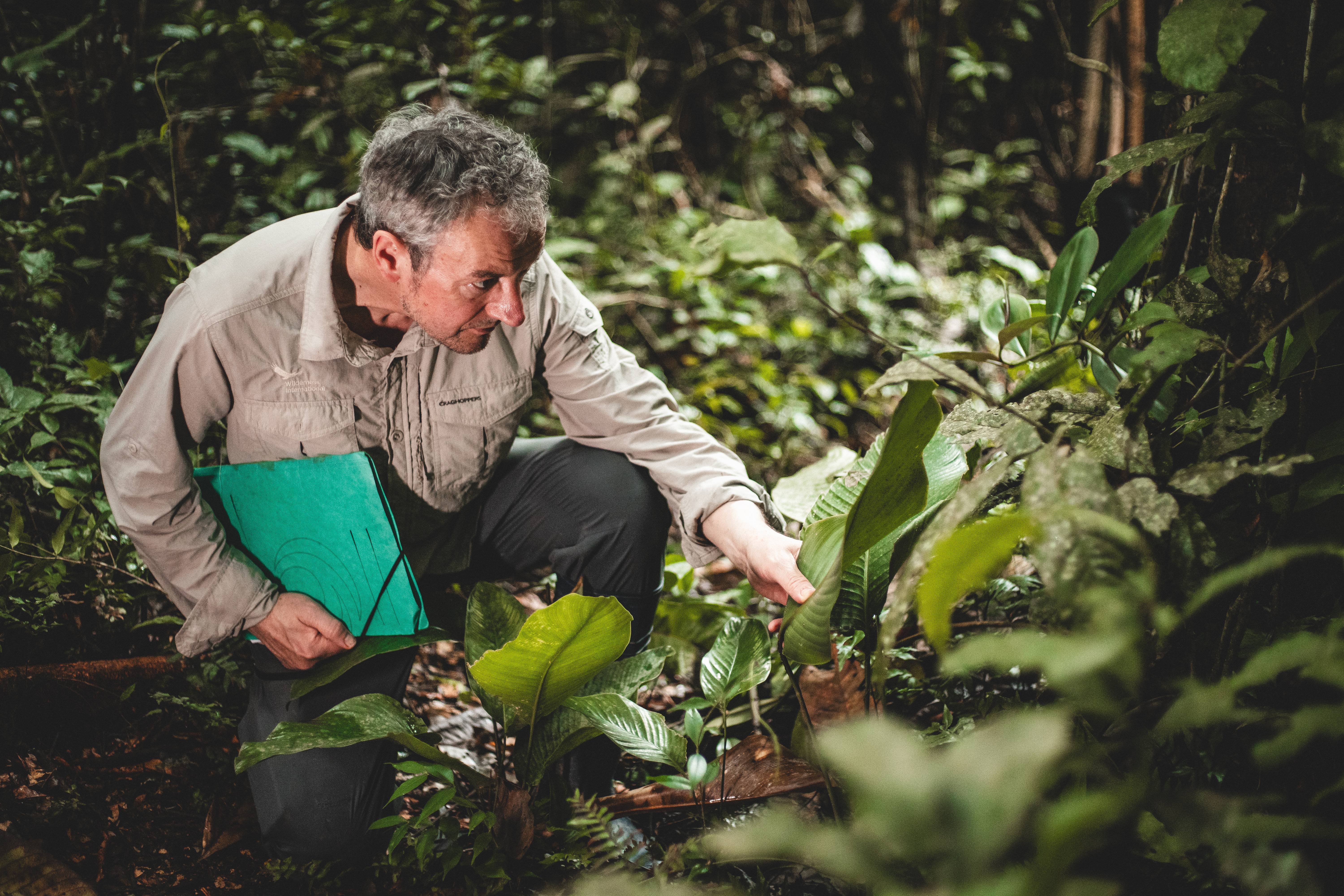
Rainer Kant at work in the Secret Forest, Peru.
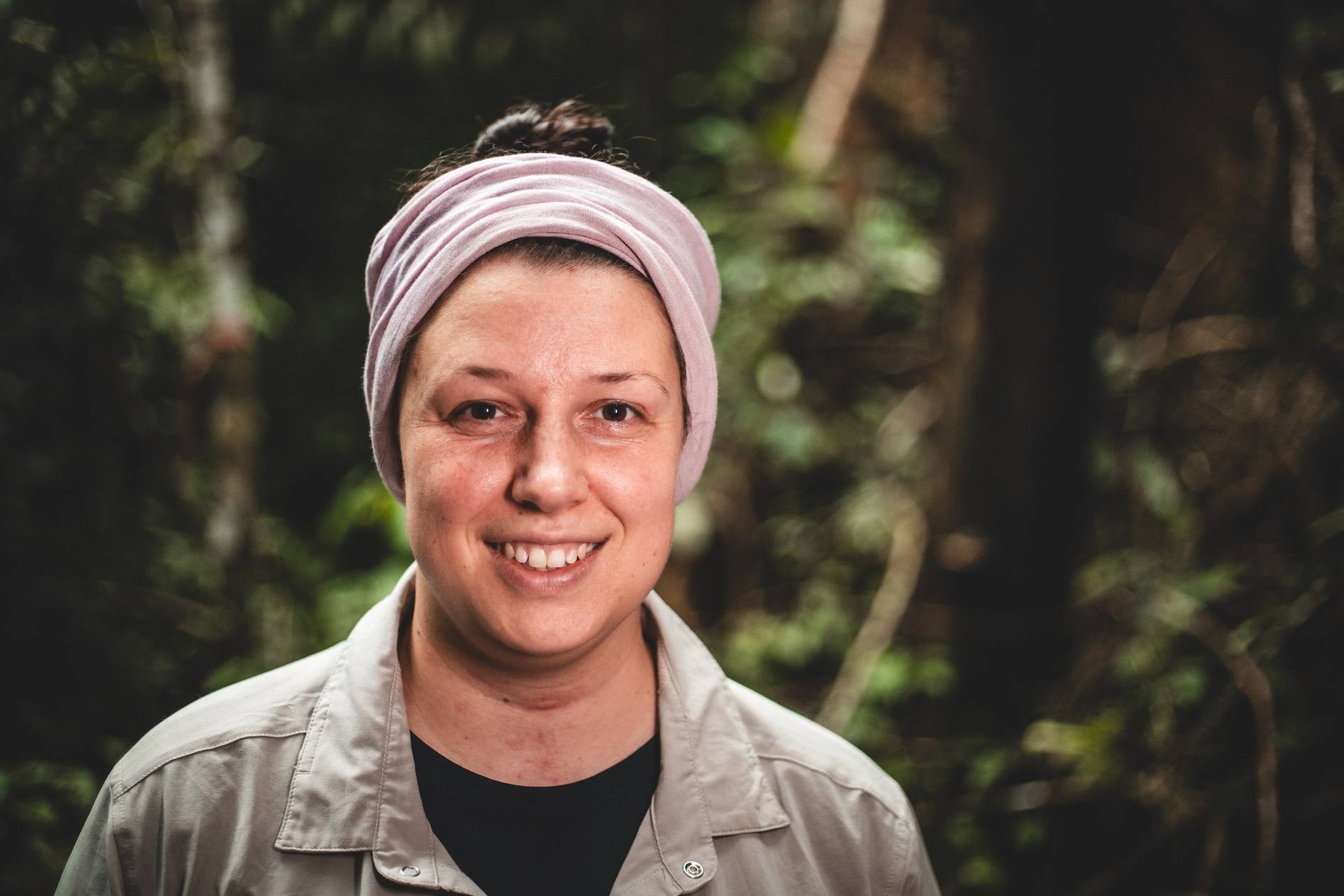
Do you have questions about the report or other topics? Marie looks forward to hearing from you!