
How can we protect the rainforest in a serious and secure manner?
That's what it's all about
Not all forest conservation is the same. Effective forest conservation must meet international quality criteria: protection must be additional, permanent, and free from displacement. In this article, we explain these criteria using Wilderness International as an example. The BAUM e.V. report certifies that our rainforest conservation efforts are demonstrably effective.
Results of the BAUM e.V. report:
Wilderness International has a proven track record of effective, transparent, and sustainable conservation. Our foundation's work is regarded as "a forward-looking model for the protection of wilderness areas."
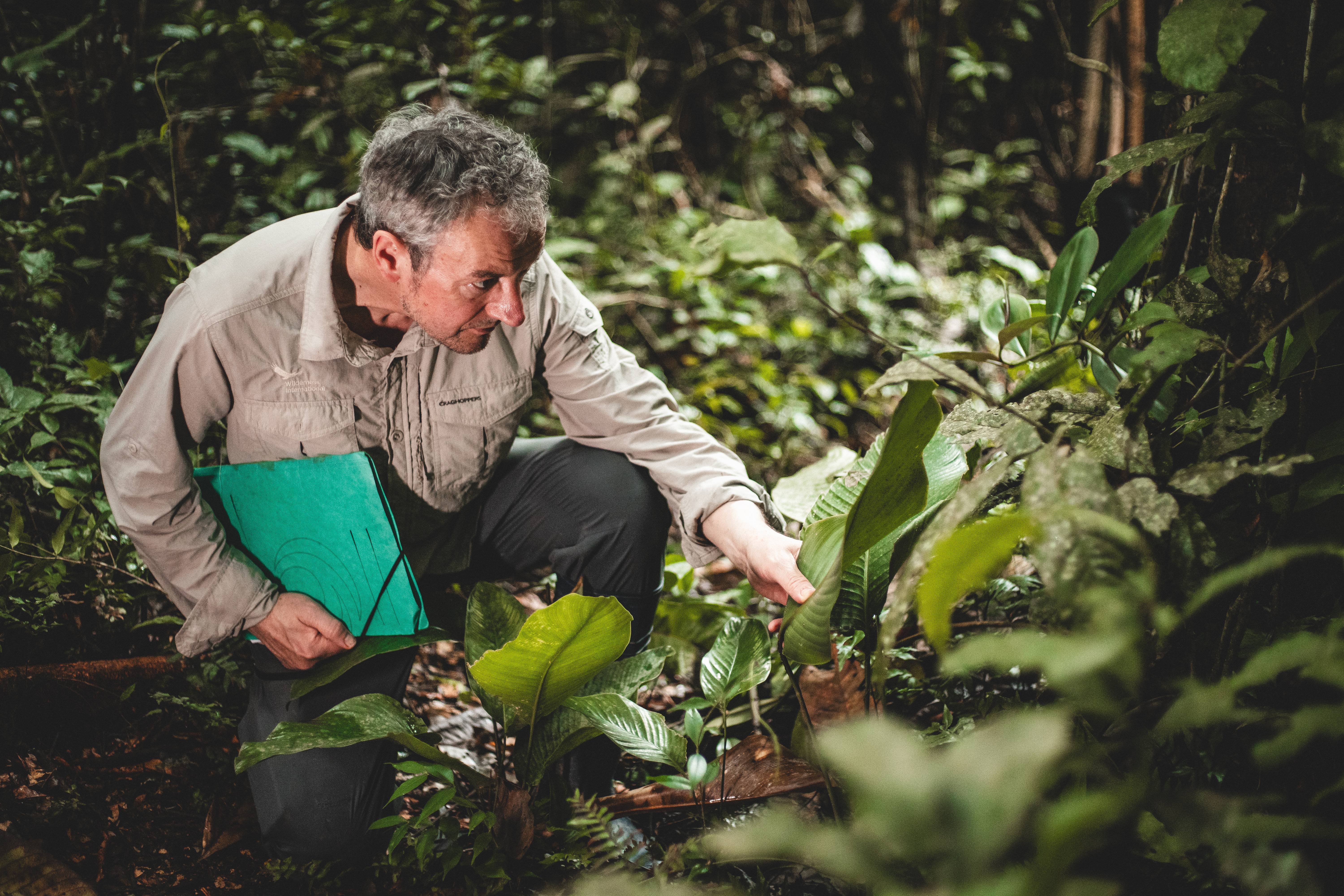
Article overview
Proven effective forest protection must meet three quality criteria: additionality, permanence, and non-displacement.
Additionality means that a conservation project actually creates additional benefits for the climate and biodiversity.
Permanent means that the protection must be long-term (at least 30 years) and reliable.
Freedom from displacement means seamless.
A well-founded report by BAUM e.V. certifies that Wilderness International meets these international criteria.
What sets our forest protection apart is its holistic approach.
In addition to our protection concept, there are other ways to protect the rainforest. Such as lobbying, campaigning, or reforestation.
These three criteria will help you recognize reputable and sustainable forest protection
An organization that promises to protect the rainforest is only reputable and its work sustainable if the protection is genuine, measurable, and permanent. If these standards are not rigorously met, there is a risk that the protective effect and, in some cases, your donations will be wasted.
The terms "genuine, measurable, and lasting" refer to the three international quality criteria for effective protection projects:
- Additionality
- Permanence and
- Freedom from displacement (freedom from leakage).
We explain these technical terms below.
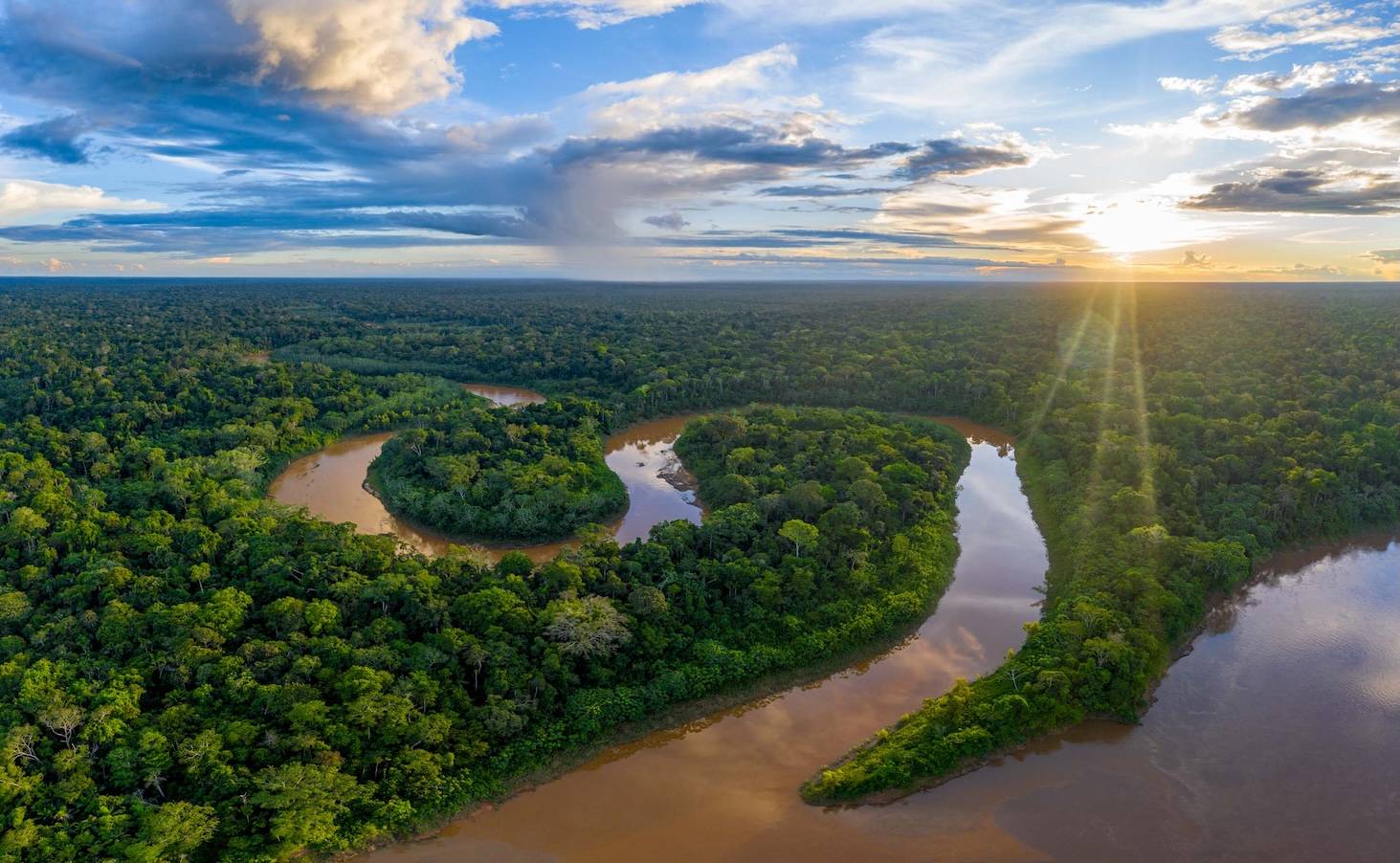
Additional, permanent, and protected from relocation: Wilderness International purchases endangered forest areas to protect them forever. These purchases are refinanced through donations, ensuring long-term protection. Each square meter is only allocated once.
Additionality: Truly effective protection
Additionality means that a conservation project creates genuine, additional benefits for the climate and biodiversity, i.e., it achieves an impact that would not have occurred without the project. It ensures that every square meter of forest protected actually represents a new, measurable conservation achievement and that existing measures are not simply double-counted or relabeled.
A project is only considered additional if it meets several conditions:
- Reference scenario(baseline): A credible scenario must be created that shows how the forest would have developed without the project.
- No legal obligation: Emission avoidance must not be required by law. It must therefore be voluntary and go beyond legal requirements.
- No funding from existing programs: The emission reductions must not already be covered by other programs or government subsidies.
- Projectintervention: The project must actively take measures to ensure forest protection.
Only when all these dimensions are fulfilled can the protection of a forest area be truly effective and make a real contribution to halting the loss of biodiversity and carbon sinks.
Durability: Long-lasting and long-term protection
Permanence means that the protection achieved is long-term and reliable. A project only meets this criterion if the protected areas and their ecological values (such as stored carbon, habitats, or biodiversity) are preserved for many decades.
International standards generally consider periods of at least 30 years to be permanent. At Wilderness International, however, we strive for truly long periods of time. In doing so, we aim to fulfill the requirement of genuine permanence in its most consistent form. While many projects are temporary in nature, the forests here are permanently removed from use—for generations to come.
To legally ensure our long-term viability, we operate as a foundation: unlike any other organizational form, this allows us to pursue a (non-profit) purpose on a permanent basis and independently of outside interests. In addition, we only operate in countries with stable legal systems and only purchase land that is officially registered in the land registry.
No displacement: Seamless protection
As a quality criterion, freedom from displacement ensures that the protection achieved by a project does not simply lead to deforestation activities being relocated to another location.
Does Wilderness International meet these quality criteria?
We have commissioned a comprehensive process assessment from the German Federal Working Group for Environmentally Conscious Management (BAUM e.V.).
The result confirms that Wilderness International meets all three international quality criteria. Our conservation work is additional, permanent, and free from displacement:
- Our projects meet all criteria for additionality —ecological, financial, and legally transparent in terms of accounting.
- Thanks to the property titles we acquire when purchasing land and the land registry entries, our forest protection is long-term.
- Thanks to our holistic approach, there is no displacement into neighboring forest areas.
The report by BAUM e. V. rates our work as a "best practice example of integrated, scientifically sound forest protection."
Wilderness International is highly successful in achieving its statutory goals. The foundation successfully protects ecologically valuable wilderness areas through legally secure land acquisition and long-term earmarking. In addition, it promotes education, research, intercultural exchange, and the transfer of environmental technologies with innovative projects in Canada, Peru, and Germany. The measures are broadly based, well documented, and demonstrate an effective link between nature conservation, scientific work, and social engagement.
Rainer Kant
Senior Advisor, BAUM e.V.
.png)
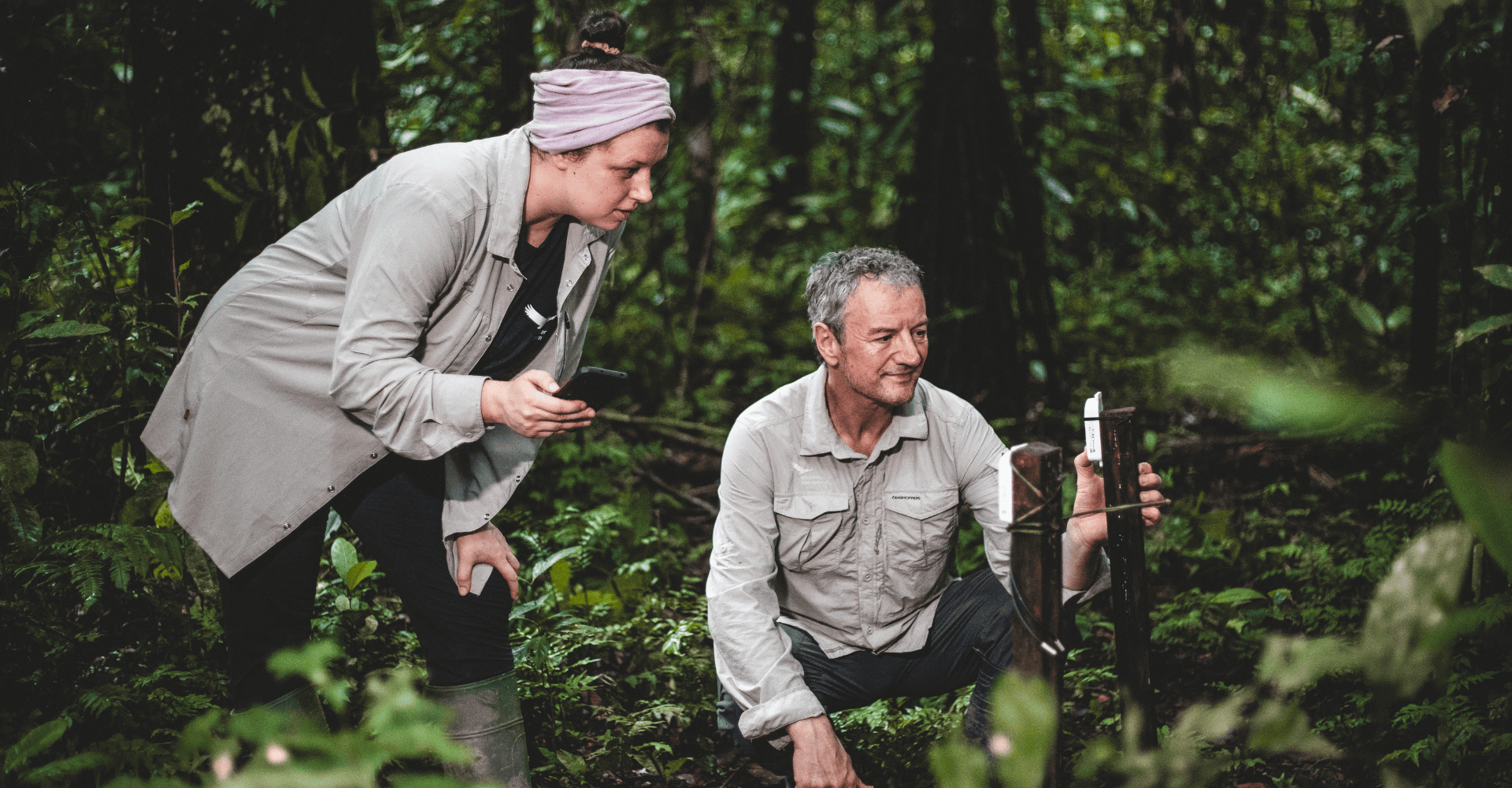
At work in the Secret Forest: Rainer Kant collects data with Marie Schreiber for the expert report.
The holistic protection concept: How we protect the rainforest
At Wilderness International, we take a holistic approach. This means that our conservation concept is based on four key pillars: land acquisition, research, environmental education, and local conservation work. As a result, our forest conservation efforts go far beyond the principle of "buying and protecting land."
The BAUM e. V. report highlights our work as an "integrated, systemic model for modern forest protection." Dipl.-Forstwirt Rainer Kant, one of the most experienced experts on biodiversity and forest ecosystems, certifies our protection concept.
- Integrativeness,
- systems thinking,
- multidimensionality,
- Interdisciplinarity and
- Holistic approach.
In short, this means, in the words of Rainer Kant: "The organization brings together different perspectives, methods, and stakeholders in order to achieve its goals effectively and sustainably. This methodologically complex and modern approach to nature conservation represents a forward-looking model for the protection of wilderness areas."
We will explain what this means in concrete terms in the following sections.
Integrative: We connect civil society, business, and science
The integrative approach is evident in the fact that Wilderness International links various areas of society with one another:
- Knowledge transfer: Environmental and climate protection are combined with educational work, technological innovations, and economic financing models.
- Stakeholders: Businesses, schools, scientists, and local and indigenous communities are actively involved.
This creates synergies between civil society, business, and science.
Systemic: We have a long-term and far-reaching impact
In our work, we never consider the protection of a piece of rainforest in isolation. We work systemically, viewing ecological challenges in a broader context.
Each forest area we protect is part of a complex ecological network and, as such, has a direct impact on the global climate, biodiversity, and regional water balance.
Through this profound systemic thinking, we design our protective measures in such a way that they achieve long-term and far-reaching effects. In short, we are not only securing an area, but also the vital global functions of the ecosystem.
Multidimensional: We make forest protection tangible and transparent
We operate multidimensionally, because our protective work has an impact on several levels simultaneously.
- Ecologically, we protect species-rich habitats.
- We finance the protection economically through land sponsorships and CO2 offsets.
- Technologically, we use innovative tools such as drones, satellite imagery, and eDNA for monitoring.
- We bring environmental protection to life through educational projects (e.g., wilderness runs) at schools and implement local projects together with the people of the region.
- We make forest protection tangible by providing the exact geocoordinates for protected areas.
Through this approach, we not only implement environmental and climate protection in a practical way, but also make it comprehensible and tangible.
Interdisciplinary: We rely on broad expertise
Another key aspect of our work is our interdisciplinary approach. We bring together experts from a wide range of fields, including biology, geography, computer science, education, and environmental science.
This breadth of expertise enables us to make informed decisions, develop innovative solutions to complex problems, and communicate the interrelationships involved in rainforest conservation in an understandable way.
Holistic approach: The result of our work
All these approaches ultimately contribute to a holistic understanding of nature conservation. We consider not only the ecological component, but also the social, cultural, and economic dimensions.
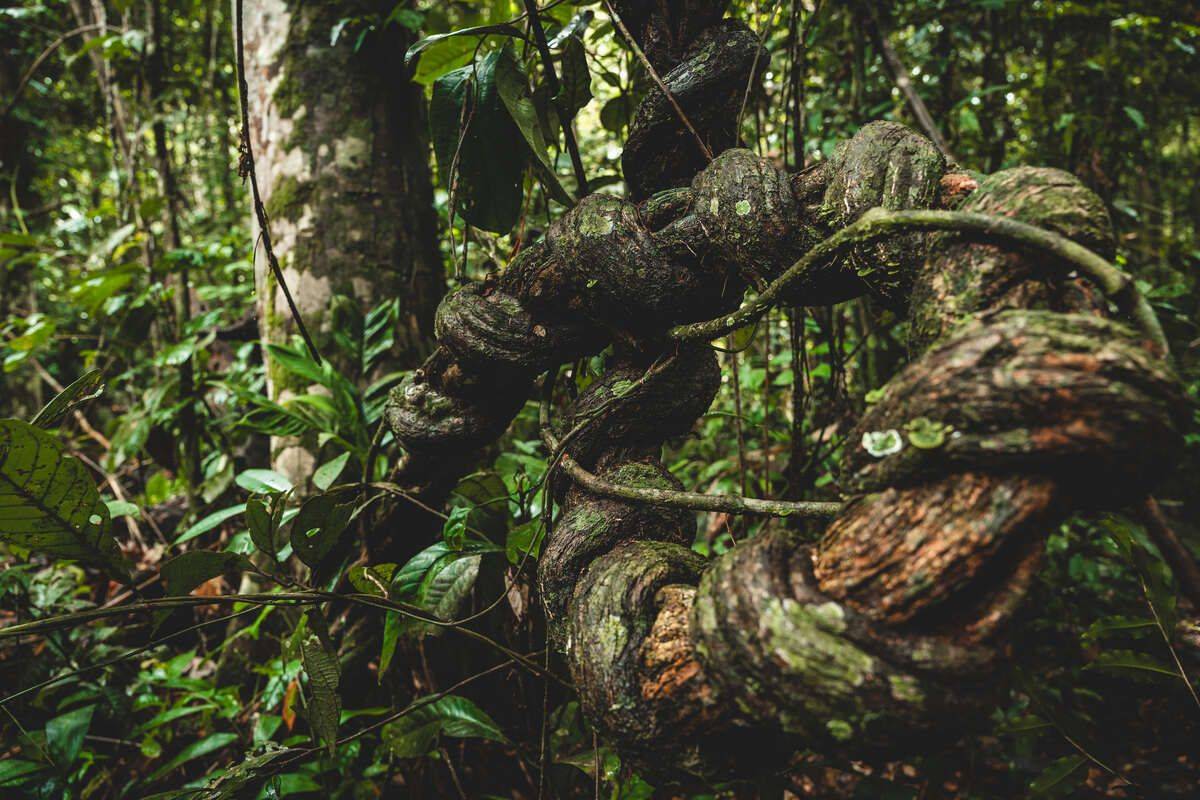
Holistic: With legal, institutional, social, and ecological protective measures, we ensure that the forests protected today will still exist in the distant future.
How do other organizations protect the rainforest?
In addition to Wilderness International's holistic protection concept, which combines many of the following approaches, there are other ways to protect the rainforest:
- Political influence & lobbying: Organizations exert pressure on governments to enact stricter environmental laws and influence international trade agreements in favor of forest protection.
- Local conservation and development work: The focus is on directly supporting indigenous and local communities to promote sustainable sources of income and the self-management of their protected areas.
- Awareness raising and campaigning: Media campaigns and educational work are used to raise global awareness of the threat and build public pressure against those responsible for deforestation.
- Certifications & standards: International sustainability standards (e.g., for palm oil or wood) are developed and monitored to ensure more transparent and sustainable corporate management.
- Financial incentives (REDD+): Countries are financially rewarded through mechanisms such as REDD+ if they can demonstrate that they have reduced emissions from deforestation, in order to make forest conservation economically attractive.
- Strengthening indigenous rights: Protecting land rights and supporting indigenous peoples is essential, as indigenous peoples are among the most effective guardians of the rainforest.
- Restoration (reforestation): Damaged areas are restored through targeted reforestation and the renaturation of ecosystems (e.g., peat bog forests) in order to secure biodiversity and carbon storage.
Why should we protect the rainforest at all?
As human beings, we should have a natural interest in preserving the rainforest. Because by protecting the rainforests, we also preserve the essential ecosystem services provided by the rainforest—from which we all benefit.
The enormous value of rainforests
The value of rainforests for our planet, for us humans, and thus also for our future is almost immeasurable:
- Climate stability: Tropical rainforests store billions of tons of CO2 and stabilize the global climate.
- Water cycle: Rainforests store water, generate precipitation, and thus ensure the water supply.
- Biodiversity: Rainforests are home to 50-75% of all animal and plant species worldwide.
- Home to indigenous peoples: Rainforests are home to many indigenous peoples whose knowledge of the sustainable use and healing powers of nature is invaluable.
- Soil protection: Intact rainforests prevent soil erosion, thereby securing fertile farmland and the availability of raw materials.
- Global supply chains: Many export and import products depend directly on intact ecosystems in the tropics—from coffee and rubber to wood and cocoa.
Important: We should not reduce rainforests to individual aspects and view them as "suppliers of raw materials." They are an essential, self-regulating ecosystem that is indispensable for all of humanity and the ecological balance of our planet.
Deforestation: Our rainforests are under existential threat
The world's rainforests are being destroyed by deforestation and slash-and-burn practices to create land for agriculture and other profitable projects:
- Cattle breeding: The largest area is often cleared to create pastureland for cattle breeding.
- Agricultural expansion: The expansion of monocultures such as soy (mainly as feed for global factory farming) and palm oil (for food, cosmetics, and biofuel) is a massive threat, especially in South America and Southeast Asia.
- Mining and raw materials: The extraction of minerals and raw materials (such as gold, iron, or bauxite) leads to the destruction of large areas of land and environmental pollution (e.g., mercury from gold mining).
- Logging: The illegal and uncontrolled felling of precious woods for timber not only creates gaps in the forest, but also makes the areas accessible for further clearing and settlement.
- Infrastructure projects: The construction of roads, dams, and other infrastructure opens up remote forest areas and promotes further destruction.
protect Join us in protecting the precious rainforest
Your contribution to a world that breathes: With every donation, you help protect valuable rainforest in Peru or on the west coast of Canada, thereby preserving our own basis of life.
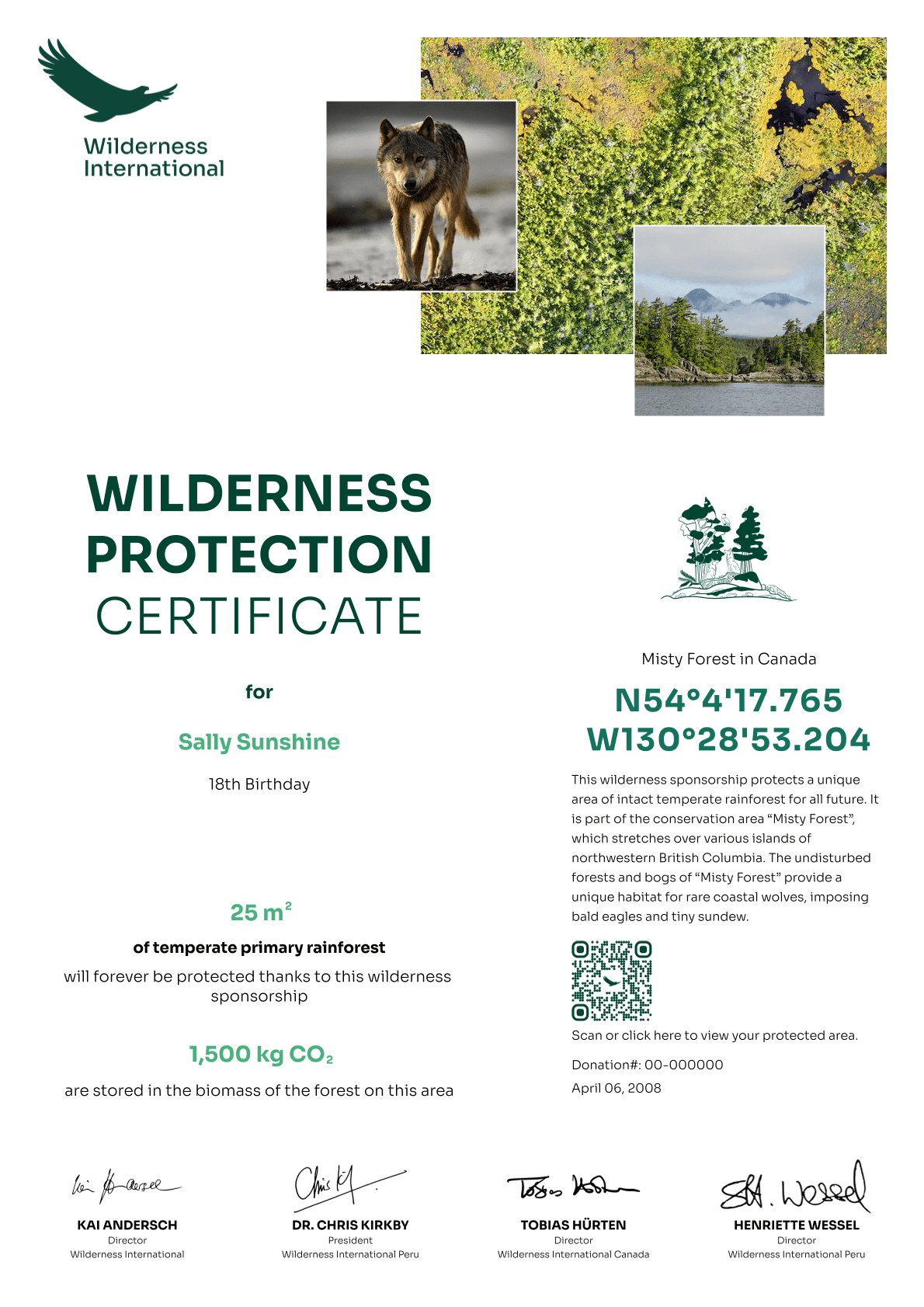
Healthy forests provide us with water and clean air and help stabilize the global climate. protect them with us: down to the square meter, complete with a certificate.


News

Drones for transparent wilderness protection - Peru Expedition June 2021
For us, transparently protecting the forest means: for you, the exact square meter ...Drones for transparent wilderness protection - Peru Expedition June 2021
For us, transparently protecting the forest means: for you, the exact square meter ...Drones for transparent wilderness protection - Peru Expedition June 2021
For us, transparently protecting the forest means: for you, the exact square meter ...