
Research fellowship in the heart of the Amazon
In November 2025, Alanis Flavia Cruz Flores visited our protected areas in Peru as part of our scholarship program and reports on her experiences for this year's "International Day of Women and Girls in Science."
From the rainforest to Bielefeld and back
When people used to ask me what I wanted to be when I grow up, my answer was always the same: I want to save animals. Nothing more, nothing less. The great heroes of my childhood were Jane Goodall and Steve Irwin, the Crocodile Hunter, and I devoured one animal documentary after another.
As I got older and began to make my first plans for the future, I came to the conclusion that studying biology would be the perfect path for me. However, after studying for a few years in my home country of Peru, I realized that the academic focus of my university did not quite match my expectations. While searching for an alternative, I came across Bielefeld University, far away in Germany, which offered a biology program with a focus on animal behavior. Without hesitation, I learned German and applied for a place at the university—and was accepted!
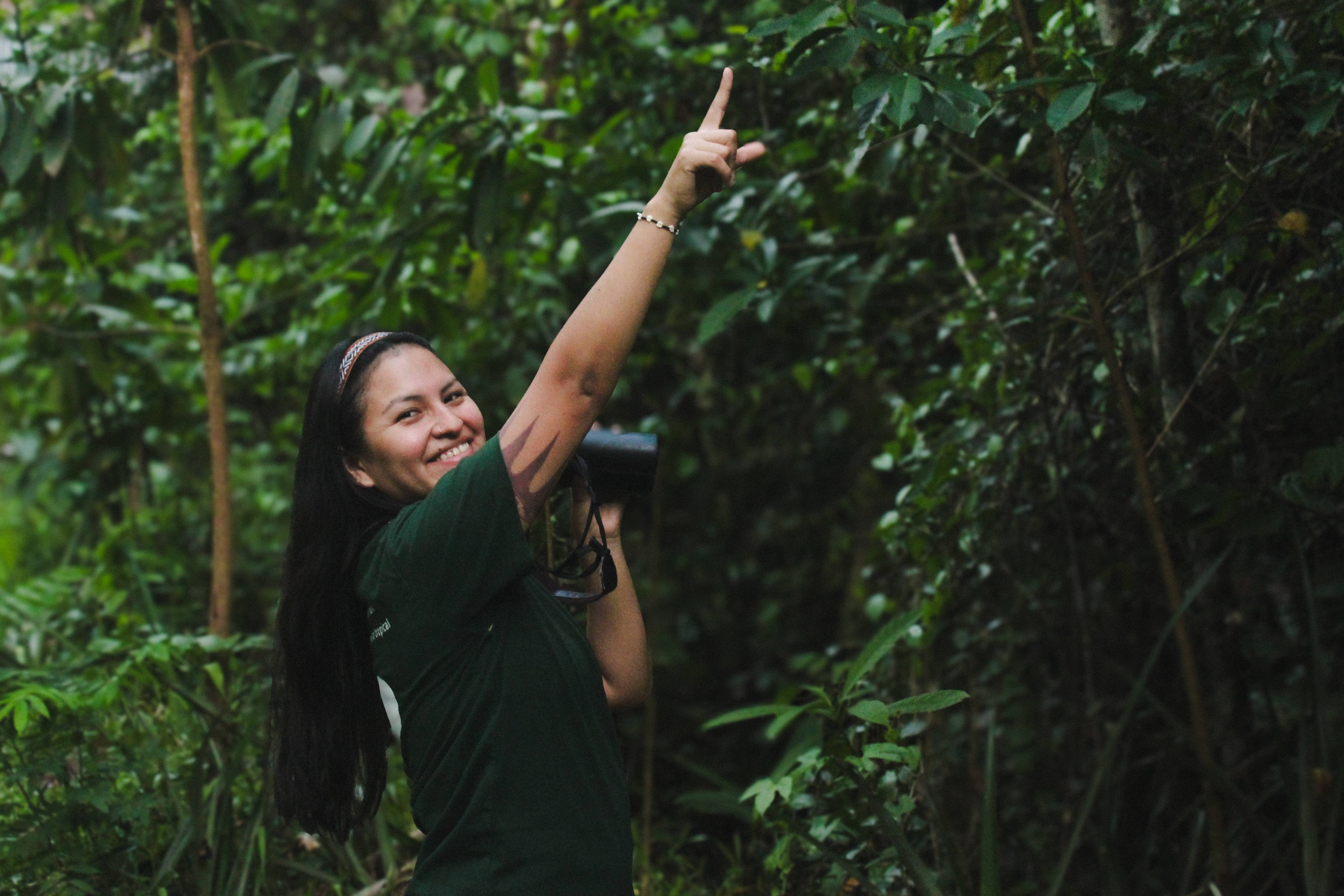
Alanis has always dreamed of conducting research in the rainforest—just like her great role models.
A few months ago, I completed my bachelor's degree and am currently studying for a master's degree in Ecology and Environmental Change. My plan was slowly taking shape, but I was still missing an important piece of the puzzle: I didn't have much practical experience working with wildlife. My long-term goal is to return to my home country of Peru and get involved in research and conservation there, so the Wilderness International research scholarship was the perfect opportunity for me!
First experiences in fieldwork
Since I already had experience working with birds in Europe, I decided to spend more time with other teams during my stay.
That's why I joined the Mammal Research Team most of the time. I had never worked with mammals before, and it was a truly wonderful experience for me! Seeing the animals living freely in their natural habitat made me so happy and reminded me why I am studying what I am studying: to ensure that wild animals can continue to live freely and peacefully in the forest.

On the way along the Tambopata River to our protected areas, you will encounter them frequently: the cute, peaceful capybaras.
The days with the Mammal Research Team started very early. We usually set off at around six in the morning to carry out transects, during which we search for mammals and their tracks, identify them, and document them in an app. At first I found it difficult, but after just under a week I was able to recognize almost all of the mammals we encountered. Over time, I also learned to interpret tracks and other signs of their presence, and my "ethnologist's soul" began to recognize differences in the behavior of individual species when they encountered us.
Transects are defined lines or strips used in environmental research (e.g., ecology, geography, biology). Observations or measurements are systematically made along these lines—for example, which plants or animals are present and how often. This allows comparisons to be made between changes in space (e.g., from the edge of a forest to a meadow) or differences between locations.
Thanks to my previous experiences with tree climbing in Germany, I was also able to help to install camera traps higher up in trees, learned how to tie different knots and also installed some terrestrial cameras. In the afternoons, I helped identify the species in the videos recorded by the camera traps, which also allowed me to learn more about species that we were unable to observe during the transects.
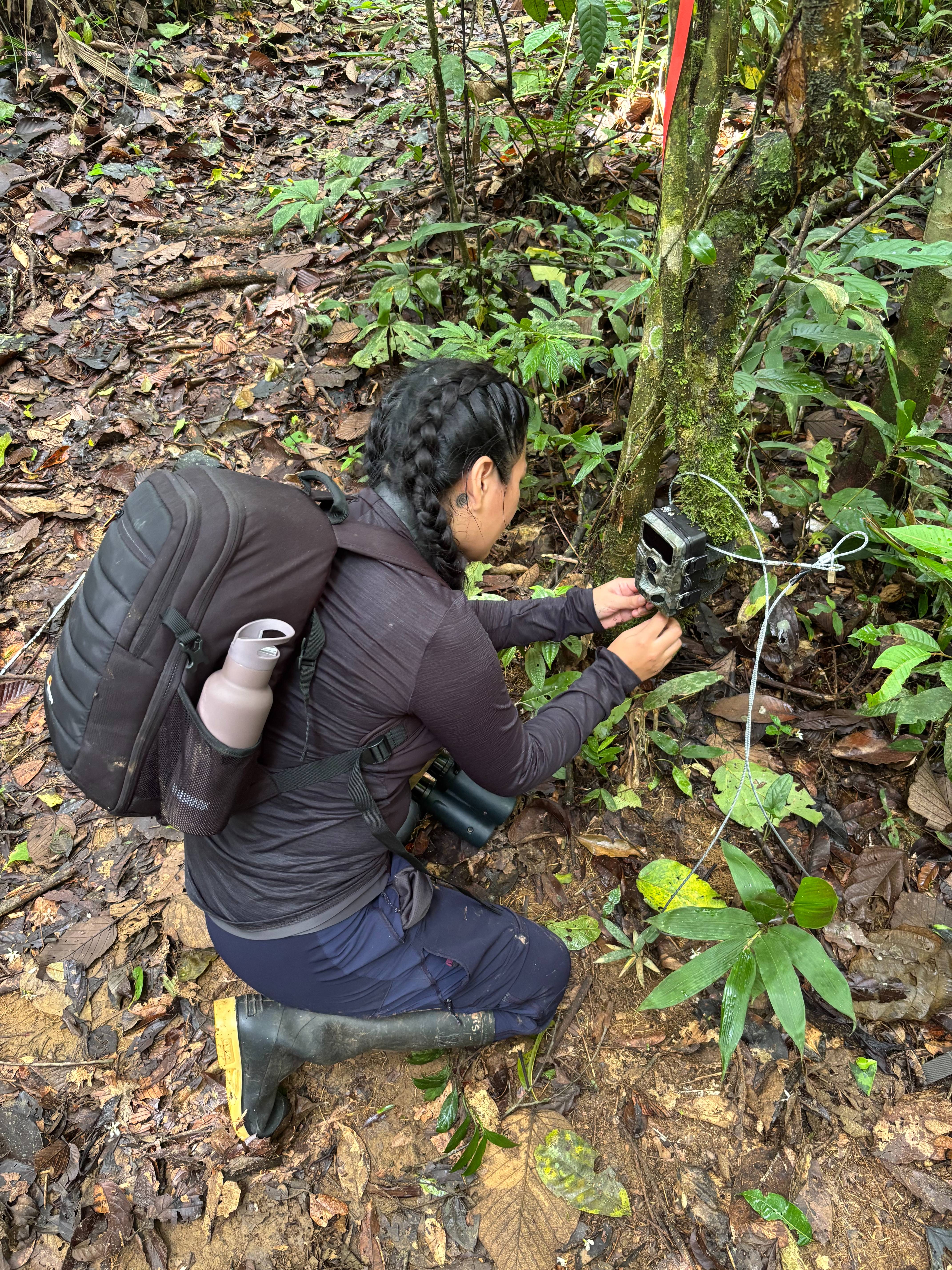
Camera traps are an important part of research work in the rainforest.
During the night transects, we also encountered herpetofauna—amphibians and reptiles—and I learned to identify the most common species and handle them with care. Interacting with researchers from different countries was an immensely enriching experience for me. Not only did I learn from their experiences in the field, but I also gained much more confidence in using English and working in an international team.
About monkey pee and tapir tracks
Many moments from my time in the rainforest will remain in my memory for a long time, but some of them are particularly vivid. One of the most unforgettable moments occurred during a transect observation when we encountered a group of at least ten squirrel monkeys. They were incredibly close, began to surround us, and one of the animals even urinated on us! It was as unexpected as it was wonderful, and another reminder of how alive and unpredictable the rainforest is.
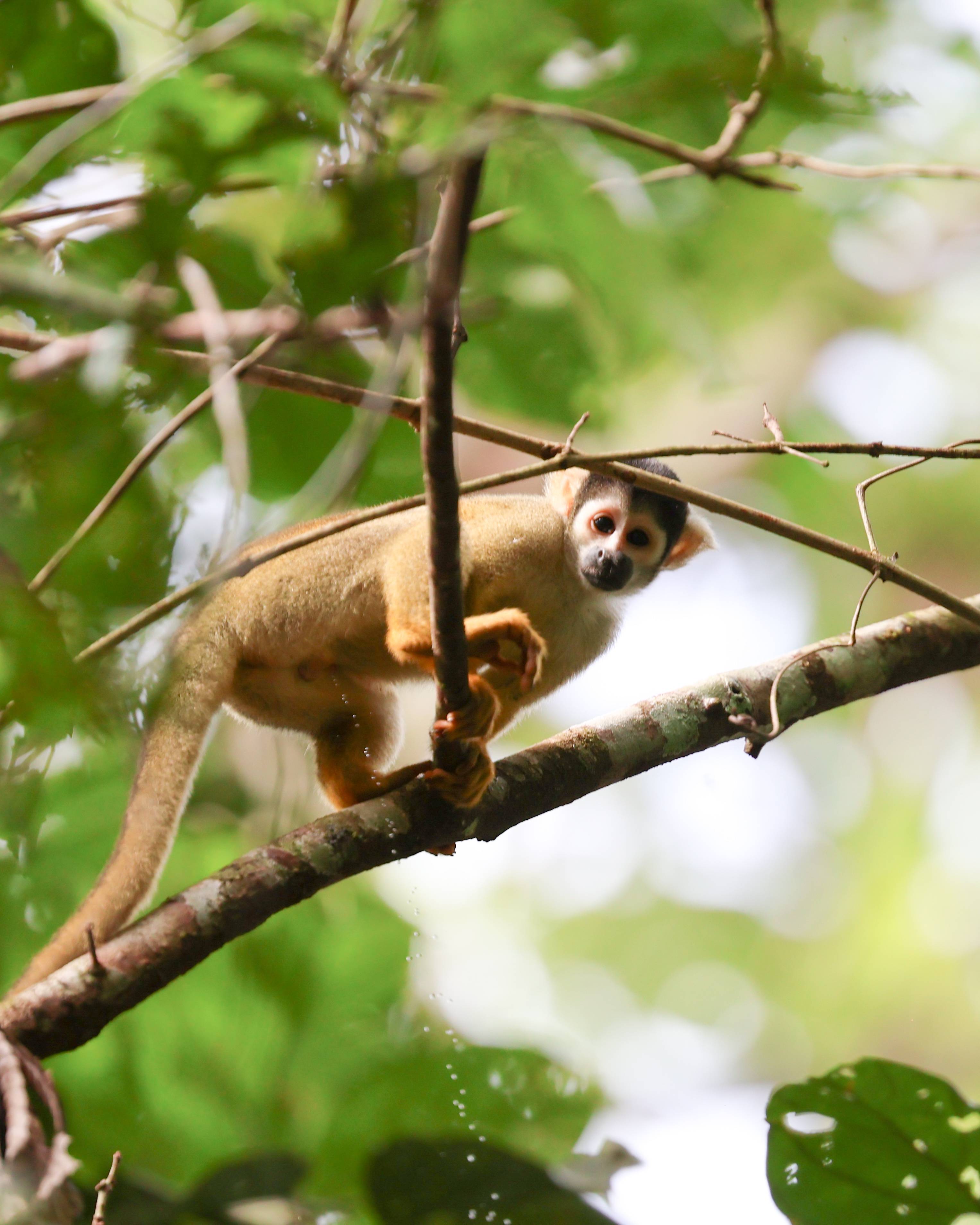
Many species of monkeys mark their territory with urine.
Another moment that has stayed with me is discovering my very first tapir footprint. It was much larger than I had ever imagined, and knowing that this animal had walked there just a few hours earlier made me feel incredibly lucky. I also remember walking through the forest very early in the morning, surrounded by the sounds of birds and insects, and realizing at that moment that this was exactly the kind of work I had dreamed of doing since I was a child. Even during the night transects, despite my fatigue, I was just incredibly grateful to be there and to be able to get to know and experience the rainforest in such a direct and intense way.
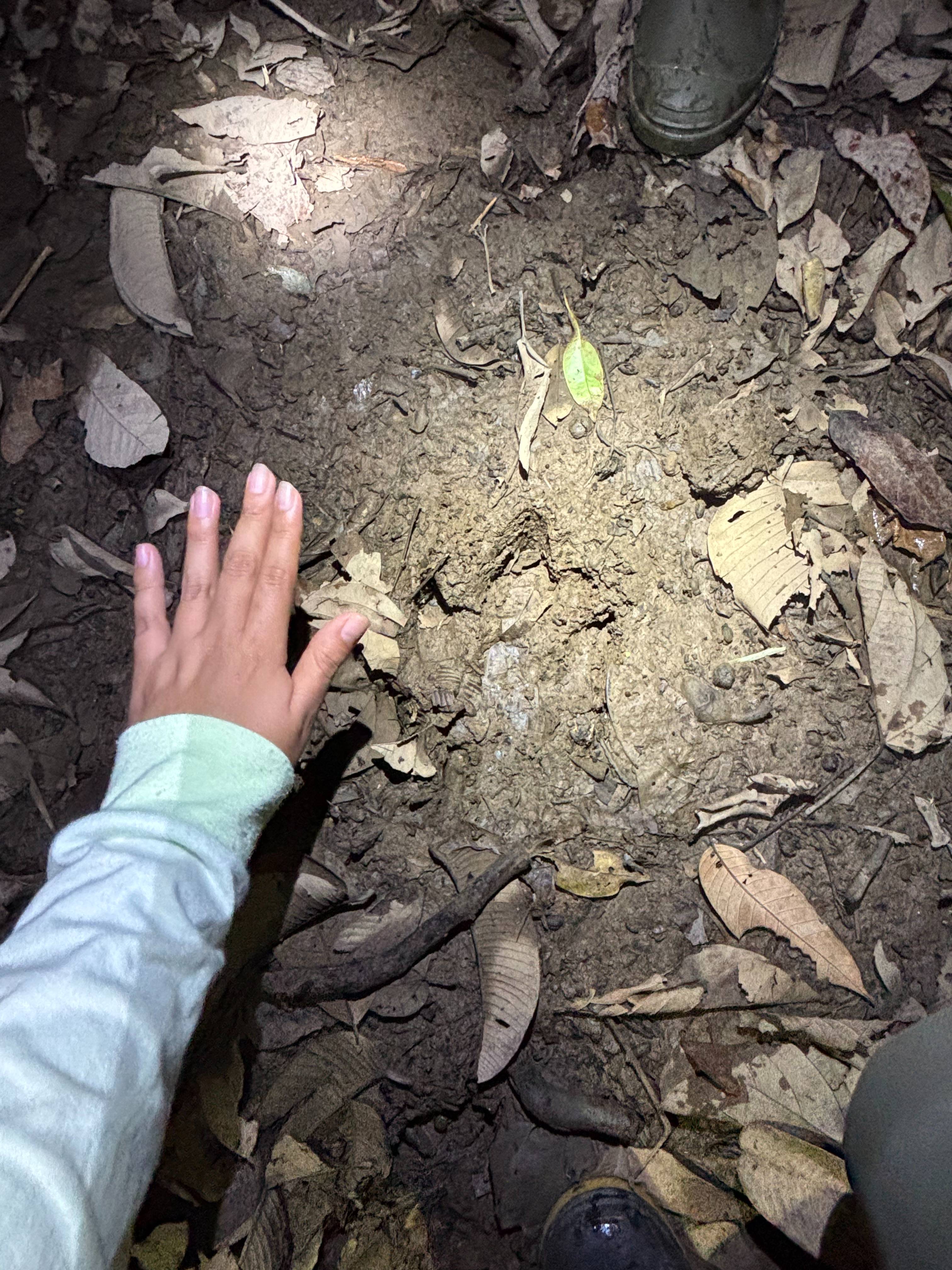
Lowland tapirs are the largest land mammals in South America.
These moments, both small and extraordinary, confirmed to me that this is the path I want to continue on in the future.
A look into the future
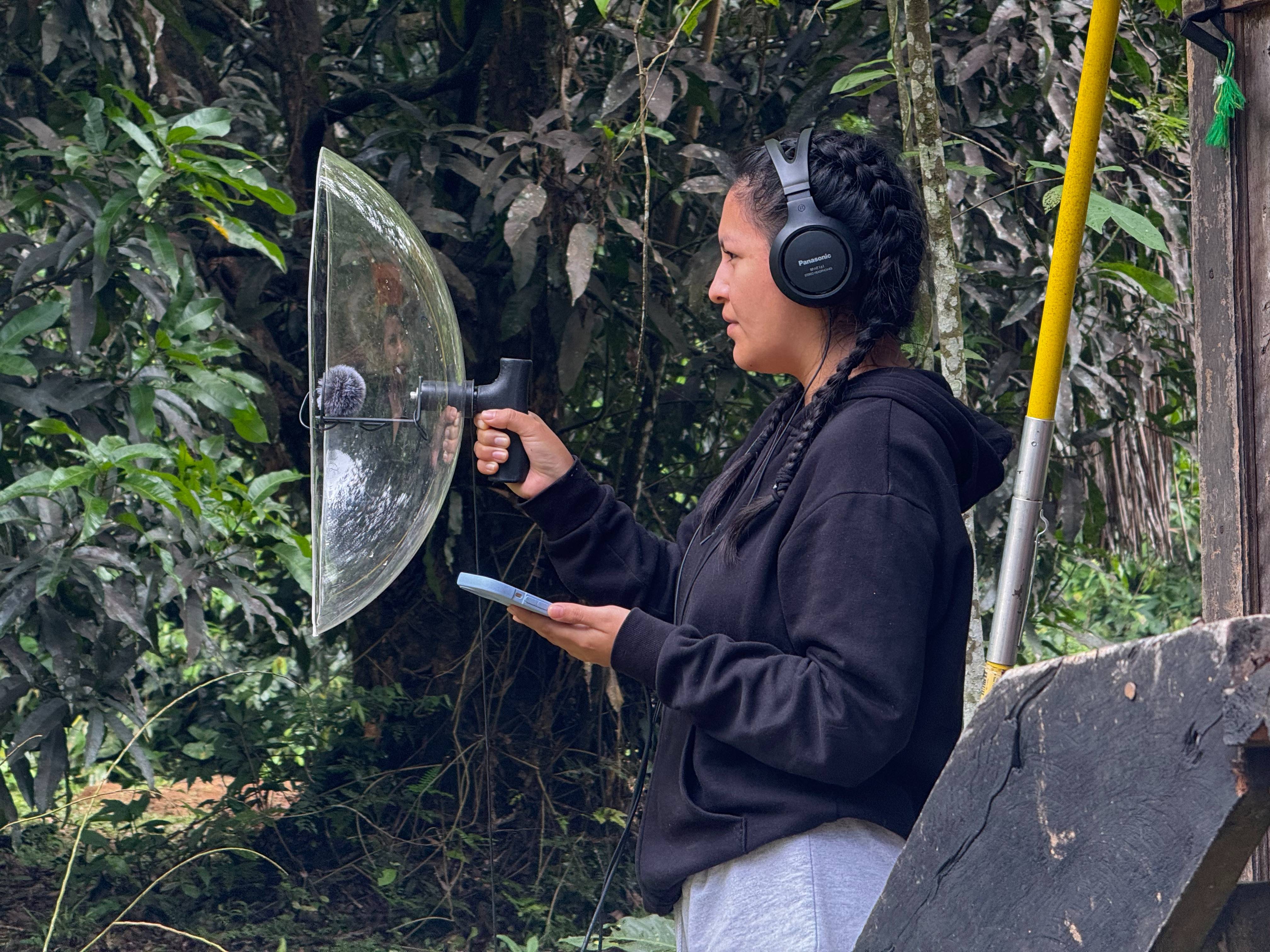
Since returning to Germany, I have been thinking a lot about returning to the Amazon as soon as possible to contribute to research and nature conservation there. I would be very happy to continue working on projects like this and to further my career in this field.
Conclusion and acknowledgements
A big thank you goes to the coordinators of the teams on site, who were always available to answer questions and patiently taught us everything they knew. I am deeply grateful to Wilderness International for giving me the opportunity to learn how to conduct research in the Amazon—a place I have dreamed of visiting since childhood. That dream has now come true, and I hope that this experience is just the beginning of a long-term collaboration.


News

Drones for transparent wilderness protection - Peru Expedition June 2021
For us, transparently protecting the forest means: for you, the exact square meter ...Drones for transparent wilderness protection - Peru Expedition June 2021
For us, transparently protecting the forest means: for you, the exact square meter ...Drones for transparent wilderness protection - Peru Expedition June 2021
For us, transparently protecting the forest means: for you, the exact square meter ...